Adventure Travel Cameras 2026: Buyer's Decision Framework
Which camera fits your expedition? An action cam, mirrorless, drone, and underwater decision framework matched to alpine, dive, paragliding and ultralight use.
This post may contain affiliate links. Disclosure
Most “best adventure camera” lists make the same mistake: they hand you a ranked top ten without ever asking what you intend to do with it. That ranking is useless. A GoPro HERO13 Black is the wrong tool for an alpine summit at dawn, a Sony a6700 is the wrong tool clipped to a downhill helmet, and a DJI Mini 4 Pro will not survive a coral wall dive at 30 meters. The right camera is the one matched to the operating environment, the weight you can carry, and the failure modes you cannot afford.
Short answer: There is no single best adventure camera, only the one matched to your operating environment. Answer four questions first — what you shoot, where, how it mounts, and what weight you will genuinely carry — and each eliminates roughly half the market. A helmet cam, an alpine mirrorless and a dive rig are different tools entirely.
How to Choose: The Four-Question Filter
Before any camera recommendation matters, answer four questions in order. Each one eliminates roughly half the market.
Question 1 — Operating temperature floor. If you regularly shoot below -10°C (alpine touring, Arctic expeditions, late-season ski mountaineering), most consumer cameras lose 40-60% of rated battery capacity and many will refuse to power on. Only a handful of bodies are rated for sustained use down to -20°C. This single constraint eliminates the majority of mirrorless cameras and most drones.
Question 2 — Water exposure depth and duration. “Splashproof” means rain. “IPX7” means 30 minutes at 1 meter. “Waterproof to 10m” means surf, kayaking, snorkeling. Recreational diving requires 20m+ native rating or a dedicated underwater housing rated to your dive depth plus a 30% safety margin.
Question 3 — Carried weight budget. A thru-hiker on the Continental Divide Trail counts every ounce. A camera kit over 1.5 lb (680g) gets left behind on day three. An overlander with vehicle support can carry 5 lb of glass and bodies without consequence. Weight budget is the single biggest constraint on image quality you can actually capture.
Question 4 — Hands-free mounting requirement. If the camera needs to be on your helmet, chest, handlebar, surfboard, or paraglider riser, it must be an action camera or a 360 camera. No other category survives the vibration, impact, and form factor demands of hands-free capture at speed.
Answer those four and the camera class chooses itself. The rest of this guide tells you which specific model wins inside each class.
Cold-Weather Alpine and Ski Mountaineering
Above 3,500 meters at first light, you have approximately twenty seconds before your fingers stop functioning and roughly forty minutes of battery capacity from any camera you brought. The cameras that survive this environment share three traits: stated operating temperature down to -10°C or lower, glove-friendly physical controls, and battery chemistry that hasn’t collapsed below freezing.
GoPro HERO13 Black
The HERO13 Black’s new Enduro battery is the meaningful upgrade for cold-weather use, rated to keep recording in temperatures down to 14°F (-10°C). Combined with the redesigned “cooling gills” on the front face that improve thermal management in both cold start and overheating scenarios, the HERO13 is the most weatherproof GoPro to date. Specs that matter: 5.3K60 video, 27MP photo, HyperSmooth 6.0 stabilization, 33ft (10m) waterproofing without case, and the new HB-Series interchangeable lens mount. Battery runtime at 4K30 is approximately 90-100 minutes with the Enduro, dropping to roughly 60 minutes near freezing. The HB-Series Macro and Ultra Wide lenses (GoPro’s official HERO13 page) finally make the GoPro a serious creative tool rather than a single-perspective POV camera.
Buy it for: alpine touring, ski mountaineering, helmet-mounted POV in any cold environment where existing GoPro ecosystem and stabilization quality matter more than absolute battery life. Buy on Amazon.
DJI Osmo Action 5 Pro
The Action 5 Pro is the cold-weather and battery-life specialist that wins on the spec sheet for anything below freezing. Operating temperature range is -20°C to 45°C — meaningfully wider than the HERO13’s -10°C to 35°C window. The 1/1.3-inch sensor delivers roughly 2x the imaging area of the HERO13 Black’s smaller sensor, which translates directly to cleaner footage in low-light alpine pre-dawn shooting. 4K/120fps maximum video, 65ft (20m) waterproofing native, and up to 4 hours of 1080p runtime under controlled conditions (roughly 2.5 hours at 0°C in real use). Dual OLED touchscreens stay readable in bright snow conditions where GoPro LCDs wash out.
Buy it for: any expedition where battery life, low-light performance, or sub -10°C operation is the priority. Buy on Amazon — and review DJI’s official Action 5 Pro specifications before committing.

Recreational Diving and Underwater Macro
Two completely different camera classes solve the underwater problem, and the right choice depends on whether you are recreational diving (10-30m, photographing reef and macro subjects) or shallow snorkel-and-surf shooting (under 10m, action capture).
OM System TG-7 — The Underwater Compact
For recreational diving the OM System TG-7 remains the camera nothing else displaces. Waterproof to 50ft (15m) without a housing, freezeproof to -10°C, shockproof to 7ft, and crushproof to 220 lbf — it survives what other cameras don’t. The 12MP BSI CMOS sensor, 25-100mm equivalent f/2.0-4.9 lens, 4K video, and the Microscope macro mode (focus to 1cm) are what underwater photographers buy this camera for. Add the official OM System PT-059 housing and depth rating extends to 147ft (45m). Add the Nauticam NA-TG7 and you get 100m. No other camera in its price tier offers this combination of standalone ruggedness and serious-housing compatibility.
Buy it for: recreational divers, snorkelers, kayakers, splash-zone surf photographers, and any traveler who wants one camera that survives everything. Buy on Amazon.
DJI Osmo Action 5 Pro — Action Underwater
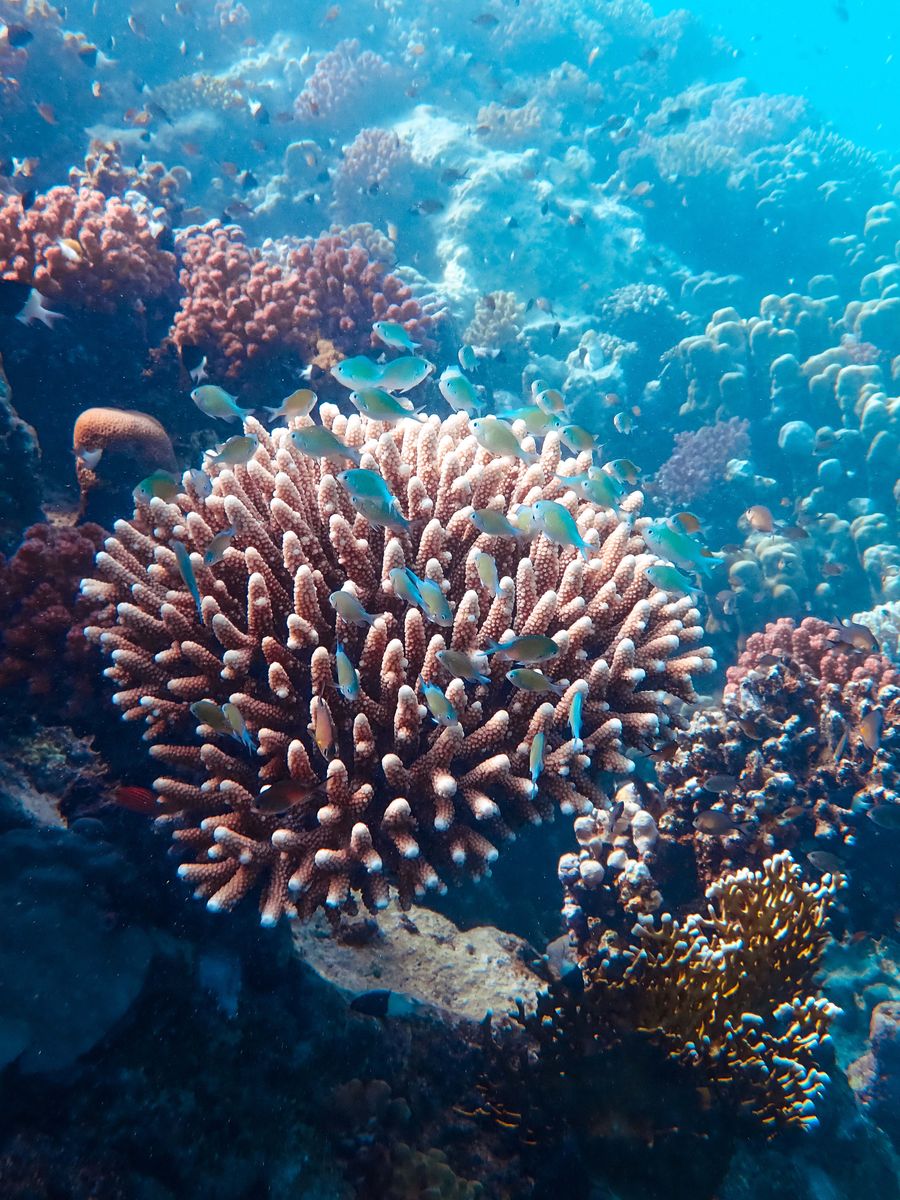
For surf, freediving to 20m, and shallow reef action where you need POV motion capture rather than macro stills, the Action 5 Pro’s 65ft native waterproofing makes it the only action camera in this guide that handles recreational dive depths without a case. It outranges the HERO13 (33ft/10m), the Insta360 X4 (33ft/10m), and the AKASO Brave 8 (33ft/10m) by a factor of 2x. For dedicated dive photography, however, the TG-7’s macro capability and housing ecosystem are categorically superior — the Action 5 Pro is the action-and-motion specialist, not the macro tool.
Paragliding, Mountain Biking, and 360 Capture
Paragliding and mountain biking share one critical constraint: at speed, you cannot frame a shot. The camera has to capture every angle simultaneously and you frame in post. This is the entire reason 360 cameras exist as a category.
Insta360 X4 — The 360 Standard
The Insta360 X4 shoots 8K 360-degree video, 5.7K60fps, and 4K100fps with FlowState stabilization that holds horizon level through pitch, roll, and yaw movements that would tumble any conventional camera. Battery capacity at 2290mAh delivers 135 minutes of 5.7K30 recording — 67% longer than the predecessor X3. Waterproof to 33ft (10m), removable lens guards protect the dual fisheye lenses from rock strikes and rotor wash. The “invisible selfie stick” effect — where the X4’s stitching algorithm erases the stick from the final image — is the defining capability for paragliding wing shots, mountain bike third-person POV, and any sequence where you want the camera floating in space behind you.
Buy it for: paragliders, mountain bikers, skiers, kiteboarders, and content creators who film first and frame later. Buy on Amazon.
The tradeoff is workflow. 360 footage requires the Insta360 app or desktop software to “reframe” into conventional video. Plan on 2-3x the post-production time of conventional action camera footage. For creators who can absorb that workflow cost, the creative ceiling is significantly higher than any fixed-lens action camera. See our adventure photography tips for beginners for fundamentals on framing motion sequences.
Ultralight Backpacking and Thru-Hiking
For multi-day self-supported travel where every gram matters, mirrorless image quality is worth the weight only if you will actually carry the camera. Most thru-hikers ship their first camera home by mile 500 because the weight-to-use ratio collapses. Two viable paths exist.
Sony a6700 — The Lightweight APS-C Path
The Sony Alpha a6700 is the most credible mirrorless body for serious backpacking. Body weight is 493g (17.4 oz), and paired with the Sony E 35mm f/1.8 OSS prime lens at 154g, the total kit weight stays under 650g. Specs: 26MP APS-C Exmor R CMOS sensor, BIONZ XR processor, 4K/120p video, 10-bit recording, AI-based subject recognition autofocus, in-body image stabilization rated to 5 stops. For a thru-hiker who wants genuine landscape image quality at golden hour, this is the floor of “worth carrying.”
Buy it for: thru-hikers and backpackers who prioritize stills quality, are willing to manage a battery rotation, and accept that this is a fair-weather body (not weather-sealed to the same standard as the Fujifilm X-T5). Buy on Amazon.
Fujifilm X-T5 — The Weather-Sealed Alternative
The Fujifilm X-T5 weighs 557g (19.7 oz) body-only, marginally heavier than the a6700, but adds weather sealing across the body that holds up to consistent rain and dust exposure. 40.2MP X-Trans 5 HR sensor delivers the highest still resolution in this class. 6.2K30p internal video, in-body image stabilization to 7 stops, and the three-way tilting LCD that works for low-angle landscape and overhead crowd shots. Fujifilm’s small prime lenses (the XF 27mm f/2.8 weighs 84g) make a sub-700g weather-sealed kit possible.
Buy it for: backpackers and trekkers shooting in genuinely bad weather where weather sealing matters and stills resolution is the priority. Buy on Amazon.
For the broader carry strategy that determines whether any camera makes the cut, see our adventure travel gear guide for packing any expedition.
Aerial: Drones for Adventure Travel
A drone is the most situational camera in any kit. It captures shots no ground-based camera can. It also adds 250-720g to your pack, requires legal registration above 250g in most jurisdictions, and has flight restrictions in most national parks and protected areas. For travel-and-adventure use, exactly one model matters.
DJI Mini 4 Pro
The DJI Mini 4 Pro is sub-249g — the magic number that exempts it from registration requirements in the US, EU, UK, Canada, Australia, and most of Asia. Specs: 1/1.3-inch CMOS sensor, 4K/100fps HDR video, 48MP stills, 34 minutes flight time on the standard Intelligent Flight Battery (up to 45 minutes with the Battery Plus, though the Plus pushes the drone over 249g and reactivates registration requirements), omnidirectional obstacle sensing, and ActiveTrack 360 for subject tracking. True vertical shooting mode is the defining feature for social-first creators who need 9:16 footage natively.
Buy it for: adventure travelers who want aerial coverage without legal friction and without adding a kilogram to their kit. Buy on Amazon. For the legal context on flying in national parks and restricted airspace, the FAA’s recreational drone rules are the starting point — and our adventure travel safety essential guide covers the broader risk framework drone pilots should think through before launching in remote terrain.
The Mini 4 Pro will not handle wind above approximately 20 mph. For genuinely windy coastal, alpine, and high-altitude environments, the DJI Air 3 (720g, registration required) is the more capable platform — but the weight and legal overhead push it out of consideration for most travel use cases.
The One-Camera Compromise: If You Can Only Carry One
If you can carry only a single camera across multiple expedition types, the answer is the DJI Osmo Action 5 Pro. The reasoning: it is the only camera in this guide that simultaneously handles -20°C cold, 65ft underwater depth, hands-free helmet mounting at speed, and 4-hour battery life. The HERO13 Black has better stabilization for high-vibration use and a deeper accessory ecosystem, but loses on temperature range, depth, and battery. The TG-7 wins underwater but fails at action capture. The Insta360 X4 wins creative ceiling but requires a workflow most travelers won’t sustain. The Action 5 Pro is the most-environments-handled-by-one-device pick, and the standalone version retails for under $300.
For the all-around best, the most-tested ranking, and the deeper feature-by-feature comparison across eight action cameras specifically, our best action cameras for adventure 2026 review is the next read. This guide framed the question; that one answers the action-camera version of it.
Related Reading
Get price-drop alerts and new guides from BoldTripGuide
One email a week: price drops on the gear we recommend, new guides, and what changed. No spam, unsubscribe anytime.