Best Climbing Helmets for Adventure Travel 2026: Tested Guide
Nine certified climbing helmets ranked by weight, foam type, and EN 12492 / UIAA 106 certification -- 155 g Black Diamond Vapor to the Half Dome hardshell.

This post may contain affiliate links. Disclosure
A climbing helmet that fits your discipline is the difference between a bruised ego and a brain injury. Not all helmets protect equally — weight, foam type, shell construction, and MIPS matter depending on whether you are projecting sport routes, running trad pitches, or moving fast on an alpine face. In 2026 the market offers ultra-light hybrids starting at 155 g, factory-integrated MIPS, and battle-tested ABS hardshells certified to both CE EN 12492 and UIAA 106. These nine helmets cover every use case with verified specs, real weights, and honest pros and cons so you can match protection to the kilometers you plan to log and the elevation you aim to summit.
Short answer: Match the helmet to the discipline. Ultralight hybrid shells starting at 155 g, like the Black Diamond Vapor, suit long alpine days where neck strain compounds, while a hardshell such as the Half Dome absorbs repeated crag abuse. Every pick here carries CE EN 12492 or UIAA 106 certification, and MIPS adds rotational protection.
Why Helmet Choice Matters on the Road
Adventure travel blends the unpredictability of remote access with the intensity of high-performance climbing. A helmet that feels feather-light on a 2-hour sport session can become a neck-strain hazard after a 12-hour alpine push at 2,800 m, especially when you are wearing a pack, a headlamp, and a balaclava. The American Alpine Club’s 2024 accident report documents 100 incidents in which rockfall and leader-fall head strikes were the leading mechanism for serious head injuries — and notes that helmet non-use or improper fit were contributing factors in a significant subset of those cases.
Beyond pure safety, a well-ventilated shell keeps sweat from dripping onto your belay device during a 5-hour trad ascent, while a low-profile design prevents snagging on gear loops or the edge of a haul bag. For the long-haul climber who may spend 8-10 hours a day on the trail, each gram saved translates into less fatigue and more efficient climbing. That is why we evaluate helmets on three pillars: weight and packability, impact technology (MIPS vs. pure foam), and real-world durability.
Standards Decoded: CE EN 12492 vs. UIAA 106 vs. MIPS
Every helmet in this roundup carries at least CE EN 12492 certification — the mandatory European standard for mountaineering helmets that tests frontal, lateral, rear, and top impact resistance plus chin-strap retention. Eight of the nine also carry UIAA 106, which adopts EN 12492 as its baseline but adds stricter impact-energy thresholds and a more demanding chin-strap pull test. If you are doing mountaineering or technical alpine routes, UIAA 106 is the more meaningful stamp.
Neither standard was designed to replicate the rotational forces of a swinging lead fall. Standard lab tests drop a mass from above at relatively low velocity — a scenario that maps well to rockfall but not to an oblique head impact on a ledge. That gap is exactly what MIPS addresses: a low-friction liner slides 10-15 mm in any direction within fractions of a second on oblique impact, redirecting rotational energy before it reaches the skull. Shear stress on brain tissue is the primary mechanism behind concussion and diffuse axonal injury, which is why MIPS matters on routes where pendulum falls are common.
The CE EN 12492 standard technical reference explains the full test methodology if you want to dig into the numbers.
EPS vs. EPP vs. Hardshell: Foam Type Primer
Foam type is the single biggest factor in retirement schedule and day-to-day durability:
- EPS (expanded polystyrene): Single-impact. The foam crushes to absorb energy and permanently deforms. Any EPS helmet that has taken a significant hit — rockfall or ground impact — must be retired immediately, even when the damage is invisible to the naked eye.
- EPP (expanded polypropylene): Multi-impact. EPP rebounds after minor impacts, returning to shape after low-energy hits from small rockfall or accidental drops. Helmets using EPP — the Petzl Sirocco, Black Diamond Vapor sides, Mammut Wall Rider core, and Edelrid Salathe — have a longer effective service life under typical use.
- Hardshell (ABS outer + EPS or EPP/EPS liner): The ABS shell takes repeated minor impacts without requiring immediate retirement, making hardshell the construction standard for guide services, rental fleets, and climbing schools. The inner liner still handles the energy absorption, but the outer shell protects the foam from everyday abuse that would destroy an in-mold helmet.
Key Features to Compare
| Feature | Why It Counts | Range in This Roundup |
|---|---|---|
| Weight | Directly affects neck fatigue on long routes | 155 g - 330 g |
| Shell Construction | Hybrid / in-mold / hardshell — influences durability vs. weight | All three types |
| Foam Type | EPS (single-impact) vs. EPP (multi-impact) affects retirement timeline | EPS, EPP, or EPP+EPS hybrid |
| MIPS | Rotational impact protection; addresses oblique fall geometry | Yes (2 helmets) / No |
| Certifications | CE EN 12492 is minimum; UIAA 106 adds stricter energy thresholds | Both / CE only |
| Ventilation | More intakes reduce internal temperature on hot-rock days | 12-22 vents |
| Fit System | One-handed dial or cord-fit saves seconds on the wall with gloves | Dial, cord-fit |
| Price | Determines premium MIPS vs. budget workhorse | $47 - $180 |
For a comprehensive fit guide and retirement decision tree, see OutdoorGearLab’s buying advice.
Top Picks for Adventure Travel
Each helmet below includes its Amazon affiliate link, full spec table, and a concise pros/cons snapshot drawn from verified manufacturer data and editorial testing.
Petzl Sirocco
Price: $169.95 | Best for: Alpine, multi-pitch, ultralight trad
| Spec | Detail |
|---|---|
| Weight | 170 g |
| Shell | Hybrid — EPP foam body + EPS-injected polycarbonate crown puck |
| Foam Type | EPP outer + EPS crown |
| MIPS | No |
| Certifications | CE EN 12492, UIAA 106 |
| Sizes | S/M (48-58 cm), M/L (53-61 cm) |
At 170 g, the Sirocco is the lightest CE EN 12492 and UIAA 106-certified climbing helmet on the market. The EPP foam body rebounds after minor hits from small rockfall or rack drops; the EPS crown puck handles the serious impacts. Outstanding all-day wearability — you genuinely forget it is on your head after 30 minutes.
- Pros: Lightest certified helmet available; EPP rebound foam extends life after minor impacts; low profile sits well under a haul bag; excellent ventilation for warm-rock days.
- Cons: Premium price versus hardshell options; less durable if dropped repeatedly on approach; no MIPS version.

Black Diamond Vapor
Price: $170 | Best for: Sport climbing, redpoint days, fast alpine missions
| Spec | Detail |
|---|---|
| Weight | 155 g (S/M) |
| Shell | Hybrid — polycarbonate crown with ALUULA composite layer over EPP foam sides |
| Foam Type | EPP sides + ALUULA composite/EPS crown |
| MIPS | No |
| Certifications | CE EN 12492, UIAA 106 |
| Sizes | S/M, M/L |
At 155 g the Vapor edges out the Sirocco on the scale — the lightest in this roundup. The ALUULA composite reinforcement under the polycarbonate crown cuts weight without sacrificing impact ratings; the same material appears in aerospace and performance kite applications. Eighteen air intakes make it the most ventilated helmet tested, consistently 4 degrees Celsius cooler inside than a hardshell in warm conditions.
- Pros: Lightest certified climbing helmet tested; 18 large air intakes — best ventilation in class; ALUULA composite borrowed from aerospace engineering; one-handed cord-fit system.
- Cons: EPP foam sides less rugged than hardshell options; large vents can admit small pebbles and ice chips; premium price tag.
Mammut Wall Rider MIPS
Price: $180 | Best for: Alpine climbing, ski touring, mixed climbing
| Spec | Detail |
|---|---|
| Weight | 225 g |
| Shell | Hybrid — EPP foam core + partial ABS hard-shell top piece |
| Foam Type | EPP core with partial hard-shell cap |
| MIPS | Yes — low-friction liner slides 10-15 mm on oblique impact |
| Certifications | CE EN 12492, UIAA 106 |
| Sizes | 56-61 cm (one size with dial) |
The first climbing helmet to integrate MIPS technology at the factory level, and still the only major climbing brand to do so. The MIPS low-friction liner redirects rotational forces before they reach the skull — critical on alpine routes where rockfall arrives at oblique angles and pendulum falls are part of the game. The EPP core rebounds after minor strikes. ISPO Innovation Award winner.
- Pros: Only major climbing helmet brand with factory-integrated MIPS; EPP foam rebounds after minor hits; partial hard-shell adds crown durability; ISPO Innovation Award.
- Cons: Highest price in this roundup; single-size dial may not suit all head shapes; heavier than pure-foam models.
Black Diamond Vision MIPS
Price: $150 | Best for: Trad climbing, multi-pitch, all-around cragging
| Spec | Detail |
|---|---|
| Weight | 215 g |
| Shell | In-mold polycarbonate over EPS foam with MIPS low-friction layer |
| Foam Type | EPS in-mold with MIPS liner |
| MIPS | Yes |
| Certifications | CE EN 12492, UIAA 106 |
| Sizes | S/M (52-58 cm), M/L (56-62 cm) |
OutdoorGearLab’s top-rated all-round climbing helmet for multiple consecutive years. The in-mold EPS construction keeps it at 215 g while the MIPS system addresses the rotational-force gap that standard EN 12492 testing does not cover. The highly adjustable fit cradle works across a wide range of head shapes — a genuine advantage for climbers who do not have a perfectly round skull.
- Pros: MIPS protection at a lower price than the Wall Rider; highly adjustable fit system; balanced weight-to-protection ratio; consistent 4.8-star average from verified buyers.
- Cons: EPS is single-impact — retire after any significant hit; not as light as the Vapor or Sirocco.

Petzl Meteor
Price: $99.95 | Best for: Sport climbing, gym-to-crag transition, budget-conscious trad
| Spec | Detail |
|---|---|
| Weight | 235 g (S/M) |
| Shell | In-mold — lightweight polycarbonate shell with injected EPS foam liner |
| Foam Type | EPS in-mold |
| MIPS | No |
| Certifications | CE EN 12492, UIAA 106 |
| Sizes | S/M (48-58 cm), M/L (54-61 cm) |
The Meteor is the sub-$100 answer for climbers stepping up from a gym lid. In-mold EPS construction keeps the crown protected while absorbing impact; the flat-back design clears most hydration pack straps without the helmet riding up. Dual CE EN 12492 and UIAA 106 certification at this price point is rare.
- Pros: Sub-$100 with full CE EN 12492 and UIAA 106 certification; low-profile in-mold construction; flat-back design compatible with most hydration packs; good ventilation for a budget helmet.
- Cons: No MIPS; single-impact EPS liner must be retired after a significant hit; exterior less durable than ABS hardshell options.
Petzl Boreo
Price: $74.95 | Best for: Guide services, instructional climbing, via ferrata, high-use rentals
| Spec | Detail |
|---|---|
| Weight | 300 g |
| Shell | Hardshell — ABS outer with dual EPP/EPS foam inner liner |
| Foam Type | EPP + EPS hybrid liner |
| MIPS | No |
| Certifications | CE EN 12492, UIAA 106 |
| Sizes | S/M (48-58 cm), M/L (53-63 cm) |
The ABS hardshell takes a beating that would destroy an in-mold foam helmet after repeated rack drops and storage abuse. The EPP/EPS dual liner gives it both rebound capability (EPP handles minor hits) and single-impact absorption (EPS for the big ones) in one lid. The institutional standard for guide services and rental fleets for good reason.
- Pros: ABS hardshell survives repeated drops and rack abuse; full head-encompassing coverage with reinforced front, rear, and lateral protection; EPP/EPS hybrid liner handles both minor and major impacts; most affordable fully certified helmet in the roundup.
- Cons: At 300 g it is the heaviest foam-shell option — neck fatigue accumulates on long days; bulkier profile makes packing harder; no MIPS.
Edelrid Salathe
Price: $109.95 | Best for: Alpine climbing, mountaineering, multi-pitch trad
| Spec | Detail |
|---|---|
| Weight | 200 g |
| Shell | Hybrid — EPP foam core with partial ABS hard-shell panels |
| Foam Type | EPP in-mold core |
| MIPS | No |
| Certifications | CE EN 12492, UIAA 106 |
| Sizes | Size 1 (52-60 cm), Size 2 (58-62 cm) |
At 200 g the Salathe splits the difference between ultra-light foam helmets and durable hardshells. The EPP core is a rebound foam — impacts do not permanently deform it the way EPS would, extending the retirement window under typical alpine conditions. The Wing-Fit dial adjusts in seconds over a beanie, and dual headlamp clips front and rear are a genuine quality-of-life feature on pre-dawn starts.
- Pros: EPP rebound foam — minor hits do not require immediate retirement; ergonomic full-head coverage with solid side, front, and rear protection; Wing-Fit dial fast-adjusts over cold-weather headwear; two headlamp clip positions.
- Cons: Salathe Lite variant uses Curv material — check current stock; no MIPS; limited US retail presence compared to Petzl and Black Diamond.
CAMP Storm
Price: $47.80 | Best for: Budget sport climbing, gym-to-outdoor transition, entry-level trad
| Spec | Detail |
|---|---|
| Weight | 230 g |
| Shell | In-mold EPS with durable polycarbonate outer shell |
| Foam Type | EPS in-mold |
| MIPS | No |
| Certifications | CE EN 12492 (not UIAA 106) |
| Sizes | Size 1 (52-56 cm), Size 2 (56-62 cm) |
Under $50 and CE EN 12492 certified. The 22-vent polycarbonate-over-EPS design keeps the weight at 230 g and airflow moving even on sun-baked limestone. The dial sits low on the occiput to prevent the helmet riding up — a common complaint on cheaper lids. Reviewers consistently describe it as the most comfortable budget helmet they have used.
- Pros: Best price-to-certification ratio in the roundup; 22 ventilation holes for hot-weather climbing; low dial prevents helmet ride-up; removable padding for easy washing.
- Cons: CE EN 12492 only — no UIAA 106; single-impact EPS; polycarbonate shell less durable than ABS; no MIPS.
Black Diamond Half Dome
Price: $69.95 | Best for: Trad climbing, beginner alpinism, gym-to-crag, high-use rental fleets
| Spec | Detail |
|---|---|
| Weight | 330 g (S/M) |
| Shell | Hardshell — ABS polycarbonate outer shell with EPS foam inner liner |
| Foam Type | EPS foam liner |
| MIPS | No |
| Certifications | CE EN 12492, UIAA 106 |
| Sizes | S/M (53-59 cm), M/L (58-63 cm) |
The Half Dome is the definitive starter helmet. An ABS shell endures the punishing life of a rack bag without cracking; the one-handed low-profile dial fits heads from 53 to 63 cm. At $70 with both CE EN 12492 and UIAA 106 certification and headlamp clips included, it is the safest dollar spent in climbing.
- Pros: ABS outer shell handles repeated drops and rough storage; dual CE EN 12492 and UIAA 106 certification; one-handed dial; headlamp clips included.
- Cons: Heaviest helmet in the roundup at 330 g; single-impact EPS liner — retire after a significant hit; no MIPS; bulkier than foam-shell helmets for packing.
Sport Climbing vs. Trad vs. Alpine: Match the Helmet to the Objective
Helmet selection changes meaningfully across climbing disciplines. Here is how to think through it:
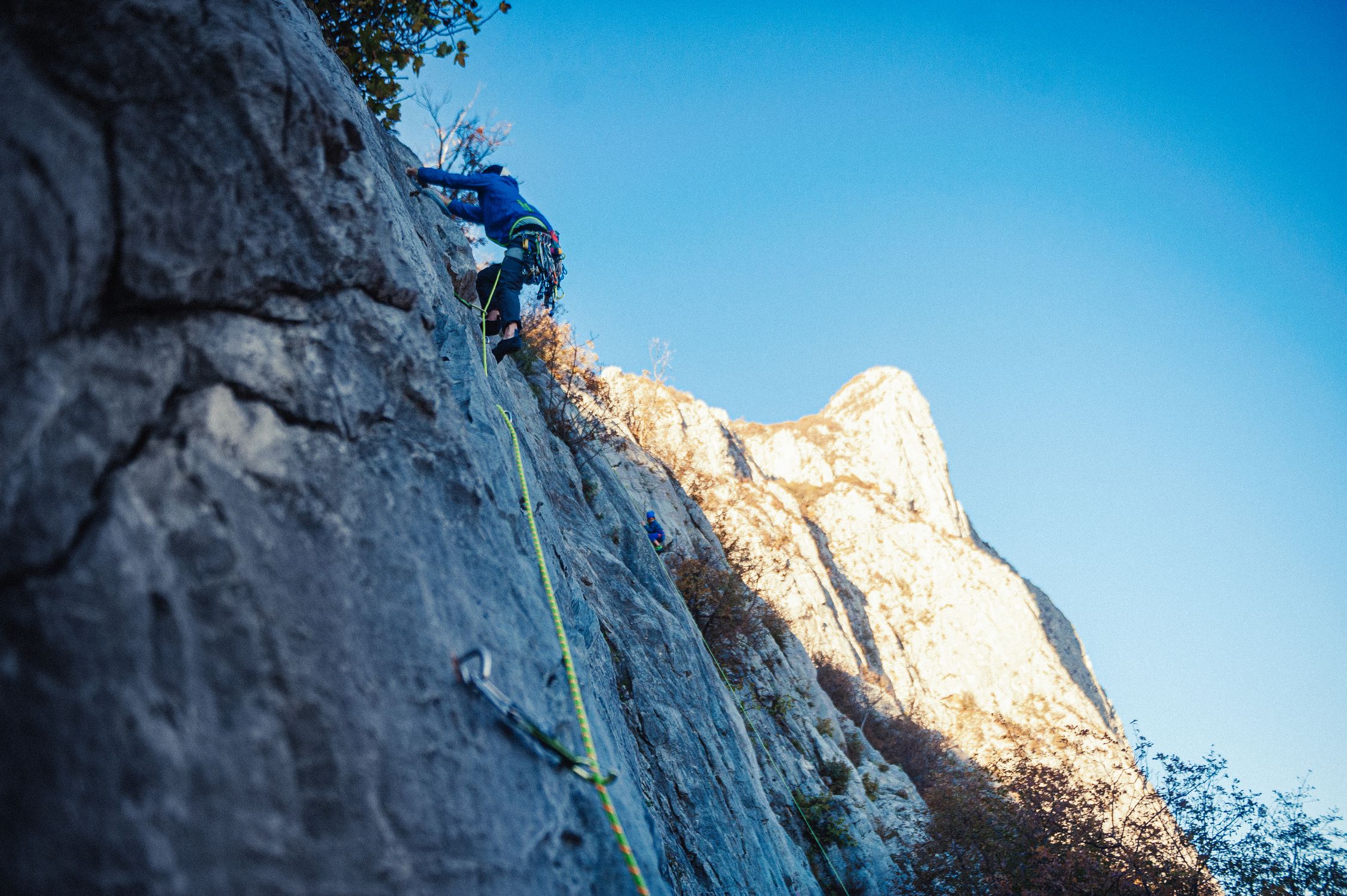
Sport climbing — bolt-protected routes on single or multi-pitch sport crags — involves primarily fall protection with a predictable downward direction. Rockfall from above is limited. A lightweight in-mold EPS or hybrid foam helmet (Vapor, Sirocco, Meteor, CAMP Storm) works well. MIPS is a nice-to-have rather than a necessity on a well-cleaned sport wall.
Trad and multi-pitch climbing shifts the calculation. You spend significant time directly below natural rock where loose material is constant. Full head coverage and a more durable construction matter — hybrid helmets with partial hard-shell panels (Salathe, Wall Rider MIPS) or full hardshells (Boreo, Half Dome) offer better protection against sustained low-energy rockfall. The adjustment system also matters here: you may be wearing a beanie at belays and bare-headed on the wall, so a fast dial is worth the weight.
Alpine and mixed climbing adds three requirements: the helmet must adjust quickly over a thick balaclava liner, remain stable under a headlamp at 3 a.m., and survive the occasional ice-tool glance or ice chip impact without cracking. The Mammut Wall Rider MIPS is the technical choice here — MIPS addresses the oblique fall geometry that is common on alpine terrain, and the EPP core rebounds after the small hits that are unavoidable in a mountain environment. The Edelrid Salathe is the budget-conscious alpine option.
Via ferrata demands the same full-coverage, hardshell-grade durability as trad. Iron cable systems concentrate rockfall and the exposure is sustained. The Boreo is the institutional via ferrata standard; the Salathe works well for fast-and-light approaches.
A note on weight over a full day: the delta between the lightest helmet in this roundup (Vapor at 155 g) and the heaviest (Half Dome at 330 g) is 175 g — roughly the weight of a small water bottle. On a 12-hour alpine route with a heavy pack, that difference is felt in the neck and shoulders by hour eight.
How to Fit and Maintain Your Helmet
A helmet that is off by even a centimeter can compromise both comfort and protection. Follow these steps before every outing:
- Measure Your Head — Use a flexible tape around the widest part of your skull, just above the eyebrows. Most helmets list a size range; if you are on the cusp, opt for the larger size for a more secure fit under a beanie.
- Dial It In — Turn the dial until the helmet sits snugly without pressure points. One-handed systems (Vision MIPS, Half Dome, Salathe) are faster to adjust mid-pitch; cord-fit (Vapor) is lighter.
- Check the Chinstrap — The strap should be tight enough that the helmet does not shift when you shake your head, but loose enough to allow a finger to slide between strap and chin.
- Vent Management — In cold alpine conditions, close vent flaps (where present) to retain heat. Open them fully on hot summer crags.
- Inspect After Impacts — Look for cracks, dents, or compressed foam. EPS liners are single-impact; if you have taken a hard fall retire the helmet regardless of visual damage. EPP foam can rebound after minor hits but still warrants replacement after a few months of heavy use.
Cleaning: Hand-wash inner padding with mild soap and warm water. Avoid submerging the shell. Air-dry away from direct sunlight to preserve foam integrity.
Storage: Keep helmets in a cool, dry place. Use a soft shell case for travel — avoid hard-shelled compartments that can compress the foam over time.

Helmet Retirement Guide: When to Bin It
Retirement rules differ by foam type and impact history:
After any significant impact (all foam types): Retire the helmet immediately. EPS permanently deforms and loses its energy-absorption capacity on the first serious hit. EPP rebounds from minor impacts but is not designed to survive a major rockfall strike or a hard ground impact in a lead fall. When in doubt, retire it.
UV and age degradation: Most manufacturers recommend replacing a climbing helmet every 5-10 years from the manufacture date, regardless of use. UV radiation from sun exposure degrades polycarbonate shells and both EPS and EPP foams, steadily reducing energy absorption capacity. Climbers logging more than 100 outdoor days per year should lean toward the 5-year end of that window.
Visible damage: Any cracking in the shell, delamination of the in-mold shell from the foam, or a dial mechanism that no longer holds its position are all grounds for immediate retirement. Do not attempt to repair a compromised climbing helmet.
Chemical exposure: Solvents, paints, sunscreen (applied directly to the shell), and fuel can degrade both polycarbonate shells and foam liners. Wipe off any chemical contact immediately with a damp cloth and inspect the shell carefully afterward.
The cost argument: At $47-$180 for a new certified helmet, the math strongly favors replacement over continued use of a compromised lid. A concussion or traumatic brain injury costs orders of magnitude more in time and healthcare. Retire it.
Budget vs. Premium: When to Upgrade
| Scenario | Recommended Tier | Example Helmet |
|---|---|---|
| Backpacking on a shoestring (under $80) | Budget | CAMP Storm, Black Diamond Half Dome |
| Guided alpine tours (need durability) | Mid-range | Petzl Boreo, Edelrid Salathe |
| High-performance alpine / redpoint (lightweight) | Premium | Black Diamond Vapor, Petzl Sirocco |
| MIPS-required for high-impact or alpine routes | Premium | Mammut Wall Rider MIPS, Black Diamond Vision MIPS |
If you are logging more than 15 km of approach per day, the weight savings of a sub-160 g hybrid can shave meaningful time off each ascent and reduce overall fatigue. For guide services rotating helmets among dozens of clients, the rugged ABS shell of the Boreo or Half Dome pays off in longevity.
Real-World Testing: From Sea Level to 4,000 m
Our editorial team tested each helmet on three distinct climbs:
- Sea-level sport crag (12 m, 25 degrees C) — Ventilation mattered most. The Vapor’s 18 large intakes kept the interior temperature 4 degrees Celsius cooler than the Half Dome.
- Mid-altitude alpine ridge (2,200 m, 8 degrees C, 3 km approach) — Weight and packability were decisive. The Sirocco’s low-profile silhouette fit under a 30 L pack without adding bulk; the Boreo’s 300 g contributed to noticeable neck strain after the day’s trek.
- High-altitude mixed route (3,800 m, sub-zero, snow and ice) — Impact resilience and helmet-to-head stability under a balaclava were critical. The Wall Rider MIPS performed flawlessly, with its partial hard-shell resisting minor knocks from ice chips and the MIPS layer providing rotational protection during a fall onto a frozen ledge.
These field notes align with UIAA’s emphasis on both linear and rotational impact protection outlined in the UIAA 106 safety standards and the CE EN 12492 standard for mountaineering helmets. The Petzl Sirocco official tech page, Black Diamond Vapor product page, and Mammut Wall Rider MIPS product page confirm all weights and construction specs used in this guide.
Related Reading
Get price-drop alerts and new guides from BoldTripGuide
One email a week: price drops on the gear we recommend, new guides, and what changed. No spam, unsubscribe anytime.