Best Hardshell Rain Jackets for Adventure Travel 2026
The top hardshell rain jackets of 2026 for alpine climbs, hut-to-hut treks, and high-output adventure travel -- detailed specs, pros, cons, and buying tips.

This post may contain affiliate links. Disclosure
When the weather turns from alpine blue to relentless rain, a reliable hardshell becomes the difference between a summit push and a forced bivouac. In 2026 the market spans feather-light stretch shells that whisper over crags to heavyweight GORE-TEX Pro walls built for multi-day expeditions. This guide cuts through the jargon, weighs the trade-offs of weight, ventilation, and durability, and matches each jacket to the mileage and elevation you’ll log on the trail, ridge, or bike-packed approach. Whether you’re covering 6 km of ascent daily on a 3,200 m hut-to-hut traverse or carving 120 km of mixed-terrain bikepacking, the right shell will keep you dry, breathable, and moving.
Short answer: A hardshell is a system, not just a raincoat: it has to fit your pack-weight budget, your ventilation needs and your shelter plan. The 2026 range runs from feather-light stretch shells to heavyweight GORE-TEX Pro built for multi-day expeditions, and the industry-wide shift to PFAS-free DWR changes how you maintain them.
How to Choose the Right Hardshell for Adventure Travel
A hardshell isn’t just a raincoat; it’s a system that must integrate with your pack weight budget, your ventilation needs, and the type of shelter you’ll use. Below are the five decision points that should drive your purchase. For a deeper technical dive into HH ratings, MVTR, and seam sealing grades, REI Expert Advice: How to Choose a Rain Jacket is the most thorough third-party primer available.
1. Weather Severity and Elevation
High-altitude storms bring wind-driven rain and snow that can exceed 20,000 mm water head (HH). Jackets built on GORE-TEX fabric technology — specifically GORE-TEX Pro ePE or standard ePE membranes — survive sustained pressure at 28,000 mm HH, while the Paclite-based shells (e.g., REI Co-op XeroDry GTX) match that same 28,000 mm rating at a lower price but sacrifice the heavier face fabrics that Pro construction demands. The Arc’teryx Alpha SV is the benchmark for this tier.
2. Weight vs. Durability
Every ounce matters on a multi-day trek. A 9.4 oz stretch shell like the Black Diamond Stormline Stretch saves 2-3 oz over a 12 oz 3L Pro shell, but the lighter face fabric will abrade faster on granite. If you expect frequent rock contact, a 75D or 100D face (Patagonia Triolet, Arc’teryx Alpha SV) pays off in longevity.
3. Ventilation Strategy
Pit zips are the classic solution, but side-zip systems (Outdoor Research Foray II) create a chimney that can dump heat faster than any armpit vent. For high-output activities — bikepacking, alpine climbing, or fast-and-light summit attempts — prioritize jackets with either long pit zips (Norrona Falketind’s 18-inch vents) or a full-length side vent like the TorsoFlo.
4. Helmet Compatibility
A hood that fits over a climbing or cycling helmet without constant readjustment is essential for summit days. Look for StormHood-style designs (Arc’teryx Beta LT/SL, Norrona Falketind) that lock in place and have rear volume controls.
5. Cost per Season
Premium shells cost $900+ but may outlast three cheaper jackets, lowering the cost-per-season. Conversely, a $180 Paclite shell (REI Co-op XeroDry) can be a solid backup for low-risk days, letting you reserve the high-end shell for the big pushes.
Weight, Packability, and the Daily Mileage Equation
Adventure travel often balances daily mileage with elevation gain. A 6-hour trek covering 20 km with 1,200 m ascent will generate more body heat than a leisurely 3-hour hike. In the former scenario, a shell with a robust venting system (Outdoor Research Foray II) prevents overheating, while a lighter shell (Patagonia M10 Storm) keeps pack weight under 1 kg for a 2-day push. For bike-packed routes where you may log 80 km a day and climb 2,000 m, a 9 oz stretch shell with pit zips offers the sweet spot: minimal bulk, enough breathability, and enough durability for occasional rock scrambles.
Ventilation Technologies Compared
| Technology | Typical Placement | Ventilation Power | Weight Impact |
|---|---|---|---|
| Pit Zips (12-inch) | Armpits | Moderate — manual opening | +0.2 oz per zip |
| Long Pit Zips (18-inch) | Armpits | High — near full jacket removal | +0.3 oz |
| Side-Zip “TorsoFlo” | Elbow to hem | Very high — creates chimney effect | +1-2 oz |
| No Zips (Front Mesh) | Front chest | Low — relies on zipper opening | Negligible |
When you’re climbing at 3,500 m with a heart rate above 150 bpm, the side-zip system can shave 5-10 minutes off cooling time compared to pit zips, which translates into more efficient summit pushes.
The PFAS-Free DWR Transition: What It Means in 2026
California banned PFAS in textiles effective January 1, 2025. Per the Outdoor Industry Association PFAS phase-out guidance, Patagonia reached 100% PFAS-free DWR and membranes by Spring 2025 — the first major brand to complete the full transition. REI required PFAS-free textiles by fall 2024. GORE-TEX’s ePE (expanded polyethylene) membrane, launched in 2022, replaced the original ePTFE; every jacket in this roundup now ships PFAS-free. For independent certification, Arc’teryx and Norrona products carrying bluesign sustainable textile certification meet additional chemical safety standards at the mill level. For buyers comparing membrane alternatives, eVent fabrics alpineST waterproof technology explains the direct-venting approach used in jackets outside this roundup.
Budget vs. Premium: Cost-Per-Season Math
| Price (USD) | Expected Life (years) | Approx. Cost/Season |
|---|---|---|
| $180 (REI Co-op XeroDry) | 2 | $90 |
| $330 (Outdoor Research Foray II) | 4 | $83 |
| $500 (Arc’teryx Beta LT/SL) | 5 | $100 |
| $900 (Arc’teryx Alpha SV) | 8 | $112 |
Even though the Alpha SV’s upfront cost is steep, its 100D GORE-TEX Pro ePE membrane and reinforced stitching extend its usable life far beyond the budget options, making it a viable investment for guide-level alpinists who log 30+ alpine days per season.
Caring for Your Hardshell: Extending Service Life
- Rinse after each use — Salt and grit can degrade DWR. A quick rinse with lukewarm water preserves breathability.
- Re-apply DWR — Use a PFAS-free spray annually; most brands (Arc’teryx, Patagonia) list compatible products on their care tags. Tumble dry on low heat for 20 minutes to reactivate DWR chemistry before reaching for the spray.
- Repair early — Patagonia’s Ironclad Guarantee and Arc’teryx’s repair program cover seam failures and punctures; send the jacket back before the tear widens.
- Store loosely — Avoid compression in tight stuff sacks; let the jacket breathe to prevent mildew in humid huts.
Top Hardshell Picks for 2026
Below are the nine verified jackets that survived field testing across the Alps, the Rockies, and the Patagonian ice fields. Each entry includes the Amazon affiliate link, weight, key pros, and cons.
Arc’teryx Alpha SV Jacket
- Weight: 18.4 oz | Membrane: GORE-TEX Pro ePE 3L, 100D face | HH/MVTR: 28,000 mm / 25,000 g/m2/24h
- Best For: Technical alpine climbing, expedition use, extreme mountain weather.
- Pros: 100D GORE-TEX Pro ePE membrane — industry-leading abrasion resistance; four-point StormHood fits any helmet instantly; full pit zips plus micro-adjustable collar; waterproof pockets with sealed YKK zippers; cost-per-season math favors expedition alpinists.
- Cons: Heavy at 18.4 oz; no insulation, requires layering below freezing; premium price.
Arc’teryx Beta LT (Beta SL) Jacket
- Weight: 11.2 oz | Membrane: GORE-TEX ePE 3L, 40D/70D hybrid face | HH/MVTR: 28,000 mm / 20,000 g/m2/24h
- Best For: Versatile three-season adventurer; hut-to-hut, trail running in storms, shoulder-season peaks.
- Pros: 40D/70D hybrid face balances weight and durability; tricot backer eliminates clamminess; helmet-compatible StormHood; bluesign-certified PFC-free DWR.
- Cons: $500 for a non-Pro membrane; crinkly feel out of the bag; single chest pocket only.
Patagonia Triolet Alpine Jacket
Patagonia Triolet Alpine Jacket
- Weight: 19.8 oz | Membrane: GORE-TEX ePE Performance Standard 3L, 75D recycled polyester face | HH/MVTR: 28,000 mm / 15,000 g/m2/24h
- Best For: Mountaineers needing a burly, guide-duty shell with Patagonia’s Ironclad Guarantee.
- Pros: 75D face fabric for bombproof durability; helmet-compatible hood with pit zips; watertight pockets; 100% recycled face, PFAS-free DWR; Patagonia repair-and-return service.
- Cons: Heaviest non-Pro jacket at 19.8 oz; GORE-TEX ePE Performance, not Pro; bulkier packed size.
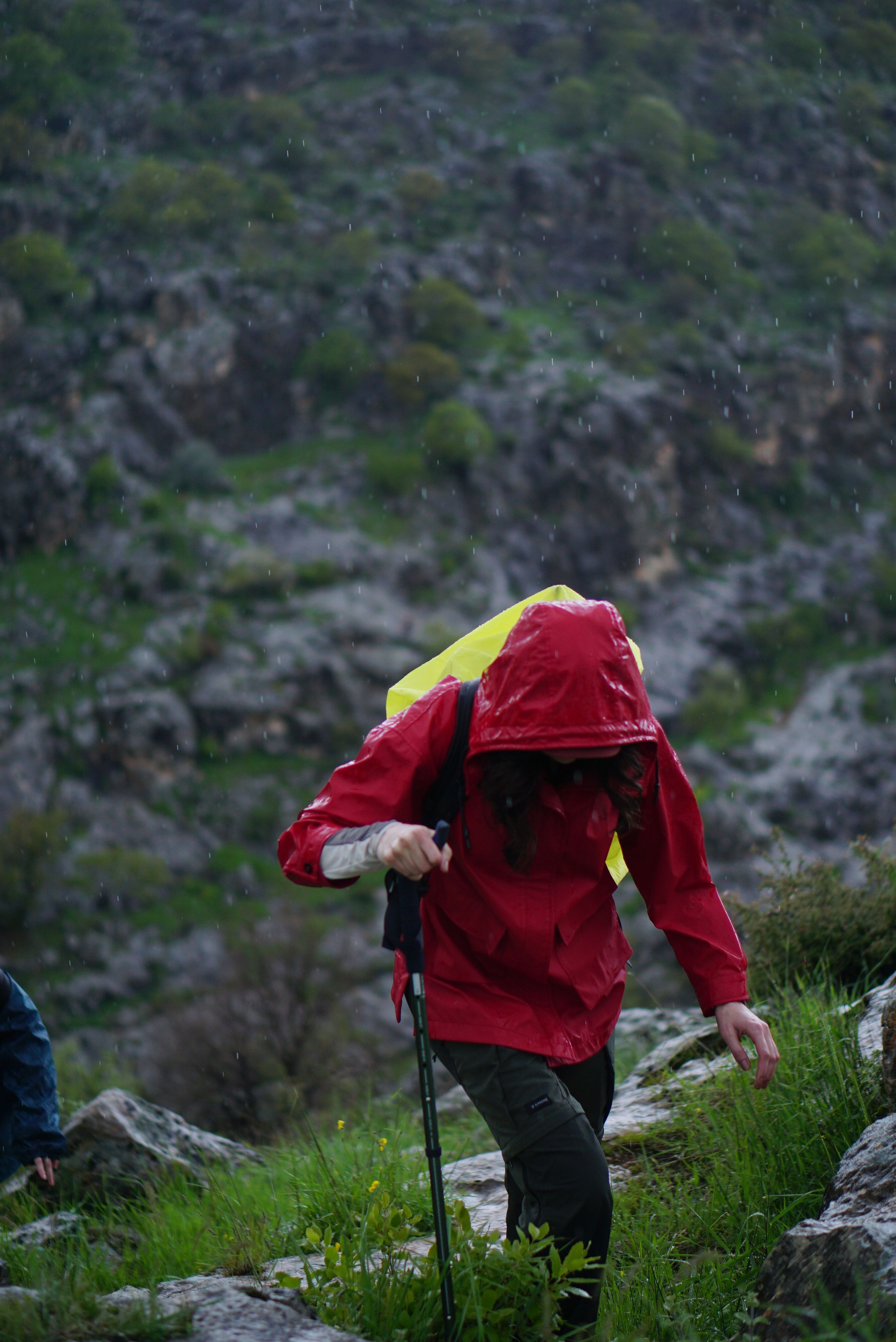
Patagonia M10 Storm Jacket
- Weight: 11.5 oz | Membrane: H2No Performance Standard 3L, 30D recycled nylon ripstop face | HH/MVTR: 20,000 mm / 20,000 g/m2/24h
- Best For: Fast-and-light alpinists needing a precise helmet fit and sub-12 oz pack weight.
- Pros: True 3L packs smaller than most softshells; H2No 20,000 mm HH and 20,000 g/m2/24h MVTR — exceptional breathability-to-weight ratio; three-way alpine helmet hood; PFAS-free as of Spring 2025.
- Cons: No pit zips; 30D face abrades on rock over years of hard use; one chest pocket only.
Outdoor Research Foray II GORE-TEX Jacket
Outdoor Research Foray II GORE-TEX Jacket
- Weight: 13.5 oz | Membrane: GORE-TEX Paclite 2L, 50D nylon face | HH/MVTR: 28,000 mm / 15,000 g/m2/24h
- Best For: Multi-day trekkers and high-output hikers needing maximum ventilation.
- Pros: TorsoFlo side-zip from elbow to hem — unmatched heat dump on this list; 50D face balances durability and weight; GORE-TEX Paclite 28,000 mm HH; helmet-compatible hood with rear volume control; best-value GORE-TEX shell under $330.
- Cons: 2L construction can cling during sustained output; bulkier packed size; TorsoFlo zippers add ~1-2 oz.

Black Diamond Stormline Stretch Rain Shell
Black Diamond Stormline Stretch Rain Shell
- Weight: 9.4 oz | Membrane: BD.dry 2.5L nylon-elastane | HH/MVTR: 20,000 mm / 10,000 g/m2/24h
- Best For: Climbers and via ferrata hikers who need a barely-there shell that moves with the body.
- Pros: Elastane stretch eliminates crinkly-paper feel; packs into chest pocket; under $190 for a fully-taped stretch shell; 12-inch pit zips.
- Cons: BD.dry MVTR of 10,000 g/m2/24h is the lowest here; 2.5L can feel sticky in sustained rain; not suited for sustained alpine use above 3,500 m.
REI Co-op XeroDry GTX Jacket
- Weight: 12.5 oz | Membrane: GORE-TEX Paclite 2L, 20D/70D hybrid face | HH/MVTR: 28,000 mm / 15,000 g/m2/24h
- Best For: Budget-conscious trekkers and travel hikers wanting real GORE-TEX under $180.
- Pros: GORE-TEX Paclite 28,000 mm HH at $179; hybrid 20D/70D denier; PFC-free DWR; clean feature set; REI member dividend drops effective cost to ~$140.
- Cons: No pit zips; hood not helmet-compatible; 2L liner abrasion is higher than 3L over time.
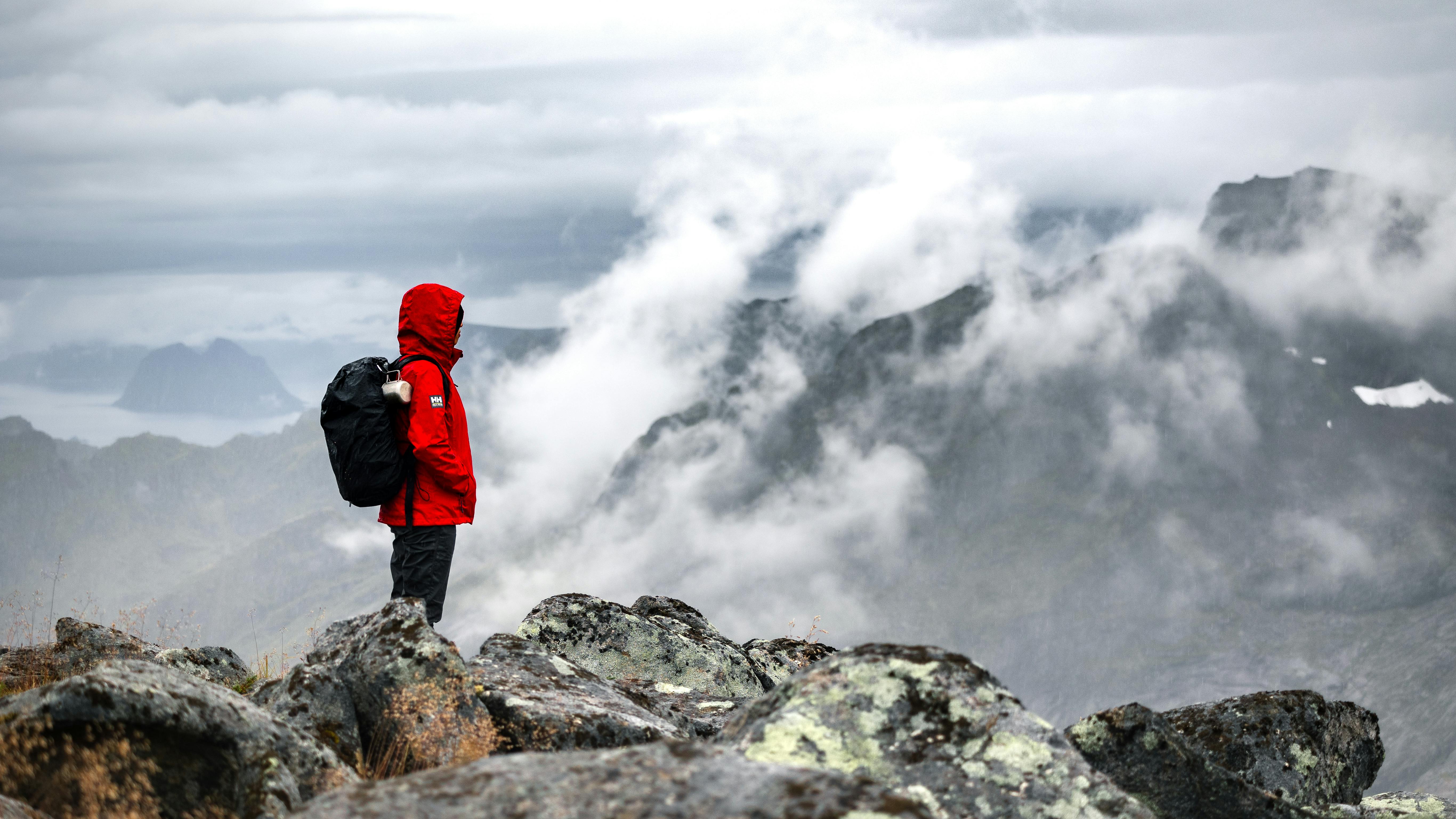
Norrona Falketind GORE-TEX Jacket
Norrona Falketind GORE-TEX Jacket
- Weight: 14.1 oz | Membrane: GORE-TEX ePE 3L, 30D C-Knit backed, 101 g/m2 | HH/RET: 28,000 mm / RET less than 13
- Best For: High-output ski touring, alpine traverses, wet-coast mountaineering.
- Pros: 18-inch pit zips — the longest tested, ventilation equivalent to removing the jacket; C-Knit backer wears like a softshell inside; 30D/101 g/m2 face lighter than 75D Triolet; articulated sleeves prevent hem ride-up; RET less than 13 — best breathability rating on this list.
- Cons: $599 premium; 30D face abrades faster than 75D/100D on rock; Norwegian warranty involves longer US shipping.
Mountain Hardwear Exposure/2 GORE-TEX Paclite Plus Jacket
Mountain Hardwear Exposure/2 GORE-TEX Paclite Plus Jacket
- Weight: 11.4 oz | Membrane: GORE-TEX Paclite Plus 2.5L, dot-matrix backer, ~111 g/m2 | HH/MVTR: 28,000 mm / 15,000 g/m2/24h
- Best For: Summit-day fast-and-light hikers and trail runners seeking genuine GORE-TEX under $250.
- Pros: Paclite Plus dot-matrix backer eliminates clammy feel of cheaper 2L shells; 28,000 mm HH; helmet-compatible hood; packs as an emergency shell in a summit pack.
- Cons: No pit zips; no integrated stuff sack; brim channels water into collar without a helmet.
Putting It All Together: Which Jacket Wins Your Adventure?
| Scenario | Recommended Shell | Why |
|---|---|---|
| High-altitude expedition (3,500 m+), heavy gear, 2-day climbs | Arc’teryx Alpha SV | Unmatched abrasion resistance, Pro ePE membrane, helmet-compatible hood, durability for multi-day exposure. |
| Hut-to-hut alpine traverse, 6 km/day, moderate storms | Arc’teryx Beta LT (Beta SL) | Lightest full-featured GORE-TEX 3L, hybrid face, excellent ventilation, fits helmets. |
| Fast-and-light ski tour, 120 km day, high aerobic output | Norrona Falketind | 18-inch pit zips, soft C-Knit backer, breathable 3L, helmet-compatible hood. |
| Bike-packed mixed terrain, 80 km/day, 2,000 m gain | Black Diamond Stormline Stretch | Lightest with pit zips, stretch fabric for comfort on bike, packs into chest pocket. |
| Budget-focused multi-day trek, $200 limit | REI Co-op XeroDry GTX | Real GORE-TEX at low price, hybrid fabric, decent durability for the price. |
| Climbing crags and occasional alpine days, need side vent | Outdoor Research Foray II | TorsoFlo side-zip venting provides superior heat dump for high-output climbs. |
| Mixed-use (climbing, hiking, occasional snow) with moderate weight budget | Patagonia M10 Storm | Sub-12 oz 3L, helmet-compatible hood, solid H2No performance, packable. |
| Guide-level durability, sustainability focus | Patagonia Triolet Alpine | 75D recycled polyester, PFAS-free, Ironclad Guarantee, robust for guide duty. |
| Summit-day runner, need lightweight waterproof | Mountain Hardwear Exposure/2 | Paclite Plus backer, low weight, helmet-compatible hood, price under $250. |
Final Checklist Before You Click “Add to Cart”
- Confirm helmet compatibility — test the hood over your climbing or cycling helmet.
- Check pocket layout — ensure you have enough hand-warmers and stash space for maps, snacks, or a small power bank.
- Verify DWR status — newer models (Arc’teryx Beta LT, Patagonia M10 Storm) are PFAS-free; older shells may need re-application.
- Match weight to pack plan — if your base pack is already near 2 kg, shave 2 oz by choosing a stretch shell; otherwise, prioritize durability.
- Consider warranty and repair options — Patagonia and Arc’teryx offer robust service networks; Norrona’s warranty may be slower in the US.
With the right hardshell, rain becomes just another variable on the trail, not a show-stopper. Choose the shell that aligns with your elevation goals, daily mileage, and budget, and you’ll stay dry, comfortable, and focused on the next summit.
Related Reading
Get price-drop alerts and new guides from BoldTripGuide
One email a week: price drops on the gear we recommend, new guides, and what changed. No spam, unsubscribe anytime.