Best Headlamps for Night Hiking and Caving 2026
Expert-tested picks for the best headlamps in 2026 for night hiking, caving, trail running, and backcountry camping adventures.
This post may contain affiliate links. Disclosure
A headlamp is one of the few pieces of adventure gear that crosses every discipline. For more, see our guide to best headlamps for caving and night hiking. Hikers, cavers, trail runners, climbers, kayakers, and backcountry skiers all depend on the same fundamental tool — a reliable light strapped to their head that leaves both hands free. But the requirements vary dramatically. A headlamp that is perfect for reading in a tent would be dangerously inadequate in a cave, and a blazing 1,400-lumen spelunking light is overkill for a campsite stroll.
This guide breaks down the best headlamps of 2026 by use case, with real-world testing insights and practical recommendations so you buy the right light for your specific adventures.
What Makes a Great Headlamp
Before diving into specific models, understand the specifications that matter:
Lumens: A measure of total light output. More lumens means a brighter light, but lumens alone do not tell the whole story — beam pattern, color temperature, and runtime matter just as much.
Beam distance: How far the light reaches before it drops below 0.25 lux (roughly the brightness of a full moon). This matters more than lumens for night hiking, where you need to see the trail 50–100 meters ahead.
Beam pattern: Flood beams illuminate a wide area up close (good for camp tasks and close-range hiking). Spot beams project a focused cone of light far ahead (good for navigation and route-finding). The best headlamps offer both.
Runtime: How long the light lasts on a single charge or set of batteries. Manufacturers typically list runtime at the lowest setting, which can be misleading. Always check runtime at the brightness level you actually plan to use.
Weight: Ranges from 30 grams for ultralight models to 300+ grams for high-powered caving lights. For any activity where you are moving for hours, lighter is better.
Water resistance: Rated on the IPX scale. IPX4 (splash-proof) is the minimum for outdoor use. IPX7 (submersible to 1 meter for 30 minutes) is preferred for rain, caving, and water sports.
Power source: Rechargeable (USB-C or micro-USB) vs. replaceable batteries (AAA or CR123A). Rechargeable is more convenient and cost-effective for regular use. Replaceable batteries are better for extended trips where charging is unavailable.
Best Overall: Black Diamond Spot 400
The Black Diamond Spot 400 is the headlamp we recommend to the widest range of adventure travelers. It balances brightness, weight, battery life, and features in a package that handles virtually any situation.
Key Specs:
- Max output: 400 lumens
- Beam distance: 100 meters (high), 8 meters (low)
- Weight: 72 grams
- Runtime: 200 hours (low), 2.5 hours (max)
- Power: 3 AAA batteries (rechargeable battery pack available separately)
- Water resistance: IPX8 (submersible to 1.1 meters)
- Beam modes: Spot, flood, red night-vision, strobe
Why it wins: The Spot 400 provides everything most adventurers need without compromise. 400 lumens on high is bright enough for night hiking on technical terrain, while the flood beam handles camp tasks and map reading. The red LED preserves night vision and does not disturb tent mates. IPX8 water resistance means it handles submersion, not just rain.
At 72 grams with batteries, it is light enough for any activity. The three-AAA power system means you can carry spare batteries that are available worldwide — important for international adventure travel.
Best for: Night hiking, backpacking, camping, general-purpose adventure travel.
Best Ultralight: Nitecore NU25 UL
For ultralight backpackers and thru-hikers who obsess over every gram, the Nitecore NU25 UL is the new benchmark.
Key Specs:
- Max output: 400 lumens
- Weight: 28 grams (headlamp only, without headband)
- Runtime: 58 hours (low), 30 minutes (max)
- Power: USB-C rechargeable (built-in 650 mAh battery)
- Water resistance: IP66
- Beam modes: White (multiple levels), red, high-CRI auxiliary
Why it wins: At 28 grams, the NU25 UL weighs less than a single AAA battery. Most ultralight hikers pair it with a lightweight cord headband (like the NiteCore or S2S option) instead of the stock headband, bringing total weight to under 35 grams. Despite its featherweight build, it produces 400 lumens — identical output to headlamps three times its weight.
The high-CRI auxiliary LED deserves special mention. High-CRI (Color Rendering Index) light renders colors more accurately than standard LEDs, which makes it easier to read trail markers, identify plants, and assess terrain at night. USB-C charging means fast top-ups from any modern power bank.
Best for: Thru-hiking, ultralight backpacking, trail running, fastpacking. Pairs well with the weight-conscious approach in our ultralight backpacking guide.
Limitations: Short runtime on max output. The built-in battery cannot be swapped, so carry a power bank for multi-day trips without charging.
Best for Caving: Fenix HM65R
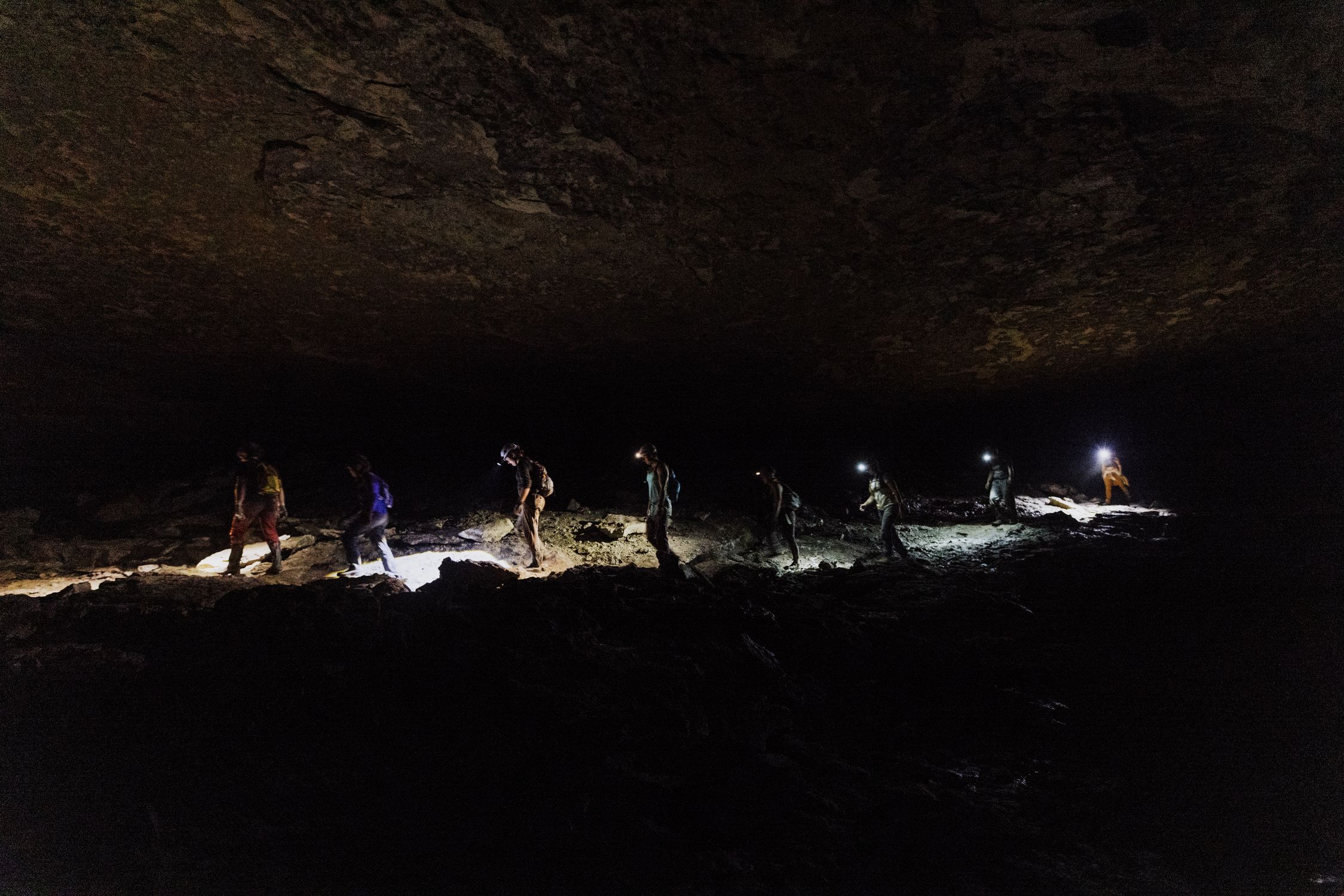
Caving demands more from a headlamp than any other activity. The light operates in total darkness, must handle water immersion, and needs to illuminate both close-range passage navigation and distant chamber exploration. The Fenix HM65R delivers.
Key Specs:
- Max output: 1,400 lumens (combined flood + spot)
- Beam distance: 163 meters
- Weight: 97 grams (without headband)
- Runtime: 300 hours (low), 2.3 hours (turbo)
- Power: USB-C rechargeable (3500 mAh 18650 battery, replaceable)
- Water resistance: IP68 (submersible to 2 meters)
- Beam modes: Independently operated floodlight and spotlight
Why it wins: The dual-beam system is the standout feature. The floodlight and spotlight operate independently, so you can run flood only (for close passage work), spot only (for scanning distant formations), or combine both for 1,400 lumens of total output. This flexibility is essential in caves where lighting needs change constantly.
The replaceable 18650 battery is critical for extended caving trips — swap in a fresh cell without returning to the surface. IP68 submersion resistance handles the inevitable dunking in underground streams and pools.
Best for: Caving, spelunking, mine exploration, and any activity in total darkness.
Limitations: Heavier than general-purpose headlamps. The rear battery pack requires a stable headband fit.
Best for Trail Running: BioLite HeadLamp 800
Trail running at night requires a specific combination: enough brightness to read terrain at speed, a secure fit that does not bounce, and a beam pattern that illuminates the trail surface without blinding you with close-range glare.
Key Specs:
- Max output: 800 lumens
- Beam distance: 120 meters
- Weight: 150 grams (including band and rear battery)
- Runtime: 150 hours (low), 3 hours (high)
- Power: USB-C rechargeable (rear-mounted battery)
- Water resistance: IPX4
- Beam modes: Spot, flood, combined, red, strobe
Why it wins: The moisture-wicking headband is designed for running — it stays put during bouncy descents and manages sweat effectively. The rear-mounted battery balances the weight distribution, reducing the nodding sensation that front-heavy headlamps create during running.
800 lumens on the combined spot/flood setting illuminates both the immediate trail surface (critical for foot placement on technical terrain) and the trail ahead (critical for route-finding and anticipating obstacles). The BioLite app allows custom brightness programming to optimize battery life for known course distances.
Best for: Night trail running, fast hiking, and any high-movement activity where bounce and weight distribution matter.
Best Budget: Petzl Tikkina
Not every adventure requires a premium headlamp. The Petzl Tikkina delivers Petzl’s build quality and reliability at an entry-level price.
Key Specs:
- Max output: 300 lumens
- Beam distance: 65 meters
- Weight: 81 grams
- Runtime: 120 hours (low), 2 hours (max)
- Power: 3 AAA batteries
- Water resistance: IPX4
- Beam modes: Three white brightness levels
Why it wins: The Tikkina costs under $25 and does the basics well. 300 lumens is adequate for established-trail hiking, campsite use, and emergency backup lighting. Petzl’s ergonomic headband design is comfortable for extended wear, and the simple single-button interface works with gloves.
Best for: Casual hikers, campers, travelers who need a reliable backup headlamp, and anyone building their adventure gear kit on a budget.
Limitations: No red LED mode (preserving night vision requires the lowest white setting). No rechargeable option. Limited beam distance for technical navigation.
Best for Winter and Cold Weather: Petzl Actik Core
Cold weather degrades battery performance dramatically — lithium-ion batteries can lose 30–50% of their capacity at sub-zero temperatures. The Petzl Actik Core handles cold better than most.
Key Specs:
- Max output: 600 lumens
- Beam distance: 100 meters
- Weight: 88 grams
- Runtime: 160 hours (low, AAA), 2.5 hours (max, Core battery)
- Power: Hybrid — Core rechargeable battery OR 3 AAA batteries
- Water resistance: IPX4
- Beam modes: Spot, flood, mixed, red, strobe
Why it wins: The hybrid power system is the critical feature for cold-weather use. The CORE rechargeable battery provides convenience for normal conditions, but when temperatures plummet, swap in lithium AAA batteries (which tolerate cold far better than rechargeable lithium-ion). Carrying both power options means you always have a backup.
600 lumens on high is bright enough for night skiing, winter mountaineering, and long-distance winter hiking. The reflective headband improves visibility to others in dark, snowy conditions.
Best for: Winter hiking, ski touring, snowshoeing, ice climbing. Ideal for the conditions described in our ski touring guide.
Lumen Guide: How Much Light Do You Actually Need?
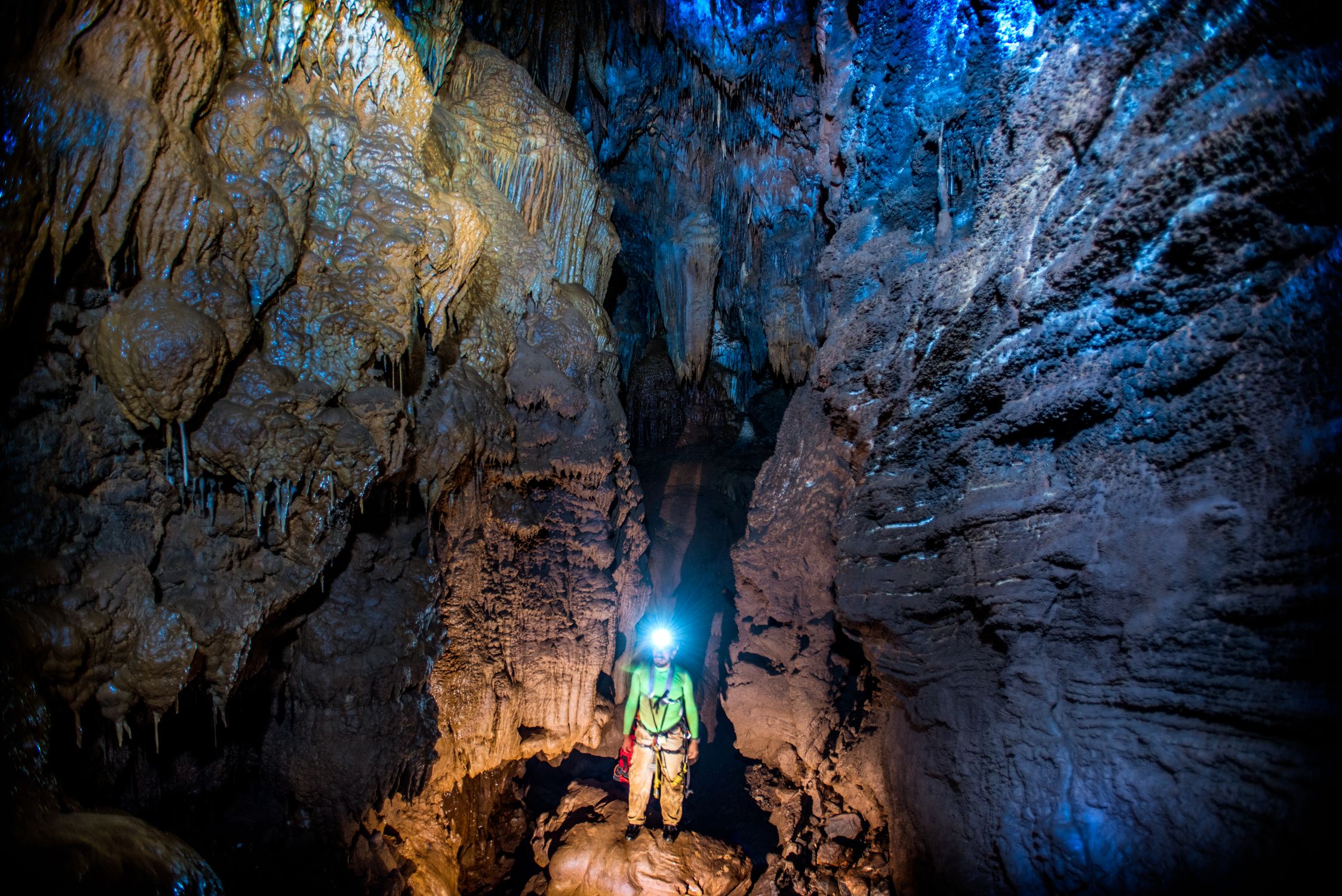
One of the most common mistakes is buying more lumens than you need. Higher output means shorter battery life, and excessively bright light in close quarters (tents, caves, cooking areas) is blinding and uncomfortable.
50–100 lumens: Camp chores, tent reading, short walks to the bathroom. This is where you will run your headlamp 80% of the time.
150–250 lumens: Established trail hiking at a moderate pace. Adequate for well-maintained trails with clear tread. Most backpackers are well-served in this range.
300–500 lumens: Technical trail hiking, trail running at moderate speed, scrambling on rocky terrain. This range provides enough light to read terrain details (loose rocks, roots, drops) at a reasonable distance.
600–1,000 lumens: Fast trail running, night mountain biking, route-finding in complex terrain, caving in large passages. You need this level when moving at speed or navigating in total darkness.
1,000+ lumens: Serious caving (large chambers), night mountain biking on technical descents, search and rescue. Specialized use cases where maximum illumination is critical.
For most adventure travelers, a headlamp with a maximum output of 300–500 lumens and good low-mode runtime (100+ hours) covers 95% of scenarios.
Headlamp Features That Matter (and Ones That Don’t)
Worth Paying For
Red LED mode: Preserves night vision and does not disturb others in shared sleeping quarters. Essential for astronomers, photographers shooting long exposures, and anyone camping in groups.
Lock mode: Prevents the headlamp from turning on accidentally in your pack. A headlamp that runs for 12 hours inside your backpack is a dead headlamp when you need it.
USB-C charging: Faster and more universal than micro-USB. Compatible with the same cables as most modern phones and power banks.
Adjustable beam angle: Tilting the light down toward the trail (rather than straight ahead) reduces eye strain and illuminates the surface where you need to place your feet.
Nice to Have
Reactive lighting (auto-dimming): Sensors adjust brightness based on ambient light and proximity. Useful but can be unpredictable — the light dims when you look at your map (which is close) and brightens when you look up (which is far). Some find this helpful; others find it frustrating.
Bluetooth app control: Allows custom brightness programming and firmware updates. Useful for tech-savvy users, unnecessary for everyone else.
Not Worth the Premium
Gesture control: Wave your hand to change modes. Sounds cool, activates accidentally, drains battery from the sensor.
Built-in whistle: Just carry a regular whistle on your pack strap.
Battery Strategy for Multi-Day Adventures
For Trips Under 3 Days
Charge your rechargeable headlamp fully before departure. Use the lowest adequate brightness setting. A 300-lumen headlamp at its lowest setting (20–30 lumens) runs for 100+ hours — far more than a long weekend of trail time.
For Trips of 3–7 Days
Carry a small power bank (5,000–10,000 mAh) and recharge your headlamp as needed. A 10,000 mAh bank recharges most headlamp batteries 8–12 times.
For Trips Over 7 Days (No Charging Available)
Use a headlamp with replaceable batteries and carry spare lithium AAA or 18650 cells. Lithium batteries are lighter, last longer, and perform better in cold than alkaline. Pack spares in a waterproof bag.
For Caving
Always carry at least three independent light sources when caving. Primary headlamp, backup headlamp, and an emergency light (small flashlight or glow stick). Running out of light underground is one of the most dangerous situations a caver can face.
Care and Maintenance
Clean contacts regularly. Battery contacts corrode over time, especially in humid environments. Wipe them with a dry cloth or pencil eraser every few weeks.
Remove batteries for storage. Batteries left in a headlamp for months can leak and corrode the contacts. Remove them if you will not use the headlamp for more than a few weeks.
Test before every trip. Turn on every mode and verify brightness. Check the headband for wear. Replace O-rings if applicable.
Dry after use. If your headlamp got wet, remove the battery cover and let everything air dry thoroughly before reassembly.
For complete gear maintenance and packing strategies, our adventure travel gear guide covers care practices for all your essential equipment.
Quick Recommendation Summary
| Use Case | Recommendation | Key Strength |
|---|---|---|
| General adventure travel | Black Diamond Spot 400 | Best all-around balance |
| Ultralight hiking | Nitecore NU25 UL | 28 grams, incredible power-to-weight |
| Caving and spelunking | Fenix HM65R | 1,400 lumens, dual independent beams |
| Trail running | BioLite HeadLamp 800 | Anti-bounce fit, balanced weight |
| Budget | Petzl Tikkina | Reliable basics under $25 |
| Cold weather | Petzl Actik Core | Hybrid battery system |
Final Thoughts
A headlamp is one of the few pieces of gear that should be in your pack on every adventure, regardless of whether you plan to use it. Even day hikers get caught out after dark. Even tropical travelers encounter power outages. Even road trippers need to change a tire at midnight.
Buy the best headlamp you can afford for your primary activity, test it thoroughly before you need it, and always carry spare power. The few ounces of weight and the $30–100 of investment buy you something invaluable: the ability to keep moving, keep working, and keep safe when the light runs out.
Get the best BoldTripGuide tips in your inbox
Weekly guides, deals, and insider tips. No spam, unsubscribe anytime.