Best Hiking Gaiters for Trail Running & Backpacking 2026
The top hiking gaiters tested for trail running, backpacking, and winter conditions in 2026. Verified picks from Kahtoola, Outdoor Research, Black Diamond, and more.

This post may contain affiliate links. Disclosure
Most hikers don’t think about gaiters until they’re shaking gravel out of a shoe at mile 14, or post-holing through April slush with soggy socks. Then they think about gaiters constantly. The right pair keeps debris out on dry singletrack, sheds mud on wet bushwhacking routes, and blocks drifting snow on alpine approaches — all without adding meaningful weight or bulk to your kit. The wrong pair blisters your calf, blows out its instep strap at altitude, or simply doesn’t stay on. This guide covers five verified picks across the spectrum from ultralight ankle gaiters for fast-and-light missions to serious full-height GORE-TEX shells for mountaineering. We also include a quick decision framework so you can skip straight to the style that fits your terrain.
Short answer: Choose gaiter height by the problem you are solving. Low ankle gaiters like the Kahtoola INSTAgaiter Low stop trail grit for almost no weight; mid-height models handle mud and shallow snow on fast hikes; full-height Gore-Tex gaiters such as the Outdoor Research Crocodile are built for winter travel and mountaineering.
Do You Actually Need Gaiters? A Quick Decision Tree
Before spending money, it helps to identify which problem you’re trying to solve.
Trail running on dry singletrack with rocky or sandy sections? A lightweight ankle gaiter is worth the 1.5 oz. Debris in shoes is a blister factory, and low gaiters solve it without any perceptible weight penalty.
Multi-day backpacking with a loaded pack on brushy or muddy trails? A mid-height gaiter adds meaningful protection for wet vegetation and light stream crossings without the bulk of a full mountaineering gaiter.
Winter hiking, snowshoeing, or alpine scrambling where snow can pack into boot tops? A full-height GORE-TEX gaiter is the right call. No mid or low gaiter will keep your shins dry when you’re stepping through a two-foot crust.
Hot, dry desert day hiking? You can skip gaiters entirely, or grab the lightest spandex pair you can find as a debris shield.
One more note: gaiters require either hook-and-loop attachment points on your boot heel (most modern trail runners have a “gaiter trap” built in) or a lace hook and instep strap. Confirm your footwear has compatibility before buying — the brief is in each product entry below.
 Photo by Bailey Dill on Pexels
1. Outdoor Research Crocodile Gore-TEX Gaiters — Best Full-Height for Winter & Mountaineering

Outdoor Research Crocodile Gore-TEX Gaiters on Amazon
ASIN: B0D6SS871C | Rating: 4.5 stars | Price: ~$130
Verdict: The Crocodile has been the benchmark full-height gaiter for serious alpine users for decades, and the updated Gore-TEX version earns that reputation in every condition that matters.
The current Crocodile uses ePE Gore-TEX 3L fabric — three-layer construction that is fully waterproof, windproof, and meaningfully more breathable than older PVC-coated gaiters at the same price point. The 420D nylon lower panels resist crampon abrasion and sharp ice edges. The top closure is a dual-buckle cam-lock that cinches down hard on insulated pants without requiring gloves-off fumbling. Instep strap is replaceable, a detail that matters after a hard season of use.
At 7.5 oz per pair, these are not a lightweight choice. They are a mountaineering tool. They seal out wet snow and wind-driven slush completely, and the Cordura base panels shrug off the kind of post-holing punishment that destroys cheap nylon in a single season.
Who it’s for: Anyone heading into genuine winter alpine terrain — snowshoers, ski tourers, mountaineers, and thru-hikers crossing high-elevation snowfields in spring. Not the right pick for warm-weather trail running or dry desert hiking.
Pros: Full GORE-TEX waterproofing, crampon-rated lower panels, replaceable instep strap, compatible with all boot sizes including plastic mountaineering boots.
Cons: Heavy for the weight-conscious backpacker, overkill in dry summer conditions, runs warm in high-output activities.
Boot compatibility: Lace hook + instep strap + upper buckle. Works with any hiking boot, mountaineering boot, or trail runner — no dedicated gaiter trap needed.
2. Kahtoola RENAgaiter Mid — Best Mid-Height for Fast Hiking & Backpacking
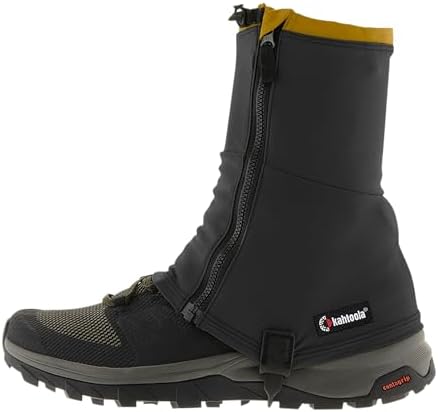
Kahtoola RENAgaiter Mid on Amazon
ASIN: B09SVMYH64 | Rating: 4.4 stars | Price: ~$66
Verdict: The RENAgaiter Mid is the crossover pick that does most things well without committing to the weight or bulk of a full mountaineering gaiter. If you own one pair of gaiters, it should probably be this one.
Kahtoola makes the RENAgaiter from 90% stretch-woven nylon and 10% polyurethane — a blend that delivers four-way stretch, genuine abrasion resistance, and a water-resistant DWR finish. It is not waterproof in the way a GORE-TEX gaiter is waterproof, but the DWR coating sheds rain and wet brush effectively enough for most three-season conditions. In sustained downpours, moisture will eventually soak through; in everything else it performs.
The 9-inch height hits a useful sweet spot: high enough to keep debris out of low-cut shoes and mid-cut boots, low enough to breathe well and not overheat during fast hiking. The YKK Vislon zipper — asymmetrical to reduce pressure on the top of the foot — opens easily with cold hands. The DuraLink instep strap is made from TPU rather than nylon webbing, which means it resists fraying against rocky terrain. Kahtoola backs the instep strap with a 1,000-mile warranty.
At 4.1 oz for the large/XL size, the RENAgaiter Mid adds almost nothing to pack weight, and it compresses flat into any hip-belt pocket.
Who it’s for: Three-season backpackers, fast-packers, and day hikers who encounter variable terrain — muddy singletrack, brushy off-trail routes, rocky approaches — without committing to full mountaineering conditions.
Pros: Four-way stretch for unrestricted movement, DuraLink instep strap with 1,000-mile warranty, breathable enough for summer use, excellent packability.
Cons: Not fully waterproof, won’t hold up against deep snow infiltration the way a full-height gaiter will.
Boot compatibility: Side YKK zipper + instep strap. Works with trail runners and hiking boots. A gaiter trap makes attachment cleaner but is not required.
 Photo by Saikat Ghosh on Pexels
3. Kahtoola INSTAgaiter Mid — Best for Trail Running & Ultralight Missions

Kahtoola INSTAgaiter Mid on Amazon
ASIN: B07MZCGRS2 | Rating: 4.3 stars | Price: ~$54
Verdict: The INSTAgaiter is the lightest purpose-built mid-height gaiter you’ll find for trail running and ultralight backpacking. At 2.7 oz per pair, it registers as nothing on the scale.
The fabric is an 84% stretch-woven nylon / 16% polyurethane blend — slightly lighter and more compressible than the RENAgaiter’s material, with the same DWR finish and the same asymmetrical YKK Vislon zipper design. The difference between the two Kahtoola options is mostly weight and stretch priority: the INSTAgaiter is tuned for athletic movement and running stride, while the RENAgaiter leans toward durability on multi-day loads.
The DuraLink instep strap carries the same 1,000-mile warranty as the rest of the Kahtoola lineup. Attachment to most trail runners with gaiter traps is seamless — the hook catches the velcro, the strap runs under the midsole, and the side zip closes in under five seconds.
For thru-hikers and trail runners who want debris protection without ever noticing they’re wearing gaiters, the INSTAgaiter is the answer.
Who it’s for: Trail runners, ultralight thru-hikers, and fastpackers on dry-to-damp terrain where debris and low brush are the primary hazards.
Pros: Among the lightest mid-height gaiters available, excellent athletic mobility, Kahtoola’s well-regarded instep strap system, straightforward gaiter-trap installation.
Cons: Less abrasion-resistant than the RENAgaiter, not appropriate for serious snow or sustained wet conditions.
Boot compatibility: Instep strap + lace hook + upper drawcord. Best with shoes that have a built-in gaiter trap for velcro attachment.
4. Kahtoola INSTAgaiter Low — Best Ankle Gaiter for Maximum Weight Savings
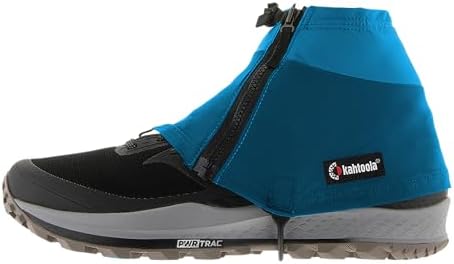
Kahtoola INSTAgaiter Low on Amazon
ASIN: B07MZDKFKQ | Rating: 4.4 stars | Price: ~$44
Verdict: When debris is the only thing you’re fighting — no mud, no snow, no bushwhacking — the INSTAgaiter Low is all you need. At 5.5 inches tall, it seals off the ankle gap without covering the calf at all.
The material and construction mirror the INSTAgaiter Mid: same stretch nylon/PU blend, same DuraLink instep strap, same asymmetrical zipper. The difference is 3.5 fewer inches of coverage. That shaves weight and eliminates any risk of heat buildup or calf constriction, which matters on hot summer races or desert trails where you just want to keep sand and small rocks out of your shoes.
The Low version is the standard choice for most competitive trail runners and the go-to recommendation for thru-hikers covering high-desert terrain on routes like the Pacific Crest Trail’s Southern California section or the Arizona Trail.
Who it’s for: Trail runners and desert hikers who need debris protection and nothing else. Not appropriate for snow, mud, or sustained wet brush.
Pros: Very low profile, no calf coverage means no heat retention, DuraLink instep strap, easy installation with gaiter-trap shoes.
Cons: Provides no protection above the ankle, not suited for wet or snowy conditions.
Boot compatibility: Instep strap + lace hook. Gaiter trap recommended.
5. Black Diamond Apex Gaiters — Best Mid-Range Full-Height Option

Black Diamond Apex Gaiters on Amazon
ASIN: B0148WSO6M | Rating: 4.2 stars | Price: ~$80
Verdict: The Black Diamond Apex sits between a lightweight trail gaiter and the full mountaineering Crocodile — waterproof enough for serious winter use, lighter than an expedition gaiter, priced under most GORE-TEX competitors.
The Apex uses a three-layer BD.dry waterproof membrane with 840D nylon lower panels for abrasion resistance. The neoprene bootstrap is coated for durability against crampon and ski-edge contact, making it a solid option for scrambling, snowshoeing, and ski touring where you need reliable weather sealing without paying expedition-gaiter prices.
The hook-and-loop front closure and webbing buckle upper are straightforward and glove-friendly. The one meaningful caveat: the upper calf cinch can feel restrictive on larger calves, and sizing runs slightly narrow — reviewers consistently recommend going up a size if you’re between sizes.
At under $80, the Apex delivers genuine waterproof protection and reinforced lower construction at a price point that makes it accessible as a first full-height gaiter.
Who it’s for: Hikers stepping up to winter terrain, ski tourers on groomed backcountry routes, and anyone who needs waterproof full-height protection without spending Crocodile prices.
Pros: Waterproof BD.dry membrane, reinforced neoprene bootstrap, solid value under $80, compatible with crampons.
Cons: Upper calf fit can be tight on larger legs — size up if in doubt. Not as breathable as GORE-TEX options at this height.
Boot compatibility: Lace hook + instep strap + upper buckle. Standard boot compatibility.
 Photo by Yaroslav Shuraev on Pexels
How to Choose: Gaiter Style by Activity
Here is the practical breakdown by use case:
Trail running (dry/desert terrain): INSTAgaiter Low. Under $45, no calf coverage, debris problem solved.
Trail running (wet/muddy terrain or races with varied surfaces): INSTAgaiter Mid. The extra 3.5 inches of coverage handles wet brush and mud splatter.
Three-season backpacking (mixed terrain): RENAgaiter Mid. The DWR finish handles most wet conditions, the weight is negligible, the durability is serious.
Fastpacking or thru-hiking: INSTAgaiter Mid or RENAgaiter Mid depending on how hard you are on gear. RENAgaiter if you’re covering rough off-trail miles with a 25+ lb pack.
Winter hiking, snowshoeing, ski touring: Black Diamond Apex for moderate winter use, OR Crocodile for serious alpine conditions or anything involving crampons.
Mountaineering or expedition travel: OR Crocodile. No comparison.
One buying tip that saves money: confirm whether your trail runners already have a built-in gaiter trap (the velcro patch on the heel). If they do, any gaiter with a hook attachment system will work cleanly. If they don’t, you’ll need to add your own velcro patch or use a gaiter with a wrap-around instep strap only — which is less secure for running.
For more on building a complete fast-and-light setup, see our trail running training plan for adventure travelers and the fastpacking guide combining running and camping.
Caring for Your Gaiters
GORE-TEX and DWR-coated gaiters need occasional maintenance to keep performing. When DWR wears down, water stops beading and starts soaking in — the membrane still works, but breathability suffers. The fix is simple: wash the gaiter according to the manufacturer’s instructions (usually cool machine wash, no fabric softener), then tumble dry on low heat. The heat reactivates the DWR finish and restores water beading. Nikwax Tech Wash or a similar non-detergent cleaner is the right choice for regular washing.
Instep straps take the most abuse. Inspect them regularly — particularly after rocky terrain use — and replace them before they fail mid-trip. Kahtoola’s DuraLink straps can be purchased as replacements directly from the brand.
Final Picks at a Glance
| Gaiter | Style | Weight | Waterproof | Best For |
|---|---|---|---|---|
| OR Crocodile Gore-TEX | Full-height | 7.5 oz | Yes (Gore-TEX) | Mountaineering, winter |
| Kahtoola RENAgaiter Mid | Mid-height | 4.1 oz | DWR only | Three-season backpacking |
| Kahtoola INSTAgaiter Mid | Mid-height | 2.7 oz | DWR only | Trail running, fastpacking |
| Kahtoola INSTAgaiter Low | Ankle | ~1.8 oz | DWR only | Desert running, dry trails |
| Black Diamond Apex | Full-height | 4.6 oz | Yes (BD.dry) | Winter day hiking, ski touring |
For more multi-day trail planning, see our guide to the best multi-day backpacking trails in North America and the complete thru-hike planning guide.
Related Reading
Get price-drop alerts and new guides from BoldTripGuide
One email a week: price drops on the gear we recommend, new guides, and what changed. No spam, unsubscribe anytime.