Best Mountaineering Axes for Classic Routes in 2026
Explore the top mountaineering axes for classic glacier and couloir routes in 2026. Detailed specs, pros, cons, and expert advice for alpine travelers.

This post may contain affiliate links. Disclosure
The alpine world is buzzing this season. Classic glacier traverses from the icy walls of Mont Blanc to the steep couloirs of the Cascades demand an axe that balances swing weight, self-arrest reliability, and day-long comfort. In 2026 the market offers everything from feather-light skimo tools to robust walking-length steel heads, each engineered to survive the grind of multi-day ascents. Below we break down the six most trusted axes for those timeless routes, explain how length and weight affect performance, and give you the safety data that turns a good purchase into a life-saving decision. Strap on your crampons—let’s get into the gear that will keep you upright when the slope gets steep.
Short answer: For classic glacier and couloir routes an axe is judged on three things: swing weight, self-arrest reliability, and comfort across a full day of walking. Length should match your height and the terrain angle, while the UIAA Type 1 versus Type 2 rating decides whether the shaft is certified for anchor and belay loads.
Top Picks for Classic Alpine Routes
Below is the curated lineup, ordered by overall suitability for classic glacier and mixed-terrain routes. Each entry includes the exact Amazon affiliate link (tagged boldtripguide-20), weight, length options, and a quick-fire pros/cons rundown.
Petzl Summit EVO — 59 cm Classic Mountaineering Ice Axe
- Weight & Length: 420 g at 59 cm (also 52 cm and 66 cm)
- Construction: Hydroformed 7075 aluminum shaft, hot-forged stainless steel toothed pick with 3 mm tip, CE/UIAA/UKCA certified
- Best For: All-around alpine touring on classic glacier routes from Mont Blanc to the Cascades where balanced swing weight and reliable self-arrest are non-negotiable
Pros – Hydroformed shaft tube sits comfortably in the hand directly under the head; curved upper shaft provides excellent clearance on 45-55 degree icy slopes without sacrificing plunge penetration; 3 mm toothed pick tip bites into hard neve while anchoring reliably in soft spring snow. Cons – Ships without protective spike or pick caps—tips are sharp out of the box; curved shaft design reduces usefulness as a walking staff on flat glacier travel compared to straight-shaft axes.
The Summit EVO’s ergonomics are purpose-built for the intermediate-to-advanced alpinist. The pick’s bite is aggressive enough for hard ice but still forgiving on soft snow, making it a true “one-axe-does-it-all” choice on classic routes.
Black Diamond Raven — 55 cm Ice Axe
- Weight & Length: 430 g at 55 cm (range 55-90 cm)
- Construction: Investment-cast one-piece stainless steel head, aircraft-grade trapezoidal aluminum shaft, CEN-B/Type 1 certified
- Best For: Glacier travel and moderate classic alpine routes—the benchmark entry-level piolet used by guide services on routes from Rainier to Mont Blanc
Pros – One-piece head eliminates assembly failure points and delivers consistent pick geometry across thousands of self-arrests; trapezoidal shaft gives a natural grip even in wet gloves; best-in-class value makes it the de-facto axe recommended by alpine guide programs worldwide. Cons – At 430 g it is heavier than ultralight competitors like the CAMP Corsa; pick geometry is optimized for self-arrest and glacier walking, less effective for aggressive placements on 55-plus-degree hard ice.
The Raven has survived falls on the Grand Teton’s Upper Exum Ridge with barely a dent in the head—proof that the single-piece design can take a serious beating.
Black Diamond Raven Pro — 50 cm Lightweight Ice Axe
- Weight & Length: 370 g at 50 cm (range 50-75 cm)
- Construction: Polished investment-cast stainless steel head, textured ergonomic aluminum trapezoidal shaft, CEN-B certified
- Best For: Weight-conscious alpinists on long multi-day routes like the Haute Route where every gram counts, and shorter climbers who need a sportier tool on sustained steep snow sections
Pros – At 370 g the Pro is 60 g lighter than the standard Raven—meaningful savings on multi-day itineraries; polished stainless head sheds snow and ice buildup faster than matte finishes in wet spring conditions; sportier pick geometry offers more positive placements on 50-60 degree hard neve. Cons – 50 cm suits climbers up to approximately 5 ft 9 in; taller mountaineers should size up to 55 or 60 cm; premium over the standard Raven is harder to justify on straightforward glacier-walk objectives.
On long Alpine traverses the Raven Pro’s angled grip keeps the wrist relaxed while swinging on hard-packed snow, reducing arm fatigue on 30+ km approach days.
C.A.M.P. Corsa Ice Axe — 50 cm Ultralight
- Weight & Length: approximately 250 g at 60 cm; UIAA Type B / CEN-B certified; available 45-70 cm
- Construction: Aluminum head with nylon-sleeved shaft that prevents snow packing, nanotech-influenced construction
- Best For: Ski mountaineering and fast-and-light alpine ascents where a sub-250 g UIAA-certified piolet is the primary constraint
Pros – Among the lightest UIAA-certified B-rated axes available—roughly half the weight of steel-headed competitors; nylon shaft insert prevents snow packing in the channel; head opening accepts optional Corsa Leash wrist strap without an adapter. Cons – Aluminum head is less durable than steel for repeated technical placements on water ice or frozen turf; very light shaft can telegraph instability on firm ice during aggressive self-arrest practice.
The Corsa is the “pack-weight eliminator”—a two-day ski tour feels almost empty with this on your back, and the axe never slows you down on the ascent.
Grivel Nepal SA Ice Axe with Long Evo Leash — 58 cm
- Weight & Length: 440 g at 58 cm; CE EN 13089 Type 1 / UIAA 152 certified; available 58, 66, 74 cm
- Construction: Hot-forged steel head with adze; SA (self-arrest) curved aluminum shaft; includes Long Evo leash with rubber tip protector
- Best For: Classic Alpine routes and glacier walks where purpose-engineered self-arrest geometry and an included leash system are non-negotiable for guided programs
Pros – SA shaft curve is purpose-built to drive the pick into snow during a fall, maximizing arrest effectiveness with minimal technique required; forged steel head with traditional adze handles step-chopping on routes like the Matterhorn Hornli Ridge efficiently; Long Evo leash included—no extra purchase required for guided contexts that mandate wrist attachment. Cons – At 440 g with leash it is one of the heavier classic axes in this roundup; bundled leash adds wrist encumbrance that modern alpine technique increasingly recommends against on technical terrain.
Grivel, founded in Courmayeur in 1818, built the Nepal SA to be the reference design for classic alpinism—and it has been in continuous production for over 40 years for good reason.
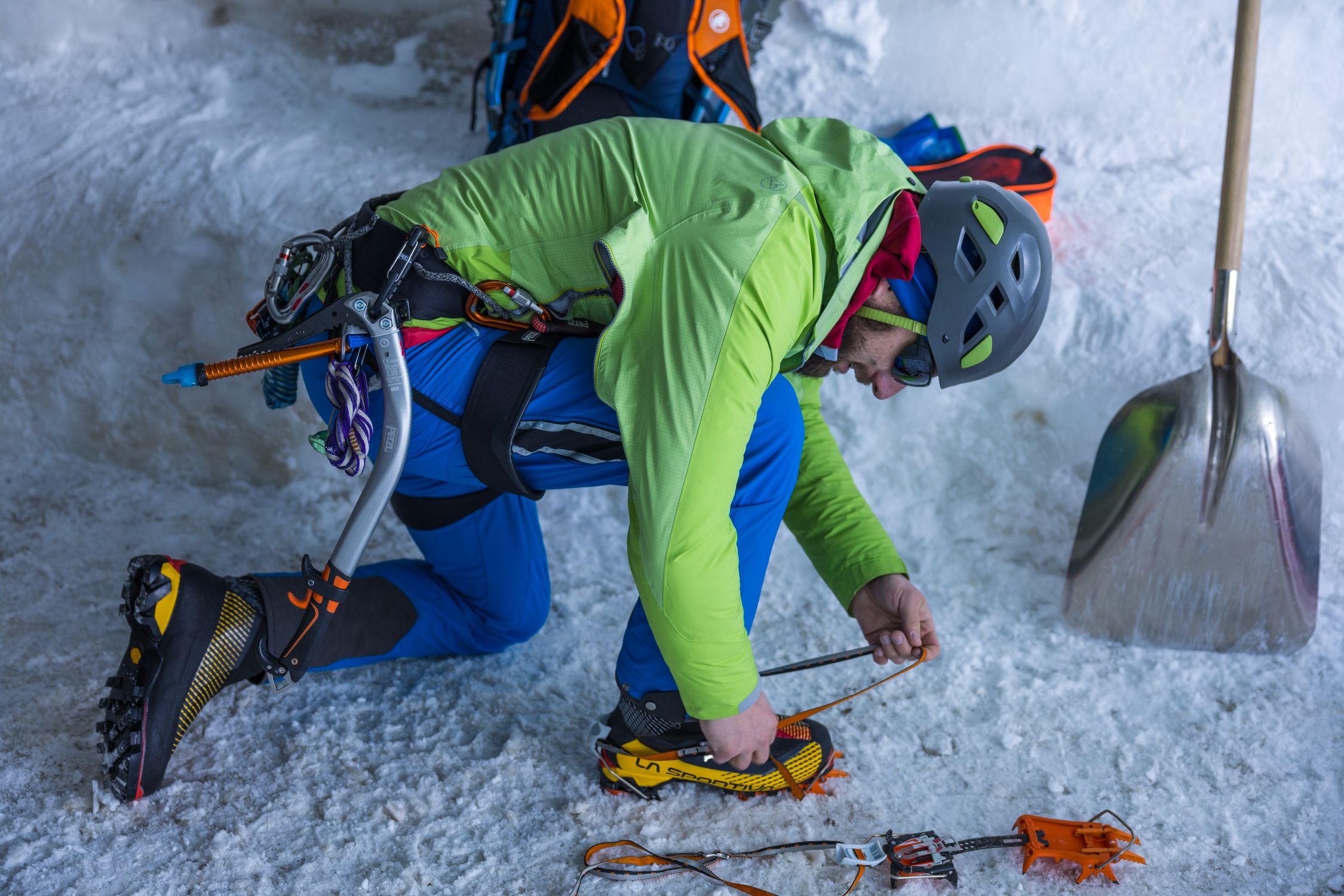
Grivel G Zero Ice Axe — 66 cm Classical Mountaineering
- Weight & Length: 425 g at 66 cm; steel head with adze, lightweight aluminum shaft; CE EN 13089 Type 1 / UIAA 152 certified; available 58, 66, 74 cm
- Construction: Removable plastic blade cover for thermal insulation, steel head, adjustable rubber leash
- Best For: Glacier trekkers and classic mountaineers on lower-angle objectives like Aconcagua Normal Route or Kilimanjaro who need walking-length security at value pricing
Pros – Longer 66 cm length gives excellent balance and plunge-pole stability on moderate snow slopes; removable plastic blade cover protects hands from the sharp adze and reduces cold transfer on frigid pre-dawn starts; steel head delivers reliable self-arrest force transfer far beyond what aluminum-headed ultralight axes offer. Cons – 66 cm length is awkward to stow on a pack during technical rock scramble sections on mixed routes; not the right tool for routes requiring frequent pack storage or sub-300 g weight constraints.
During long treks on Patagonian ice fields, the G Zero’s length lets you plant the axe with confidence on deep snow, while the plastic cover keeps your gloves from freezing solid on cold mornings.
How to Choose the Right Axe Length
Length is the first decision most climbers face, and it directly influences balance, swing arc, and the ability to self-arrest on varying slopes. Classic glacier routes typically call for a walking-length axe (60-70 cm) because the longer shaft provides a stable platform for flat or gently rolling snowfields. The extra leverage helps you plant the axe firmly when moving at a moderate pace, and it reduces the effort needed to dig a pick into deep snow.
Conversely, steep mixed or skimo routes benefit from a shorter, 45-55 cm tool. A compact length shortens the swing, allowing rapid, repeated placements on hard ice or during quick transitions between climbing and skiing. The trade-off is reduced stability on low-angle terrain; a short axe can feel “twitchy” when you try to self-arrest on a gentle slope.
A good rule of thumb:
- Taller climbers (180 cm and above) often feel more comfortable with 66 cm or longer on walking routes.
- Mid-height climbers (165-180 cm) find 59-66 cm ideal for mixed terrain.
- Shorter climbers (under 165 cm) may prefer 52-59 cm to keep the swing arc manageable.
The Petzl Summit EVO’s 59 cm length hits the sweet spot for most intermediate-to-advanced alpinists tackling classic routes that blend glacier travel with occasional steep sections. The Grivel G Zero’s 66 cm version, on the other hand, is a solid choice for tall trekkers who spend most of the day on moderate snow.
Weight vs. Durability Trade-offs
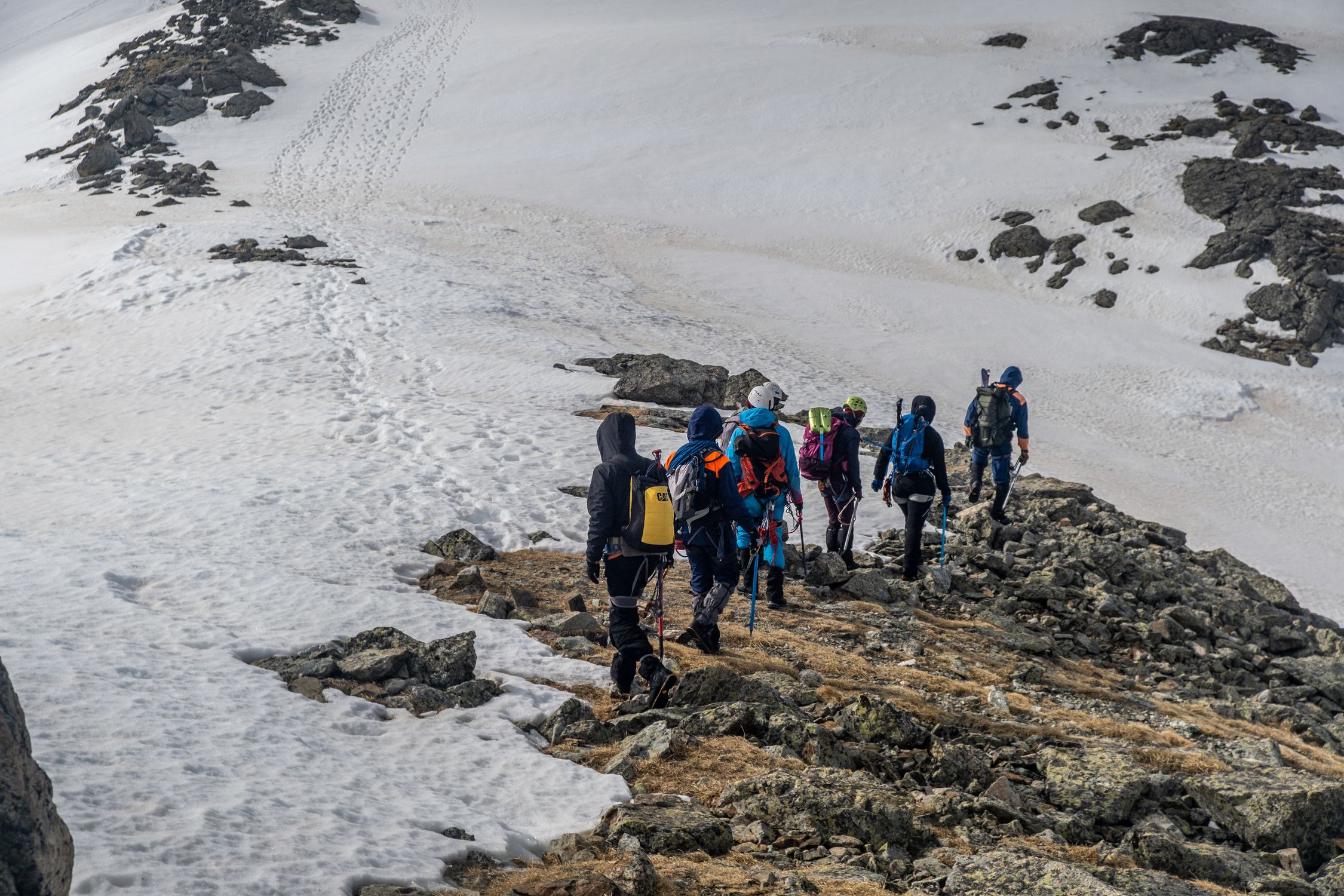
When you’re hauling a pack for multiple days, every gram matters, but durability can be the difference between a clean descent and a forced retreat. Steel heads (e.g., Grivel G Zero, Petzl Summit EVO) are virtually indestructible on hard ice and provide the most reliable self-arrest. However, they add a few hundred grams compared to all-aluminum heads like the CAMP Corsa.
Aluminum heads shave weight dramatically—Corsa’s sub-250 g total is roughly a third of a typical steel-head axe—but they can blunt faster on icy terrain. If your classic route stays below 2,500 m and you’ll encounter mostly soft snow, an aluminum axe may be sufficient. For higher altitude, mixed ice, or routes with potential for hard-ice picket anchors, a steel head is the safer bet.
The Black Diamond Raven Pro illustrates a middle ground: a polished steel head paired with a lightweight shaft, delivering a modest weight reduction without sacrificing the durability of a full-metal pick. The Pro’s head survives hard swings into hidden ice patches with only superficial nicks—plenty of life left for the Haute Route and beyond.
UIAA Type 1 vs. Type 2 – What Matters on Classic Routes
The UIAA and CEN standards split ice tools into two categories:
- Type 1 (Basic/CEN-B) – Designed for glacier walking, snow travel, and self-arrest on moderate slopes. All six axes in this roundup are Type 1 certified, meaning they meet the minimum strength and geometry for classic mountaineering.
- Type 2 (Technical/CEN-T) – Built for hard ice climbing, with reinforced picks and often a more aggressive curvature for steep technical placements.
For classic glacier routes, a Type 1 axe is not just adequate—it’s the recommended choice. The added mass and aggressive geometry of a Type 2 tool can feel cumbersome on long approaches and may increase fatigue. However, if your itinerary includes a hard-ice pitch (e.g., a frozen waterfall on the North Face of the Eiger), you might want to carry a secondary technical axe or opt for a hybrid model like the Raven Pro, which retains a Type 1 certification but offers a slightly more aggressive pick.
For deeper safety standards, see the UIAA accident reporting page and the American Alpine Institute’s ice axe technique guide.
Safety Stats and Why a Reliable Axe Saves Lives
The American Alpine Club’s 2025 report recorded 190 total accidents and 49 fatalities in the United States in 2024—the second-highest counts since the AAC began keeping records in the 1950s. A significant portion of these incidents stem from inadequate self-arrest technique or using an axe that lacks the necessary swing weight or pick geometry for the terrain. See the full 2025 climbing accident trends analysis for details.
A well-balanced axe like the Petzl Summit EVO provides a reliable bite on both soft snow and hard ice, reducing the likelihood of a slip-through during a fall. Meanwhile, the Grivel G Zero’s longer shaft gives you a larger lever arm, making it easier to generate the force needed to stop a slide on moderate slopes.
These safety margins matter when you consider that Nepal raised the Everest climbing permit fee by 36% in 2025 and now requires proof of a prior 7,000 m summit—a signal that regulators worldwide are taking alpine risk more seriously. Choosing an axe that matches the route’s demands, and maintaining it properly, is a proactive step toward a clean summit and a safe descent.

Maintenance Tips for Your Alpine Axe
A reliable axe is only as good as the care you give it. Follow these routine steps to keep your tool performing at peak level:
- After Every Trip: Rinse the head and shaft with lukewarm water to remove snow, ice, and grit. Avoid high-pressure sprays that can force water into the shaft channel.
- Dry Thoroughly: Use a microfiber cloth, then let the axe air-dry in a shaded area. For steel heads, a light coat of anti-rust oil prevents corrosion.
- Inspect the Pick: Look for chips, bends, or excessive wear. Even a small nick can compromise bite on hard ice. Replace the head if the tip is dull beyond sharpening.
- Check the Shaft: For aluminum shafts, verify that the curve hasn’t been compromised by impact. The hydroformed profile of the Petzl Summit EVO is particularly worth inspecting after any hard fall.
- Leash & Grip: If your axe includes a rubber leash (e.g., Grivel Nepal SA), inspect it for cracks. Replace worn leashes to avoid sudden failure during a fall.
- Storage: Store the axe in a dry, temperature-stable environment. For steel-head axes, keep them separate from other metal tools to avoid scratching the polished finish.
Putting the Axe to the Test on Iconic Routes
Here’s how the top picks map to three classic objectives:
- Mont Blanc Normal Route (Classic Glacier) – The Petzl Summit EVO’s 59 cm length and balanced swing makes it effortless to self-arrest on the Grand Couloir’s icy patches. The hydroformed steel head’s bite is the right call near the Gouter Hut.
- Mount Whitney – Mountaineers Route – The Black Diamond Raven’s robust construction and trapezoidal shaft proves ideal for the mixed snow-rock sections. Its heavier weight is a minor drawback, but the confidence in the head’s durability outweighs it.
- Haute Route – Chamonix to Zermatt – Over 12 days of varied terrain, the Black Diamond Raven Pro’s lightweight profile reduces pack weight without sacrificing the reliable pick needed for high-altitude glacier crossings.
Each axe shines in its niche, reinforcing the idea that no single tool dominates every classic route. Match the axe to the route’s primary demands, and you’ll arrive at the summit with both performance and safety on your side.
Related Reading
Get price-drop alerts and new guides from BoldTripGuide
One email a week: price drops on the gear we recommend, new guides, and what changed. No spam, unsubscribe anytime.