Budget Backcountry Skiing and Splitboarding Guide 2026
How to get into backcountry skiing and splitboarding on a budget in 2026. Affordable gear, free terrain, avalanche education, and real cost comparisons vs resort skiing.

This post may contain affiliate links. Disclosure
Resort skiing has become absurdly expensive. Single-day lift tickets now exceed $300 at major US ski resorts during holiday periods. A season pass for the Ikon or Epic network runs $800 to $1,200 before you factor in travel, lodging, and the $18 beers at the base lodge. Meanwhile, the best skiing on the planet — untracked powder in vast alpine terrain with zero lift lines — costs nothing beyond the gear to get there and the knowledge to do it safely. That is backcountry skiing and splitboarding, and despite the perception that it is an expensive, elite pursuit, it is more accessible and more affordable than resort skiing once you have the right equipment.
A complete backcountry setup can be assembled for $1,200 used or $2,400 new. Overnight hut stays often run under $30. The terrain is infinite and ungroomed, and the only crowd you encounter is occasionally your own friends.
But here is the critical caveat that distinguishes this article from the Instagram fantasy: backcountry skiing in avalanche terrain is genuinely dangerous. The winter of 2025-2026 has already seen 15 US avalanche fatalities as of late February, including 12 backcountry skiers or snowboarders. Nine people died in a single guided expedition near Castle Peak, California. Before you set foot in the backcountry, you need avalanche education, rescue equipment, and the judgment to make conservative decisions. This is not optional. It is the price of admission.
Getting Started: The Gear
Backcountry Ski Setup
| Component | Budget Option | Cost | Mid-Range Option | Cost |
|---|---|---|---|---|
| Skis | Used touring skis (100-105mm waist) | $200-400 | DPS Pagoda Tour 100 | $700 |
| Bindings | Marker Kingpin (used) | $150-250 | Fritschi Tecton 13 | $550 |
| Skins | G3 Alpinist (trimmed to ski) | $130 | Pomoca Climb Pro S-Glide | $180 |
| Boots | Scarpa Maestrale (used) | $200-350 | Tecnica Zero G Tour Pro | $600 |
| Poles | Black Diamond Expedition 3 | $80 | Black Diamond Carbon Compactor | $130 |
| Total | $760-$1,210 | $2,160 |
Splitboard Setup
| Component | Budget Option | Cost | Mid-Range Option | Cost |
|---|---|---|---|---|
| Splitboard | Used board | $250-500 | Jones Solution | $700 |
| Bindings | Spark R&D Surge (used) | $200-300 | Spark R&D Arc Pro | $500 |
| Skins | Jones Nomad (pre-cut) | $140 | G3 Alpinist Splitboard | $170 |
| Boots | Used stiff snowboard boots | $100-200 | K2 Aspect | $350 |
| Poles | Collapsible touring poles | $60 | Black Diamond Expedition 3 | $80 |
| Total | $750-$1,200 | $1,800 |
Avalanche Safety Equipment (Non-Negotiable)
| Item | Recommended Model | Cost | Notes |
|---|---|---|---|
| Avalanche transceiver | Mammut Barryvox S | $300 | Three-antenna, fast search |
| Probe | BCA Stealth 240 | $55 | 240cm minimum length |
| Shovel | BCA B-1 EXT | $55 | Metal blade, extendable handle |
| Airbag pack (optional) | BCA Float 22 | $350 | Increases survival odds significantly |
| Total (minimum) | $410 |
The avalanche safety equipment is not optional. A transceiver, probe, and shovel (the “avy trifecta”) must be carried by every member of your party on every backcountry trip. These tools enable you to locate and dig out a buried partner within the critical 15-minute survival window. Our best avalanche beacons roundup tests eight transceivers in controlled burial scenarios and ranks them by search speed, multiple burial mode, and ease of use under stress.
Where to Ski for Free: Best Budget Backcountry Zones
United States
Wasatch Range, Utah: The backcountry zones adjacent to Alta, Snowbird, Brighton, and Park City are some of the most accessible and highest-quality in North America. Big and Little Cottonwood Canyons offer roadside access to incredible terrain with 500+ centimeters of annual snowfall. The trailhead at White Pine is a 20-minute skin to outstanding north-facing bowls. Zero access fees.
Teton Pass, Wyoming: The pass between Jackson and Victor offers roadside access to steep, committing terrain. Popular runs like Glory Bowl, Eddies, and Mt. Taylor provide 300 to 900 meters of vertical in terrain ranging from mellow glades to extreme couloirs. Free access, free parking.
Colorado’s Front Range: Berthoud Pass, Loveland Pass, and Jones Pass provide accessible backcountry within 90 minutes of Denver. Berthoud Pass is particularly popular, with multiple skiable aspects and a high-frequency bus service that can function as a pseudo-lift.
Washington’s Cascades: Stevens Pass and Snoqualmie Pass backcountry areas offer Pacific Northwest powder (heavy and deep) with roadside access. The Cascade volcanoes (Baker, Rainier, Adams) offer spring corn skiing from April through June.
Europe
Chamonix, France: The lift infrastructure provides uphill access to high-alpine starting points, but the backcountry terrain accessible on foot is equally impressive and free. The Aiguilles Rouges and Vallorcine areas offer outstanding touring without lift tickets.
Lofoten Islands, Norway: Ski touring above the Arctic Ocean is a bucket-list experience. The terrain rises directly from sea level to 1,000+ meters, meaning every run ends at the beach. There are no lifts and no fees. Access is via ferries and roads.
Lyngen Alps, Norway: Steeper and more committing than Lofoten, the Lyngen Alps offer alpine ski touring in a true wilderness setting. No infrastructure, no fees, and spectacular fjord-to-summit terrain.
Austrian Tyrol: The Sellrain Valley and Stubai Alps offer outstanding ski touring with hut-to-hut infrastructure. Mountain huts provide food and accommodation, making multi-day tours comfortable without camping gear. Hut fees run $40 to $80 per night with dinner and breakfast.
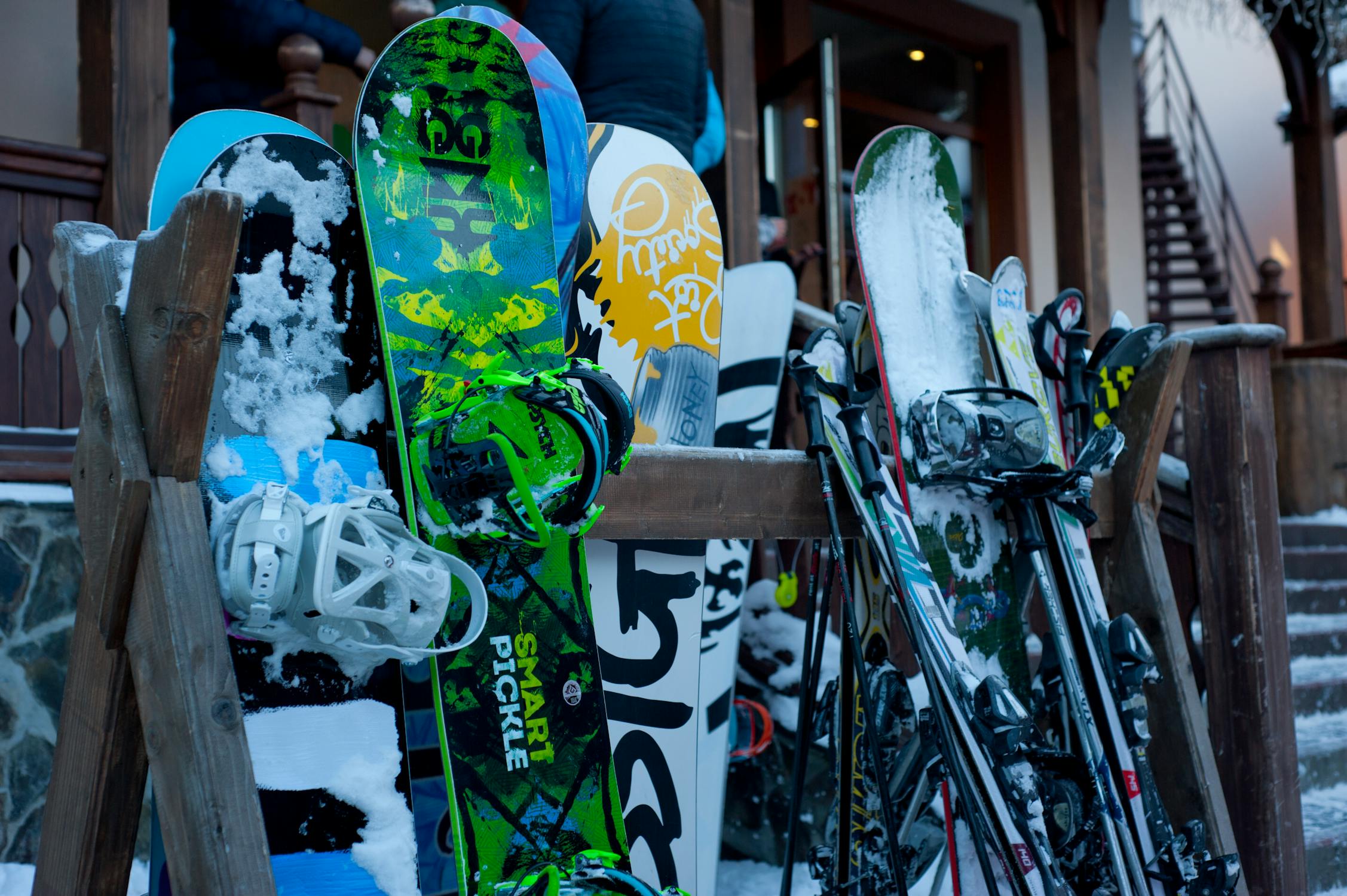 Photo credit on Pexels
Avalanche Education: The Most Important Investment
Course Levels
| Course | Duration | Cost | What You Learn |
|---|---|---|---|
| AIARE Level 1 / AST 1 | 3 days | $350-$500 | Terrain assessment, companion rescue, decision-making frameworks |
| AIARE Level 2 / AST 2 | 3-4 days | $500-$700 | Advanced snowpack analysis, route-finding, leadership |
| AIARE Pro 1 | 5 days | $1,000-$1,500 | Professional-level assessment and decision-making |
| Avalanche Rescue | 1 day | $150-$250 | Companion rescue practice |
AIARE Level 1 (or the Canadian AST 1) is the minimum education before entering avalanche terrain. This three-day course covers terrain identification, basic snowpack assessment, companion rescue, and the decision-making frameworks that keep you alive. The investment of $350 to $500 and three days is the single most important expenditure in your backcountry career. Given the 2025-2026 season’s fatality rate, the Utah Avalanche Center has already recorded over 200 avalanches this winter — the conditions are real, and education saves lives.
What You Learn in AIARE Level 1
Day 1 (Classroom):
- Avalanche types and triggers
- Terrain recognition (what slopes are dangerous)
- Decision-making frameworks (Obvious Clues method)
- Reading avalanche advisories
Day 2 (Field):
- Snowpack observation and basic pit analysis
- Terrain assessment in real conditions
- Route planning and terrain selection
- Companion rescue practice (transceiver search, probing, shoveling)
Day 3 (Field):
- Full touring day applying learned skills
- Real-time decision-making with instructor feedback
- Simulated rescue scenarios under time pressure
Ongoing Education
Avalanche education does not end with a course. The avalanche community provides free ongoing education through:
- Avalanche advisories: Check your regional avalanche center forecast before every trip. In the US: avalanche.org. In Canada: avalanche.ca. In Europe: avalanches.org.
- Know Before You Go: Free avalanche awareness presentations offered by avalanche centers nationwide.
- Community observations: Submit and read field observations on your regional avalanche center’s website.
- Practice rescue: Run a companion rescue drill at the start of every season and periodically throughout the winter.
Budget Strategies for Backcountry Skiing
Buying Used Gear
The used backcountry gear market is active and offers significant savings:
- TGR forums: The largest online marketplace for backcountry ski gear
- Facebook groups: “Backcountry Ski Gear Swap,” “Splitboard Gear Exchange”
- Geartrade.com: Outdoor gear consignment
- Local ski shops: End-of-season sales (March-April) offer 30 to 50% discounts on current gear
What to buy used: Skis, splitboards, bindings, poles, packs. These items have long usable lifespans and hold up well.
What to buy new: Avalanche transceivers (battery age and firmware updates matter), climbing skins (adhesive degrades), and boots (fit is critical and used boots may be packed out).
For broader gear selection advice across adventure disciplines, see our adventure travel gear guide.
Splitboarding vs Skiing on a Budget
Splitboarding is generally cheaper to enter than backcountry skiing because:
- Snowboard boots are less expensive than touring ski boots
- Used splitboards are plentiful as riders upgrade
- The binding system is simpler (fewer moving parts to fail)
Carpooling and Lodging
- Share rides: Gas and parking are the primary recurring costs. Carpooling splits both.
- Sleep in your car: Backcountry trailheads often allow overnight parking. A sleeping pad in the back of an SUV or van costs nothing.
- Hut trips: Mountain huts in Europe and some US locations provide overnight shelter for $30 to $80, enabling multi-day tours without camping gear weight. For hut-to-hut travel systems, see our hut-to-hut hiking guide.
A Typical Backcountry Day
5:30 AM: Wake up, eat breakfast, check avalanche advisory on phone.
6:30 AM: Arrive at trailhead. Apply skins, check transceiver function (every member of the group turns their transceiver to search mode and verifies it can detect every other transceiver in the group).
7:00 AM: Begin skinning uphill. Pace is conversational, approximately 300 to 500 meters of elevation gain per hour. On a standard tour, you skin for 2 to 4 hours.
10:00 AM: Reach the top. Transition: remove skins, switch binding mode from walk to ski, eat a snack, assess the descent route.
10:30 AM: Ski down. A good backcountry run lasts 5 to 15 minutes for 500 to 1,000 meters of vertical. In powder, this is the payoff for all the uphill work, and it is indescribable.
11:00 AM: Bottom of the run. Decide: go again (re-skin for another lap) or head out. Most tours involve 1 to 3 runs.
1:00 PM: Back at the car. Debrief, post observations to the avalanche center, drive home.
Splitboarding: The Snowboard Alternative
Splitboarding deserves dedicated attention because it has made backcountry riding accessible to snowboarders who previously had no uphill option beyond snowshoes (which are miserable for carrying a snowboard).
A splitboard is a snowboard that splits lengthwise into two ski-shaped halves for uphill travel. You attach climbing skins to the bases, click your bindings into touring mode, and skin uphill like a skier. At the top, you reassemble the board into a single snowboard and ride down.
Advantages of splitboarding over backcountry skiing:
- If you already snowboard, the downhill skills transfer directly
- Snowboard boots are more comfortable for hiking than ski touring boots
- Used splitboard setups are plentiful and affordable
- Powder performance is often better on a wide snowboard than on touring skis
Disadvantages:
- Transition time (switching from tour mode to ride mode) is slower than ski transitions
- Uphill efficiency is slightly lower due to the wider platform
- The splitboard market has fewer options than the touring ski market
Recommended starter setup: A used Jones Solution splitboard ($300 to $500), Spark R&D Surge bindings (used, $200 to $300), and G3 Alpinist skins ($140). Total: $640 to $940 for a complete setup that will last multiple seasons.
Common Beginner Mistakes
- Skiing above your avalanche education level. If you have not taken AIARE 1, stay on low-angle terrain (below 30 degrees) or in controlled backcountry areas.
- Going alone. Companion rescue requires companions. Never travel in avalanche terrain solo.
- Ignoring the avalanche advisory. The advisory exists because experts have assessed the current conditions. Read it. Follow it.
- Over-extending on the uphill. Skinning is exhausting, and tired skiers make poor decisions and ski poorly. Start with short tours (500 to 800 meters of elevation gain) and build from there.
- Inadequate fitness. Skinning uphill for 2 to 4 hours with a pack requires cardiovascular fitness. Start training (hiking, cycling, stair climbing) 8 to 12 weeks before the season. See our adventure travel health guide for a fitness preparation framework.
Cost Comparison: Resort vs Backcountry Skiing Over One Season
| Expense | Resort Skiing (50 days) | Backcountry Skiing (50 days) |
|---|---|---|
| Lift tickets / Season pass | $900-$1,200 | $0 |
| Ski equipment | $800-$1,500 (resort gear) | $1,500-$3,000 (touring gear) |
| Avalanche safety gear | $0 (not needed in-bounds) | $410-$760 |
| Avalanche education | $0 | $350-$500 (one-time) |
| Transportation (gas) | $500-$800 | $400-$600 |
| Food and drink | $1,000-$2,000 (base lodge) | $200-$400 (pack your own) |
| Season total | $3,200-$5,500 | $2,860-$5,260 |
| Year 2+ total | $3,200-$5,500 | $600-$1,000 |
The numbers tell the story. Backcountry skiing has a higher first-year cost due to gear and education, but from year two onward, it costs a fraction of resort skiing because you are not buying lift tickets or overpriced base lodge food. Over a five-year period, a backcountry skier who already owns their gear spends $3,000 to $5,000 less than a comparable resort skier. And the skiing is objectively better: untracked powder, no crowds, and terrain that is limited only by your fitness and judgment.
For dedicated ski touring beginners, our ski touring beginners backcountry guide covers the learning progression in more depth.
Recommended Safety Gear for Backcountry Skiing
On a tight budget, prioritize these two safety items before anything else: the Garmin inReach Mini 2 ($350-400) provides satellite SOS and two-way messaging when you are out of cell range — in an avalanche scenario or serious injury, this is what gets rescue moving. For early dawn starts and post-sunset returns to the car, the Petzl Tikka Headlamp at 350 lumens in a 78g package is the standard.
 Safety essentials for budget backcountry skiing — Photo on Pexels
Related Reading
Get the best ThrillStays tips in your inbox
Weekly guides, deals, and insider tips. No spam, unsubscribe anytime.