Utah National Parks Car Rental Guide 2026 for Adventurers
Renting a car for Utah's Big 5 national parks in 2026? Get age rules, price bands, insurance tips, road limits, and booking strategies for a smooth road trip.

This post may contain affiliate links. Disclosure
The Utah Big 5 - Zion, Bryce Canyon, Arches, Canyonlands, and Capitol Reef - are a magnet for climbers, backcountry hikers, and anyone who lives for high-altitude dust and red-rock sunsets. Hitting them all in one loop means serious time behind the wheel, and the right rental is the difference between a smooth ride and a busted-tire nightmare. In 2026 the market is crowded, the tunnels are tight, and off-pavement clauses are stricter than ever. This guide breaks down what you need before you click reserve: age requirements, daily rates, insurance nuances, which wheels get you past the 4WD-only stretches, and the booking hacks that keep your budget from blowing up like a desert thunderhead.
Short answer: Nine major rental brands sit on-site at Salt Lake City International’s Gateway Center. Economy cars start around $31 a day, compacts $29-35 and intermediates $34-45. Every primary road to Zion, Bryce Canyon and the main Arches viewpoints is paved, so a 2WD car is enough unless you plan backcountry routes.
Rental Requirements & Age Limits
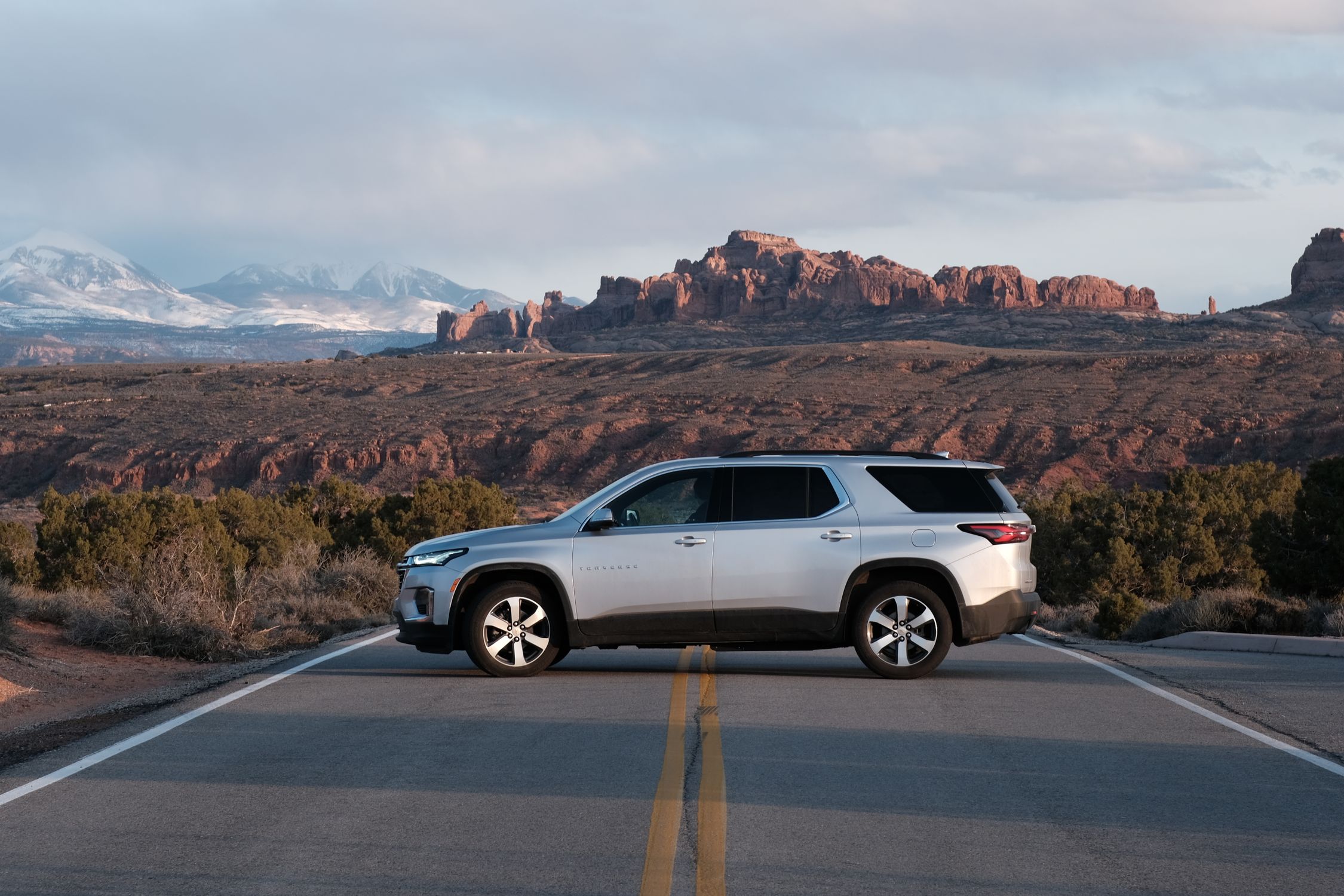
All major U.S. car-rental brands operate in Utah: Alamo, Avis, Budget, Dollar, Enterprise, Hertz, National, Payless, Thrifty, and Sixt. Fly into Salt Lake City International Airport and you will find nine of those agencies on-site at the Gateway Center, which makes pickup fast if you are landing and driving straight out. The baseline driver age is 21, and you must present a valid driver’s license plus a passport or government ID at the counter. Some vehicle classes - especially midsize SUVs and trucks - demand a higher minimum age (often 25) or add an under-age driver surcharge. One-way rentals between cities (say, picking up in St. George and dropping off in Moab) are allowed, but expect a one-way fee - confirm the exact amount before you sign. Because a Big 5 loop often means starting in one gateway town and finishing in another, plan your route before you book: the fee is set by the drop-off distance, and locking in the itinerary early lets you weigh it against a round-trip rental from a single hub.
Cost Breakdown by Vehicle Class

Pricing in 2026 is still anchored to the classic economy-compact-intermediate bands. At Salt Lake City Airport, economy cars start around $31/day and can climb to $42/day, while compact models run $29-35/day. The intermediate segment sits at $34-45/day. Factor in taxes, fees, and any optional insurance, and the average rental sits near $63/day. St. George Airport offers a similar spread, with economy and compact rates hovering between $29-42/day, and on-site agencies there include Budget, Hertz, Alamo, Avis, Enterprise, and National. If you are hauling a roof rack, a bike bag, or a small surfboard, the compact SUV often gives the best balance of cargo space and fuel economy without breaching the Zion tunnel limits. For a quick price comparison across agencies, run your dates through DiscoverCars - it pulls rates from the major brands in real time. For a solo climber or a pair traveling light, an economy or compact car covers the Big 5 loop just fine and keeps fuel costs down over the long desert miles between parks. Groups of three or four hauling coolers, climbing racks, or camp gear tend to land in the intermediate class instead, trading a slightly higher daily rate for the extra trunk space a multi-park itinerary demands.
Insurance & Liability on Rugged Roads

Standard rental contracts come with a Collision Damage Waiver (CDW) that protects the vehicle against accidental damage, but the waiver almost always excludes off-pavement use. In Utah’s canyon country that clause matters: most agreements explicitly prohibit driving on unpaved roads, and breaking that rule can void both the insurance and the rental contract. If you plan to park at remote trailheads or scramble down a slickrock descent, add the theft protection rider - it covers loss from theft or vandalism while the car sits unattended overnight. When you are eyeing a 4WD-only backcountry road, read the fine print closely; most companies will not cover damage if you stray onto a gravel or sand track without prior written approval. Multi-day itineraries that leave the car parked overnight at a trailhead for a canyoneering trip or an overnight backpack are exactly the scenario theft protection is built for, since the vehicle sits unattended and out of sight for hours at a time.
Road Realities - Paved vs. 4WD Needed

The good news: all primary roads to Zion, Bryce Canyon, and the main viewpoints of Arches are paved, so a standard 2WD sedan or compact SUV gets you to the trailheads without a hitch. The Zion-Mt. Carmel Highway tunnel is the first size-check you will encounter. It caps vehicles at 35’9” length, 7’10” width, 11’4” height, and 50,000 lb. Anything larger gets turned around at the entrance station and rerouted onto alternate state highways, adding roughly 40-50 minutes to your travel time. That size cap matters most for anyone touring in a full-size RV, a truck with a popup camper, or a rig hauling a trailer - all of which routinely exceed those numbers and get sent the long way around.
The only 4WD-only road in Arches is the unpaved stretch between Tower Arch and Balanced Rock. To qualify, your vehicle needs 15-inch rims, at least 8 inches of ground clearance, and a locking transfer case - all-wheel-drive models do not make the cut. Canyonlands enforces its own four-wheel-drive determination for its remote backcountry loops, and Capitol Reef has similar high-clearance and 4WD requirements on its backcountry roads. If you are renting a true 4WD anywhere in the Big 5, look for the same baseline: 15-inch tires, 8 inches of clearance, and a locking transfer case - that keeps you on the right side of the agreement and your insurance intact.
Booking Strategies & Pickup Point Hacks
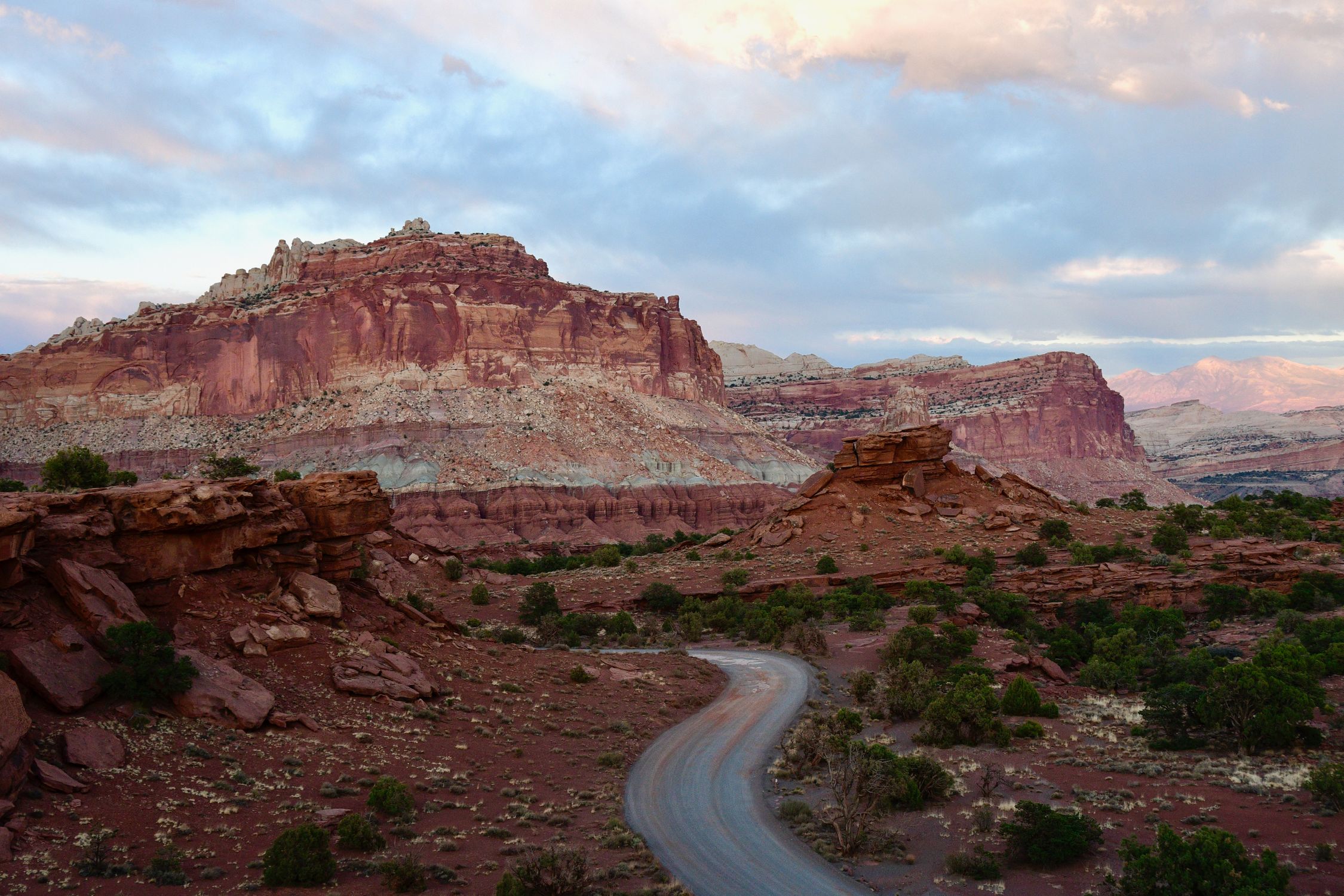
Peak season (spring and fall) drives up demand for the Big 5 loop, and rental prices can spike hard. Book as early as possible - the earlier you lock in a reservation, the more likely you will snag a vehicle that actually fits the Zion tunnel dimensions. Compare Salt Lake City vs. St. George vs. Las Vegas pickup locations before you commit. Salt Lake City gives you a central hub and the full roster of agencies, but adds roughly 2-3 hours of driving before you hit the first park. St. George drops you close to Zion and Bryce, shaving off that extra leg of driving. Las Vegas is worth pricing out too if you are flying in on cheaper fares and focusing your trip on the southwestern parks - just run the math on drive time against the rental rate before you book. Utah.com’s rental car guide is a useful place to sanity-check agency options by region.
Before you hit the road, swing by a ranger station for the latest road-condition updates, especially if you are eyeing the 4WD-only routes in Arches, Canyonlands, or Capitol Reef. Verify vehicle dimensions against the Zion tunnel limits and confirm the rental company’s policy on oversized vehicles. If you need extra cargo space, consider a compact SUV with a roof rack rather than a full-size truck, which often exceeds the height restriction. Finally, keep an eye on the one-way fee if you plan to drop the car at a different airport - it can add $50-100 to the total, so factor that into your budget.
What to Pack - GPS & Navigation Gear
When you are navigating canyon labyrinths and high-altitude passes with spotty cell service, a reliable GPS watch is worth its weight in titanium. Here is how the three top adventure watches stack up for a Big 5 road trip.
Garmin fenix 8 Solar Sapphire 51mm
The Garmin fenix 8 Solar Sapphire 51mm is the battery-monster of the group: solar-assisted 149 hours of GPS tracking, up to 48 days in smartwatch mode, dive-rated to 40m, multi-band GPS/GLONASS/Galileo/BeiDou for pinpoint canyon accuracy, and a built-in flashlight for night-time descents. At 89g it is the heaviest of the three, and the roughly $1,200 price tag is a real ask, but for expedition-length trips across the Big 5, the battery ceiling alone justifies it.
COROS VERTIX 2S Adventure GPS Watch
The COROS VERTIX 2S Adventure GPS Watch trades some polish for value at about $699: 40 days of smartwatch battery, 118 hours of full GPS, a sapphire-crystal screen with a titanium bezel, and dual-frequency GPS/GLONASS/Galileo/BeiDou reception for accuracy deep in slot canyons. It skips the built-in flashlight and runs a smaller third-party app ecosystem than Garmin, but for trail runners and mountaineers who want premium GPS without the Garmin price tag, it is the pick.
SUUNTO Vertical Adventure GPS Solar Watch
The SUUNTO Vertical Adventure GPS Solar Watch leans into screen size and endurance: a 1.4-inch color touchscreen with solar assist, 60 days of smartwatch battery, free global offline maps, and 95-plus sport modes, all around $649. Heart rate accuracy trails a dedicated chest strap and the touchscreen can lag in cold conditions, but for hikers and multisport athletes who want a big, legible screen on long park days, it holds its own against pricier rivals.
None of these three watches is a bad pick for the Big 5 loop - the choice comes down to what you are optimizing for. Maximum battery and a flashlight favor the Garmin; a lighter price tag with nearly the same GPS accuracy favors the COROS; the biggest screen and longest solar-assisted battery favor the SUUNTO.
Pack at least one of these watches, a physical topographic map of each park, and a portable power bank (solar if you can spare the weight). Redundancy saves you when a battery dies on a remote ridge.
Common Mistakes & FAQ
Q: Can I drive my rental on the unpaved backcountry roads? A: Most contracts forbid it. Doing so voids the CDW and any theft protection. If you need a 4WD, rent a vehicle that meets the park’s specifications and get written permission from the rental agency.
Q: Will an AWD sedan get me through the Tower Arch-Balanced Rock road? A: No. Only true 4WD with 15-inch rims, 8 inches of clearance, and a locking transfer case qualifies. An AWD will be turned back at the trailhead.
Q: How do I avoid the Zion tunnel detour? A: Verify the vehicle’s length, width, height, and weight before you sign the contract. The tunnel limits are 35’9” x 7’10” x 11’4” x 50,000 lb. If you’re on the edge, call the rental desk and ask for the exact specs of the model you’re reserving.
Q: Does Capitol Reef have the same 4WD restrictions as Arches? A: Yes. Capitol Reef carries its own high-clearance and four-wheel-drive determinations for its backcountry roads, similar to Canyonlands. Treat any unpaved route in either park the way you would Tower Arch-Balanced Rock: confirm your vehicle qualifies before you turn off pavement.
Q: Which vehicle class should most Big 5 travelers book? A: A compact or economy car handles every paved stretch to Zion, Bryce, and the main Arches viewpoints just fine. Step up to an intermediate SUV only if you are hauling extra gear or splitting the trip across a bigger group - it will not get you onto the Tower Arch-Balanced Rock road or any other 4WD-only route, which requires a true 4WD with 15-inch rims, 8 inches of clearance, and a locking transfer case regardless of size class.
Q: Is it cheaper to rent in Salt Lake City and drive down? A: Not always. Salt Lake City offers the most agency options, but the extra 2-3 hours of driving adds fuel costs and wear. St. George often has comparable rates for compact SUVs and puts you within 30 minutes of Zion’s entrance.
Q: What if I need to extend my rental by a day while on the road? A: Call the agency as soon as you know. Extensions are usually cheaper when arranged ahead of time rather than at the drop-off desk, especially during peak season.
Avoiding these pitfalls keeps your insurance intact, your budget in check, and your adventure flowing like a desert wind.
Related Reading
Get price-drop alerts and new guides from BoldTripGuide
One email a week: price drops on the gear we recommend, new guides, and what changed. No spam, unsubscribe anytime.