Night Adventures: Caving, Stargazing & Nocturnal Wildlife 2026
Best night adventures worldwide in 2026. Caving, dark-sky stargazing, nocturnal wildlife safaris, bioluminescence kayaking. Destinations, costs, and gear guide.

This post may contain affiliate links. Disclosure
Updated for 2026 — Accurate as of February 2026.
There is an entire world of adventure that most travelers never experience because they are asleep when it happens. After the sun sets, a parallel universe activates: caves that exist in permanent darkness reveal geological formations millions of years old, the night sky erupts with billions of stars that light-polluted city dwellers have never seen, and nocturnal creatures emerge from hiding to hunt, forage, and perform behaviors that daytime visitors miss entirely. Night adventure is not a novelty add-on to regular travel. It is an entire category of experience that, for many travelers, proves to be the most memorable part of their trip.
I have spent more nights underground, on mountaintops, and in jungles than I can count, and the common thread is this: darkness strips away the visual dominance that characterizes daytime experience and forces your other senses to compensate. You hear things you would never notice in daylight. You feel temperature and moisture changes that daytime heat masks. You become acutely aware of your own vulnerability, which heightens every sensation. Night adventure is more intense, more intimate, and more rewarding than its daytime equivalent, and this guide covers the best of it across three categories: underground, overhead, and alive.
Part 1: Caving Adventures
Why Go Underground
Caves are the last true wilderness. While nearly every surface landscape on Earth has been mapped, photographed, and posted on Instagram, there are estimated to be millions of caves worldwide that have never been entered by humans. The underground world operates on geological time scales: the stalactite growing one millimeter per century, the underground river carving a passage over millions of years. When you enter a cave, you step outside human time into something vastly older and slower.
Types of Caving Experiences
| Type | Physical Demand | Risk Level | Experience Needed | Best For |
|---|---|---|---|---|
| Show caves (tourist caves) | Minimal | Very Low | None | Beginners, families |
| Wild caving (guided) | Moderate-High | Moderate | None (guide provides) | Adventure seekers |
| Technical caving | High | High | Training required | Experienced cavers |
| Cave diving | Very High | Very High | Extensive certification | Expert divers |
Best Caving Destinations
Waitomo Caves, New Zealand The Waitomo Glowworm Caves are one of the world’s most remarkable underground experiences. Thousands of Arachnocampa luminosa glowworms light up the cave ceiling like a subterranean Milky Way. The standard boat tour is good, but the Black Water Rafting experience is exceptional: you float through the cave on an inner tube in complete darkness except for the bioluminescent glow above you. The Legendary Black Water Rafting Co. runs tours that include abseiling (rappelling) into the cave, tubing through underground rapids, and climbing through tight passages. Cost: $130 to $260 per person.
Mammoth Cave, Kentucky, USA The world’s longest known cave system, with over 650 kilometers of surveyed passages. The National Park Service offers multiple tour options ranging from the family-friendly Domes and Dripstones Tour (2 hours, $18) to the Wild Cave Tour (6 hours of crawling through tight passages, $60). The Wild Cave Tour is the real deal: you crawl through spaces barely wider than your shoulders, chimney through vertical cracks, and belly-crawl through passages where the ceiling is 30 centimeters from the floor. It is claustrophobic, physically demanding, and utterly exhilarating.
Caves of Aggtelek and Slovak Karst, Hungary/Slovakia A UNESCO World Heritage Site with over 700 caves. The Baradla Cave, at 26 kilometers, is the longest stalactite cave in Europe. Guided tours range from easy walking tours to adventure routes involving climbing, crawling, and wading through underground streams. The acoustics in the main chamber are so good that classical concerts are held inside.
Cenotes of the Yucatan, Mexico The Yucatan Peninsula is underlain by the world’s largest underwater cave system, accessible through thousands of cenotes (natural sinkholes). Snorkeling and diving in cenotes like Gran Cenote, Dos Ojos, and Cenote Angelita reveals crystal-clear water, submerged stalactites, and halocline layers where salt and fresh water meet, creating visible currents in mid-water. Cenote diving requires cave diving certification for penetration dives, but open-water cenote snorkeling is accessible to anyone.
Skocjan Caves, Slovenia The Skocjan Cave system features the largest known underground canyon in Europe: 146 meters tall, with the Reka River flowing through it. Walking through the canyon on an elevated pathway, with the river thundering below and the cavern walls disappearing into darkness above, is genuinely awe-inspiring. UNESCO World Heritage Site. Entry: $25 per person.
Part 2: Stargazing Adventures
The Dark Sky Problem and Its Solution
Over 80% of the world’s population lives under light-polluted skies, and a third of humanity cannot see the Milky Way with the naked eye. For most city dwellers, the night sky contains a few dozen visible stars. Under truly dark skies, that number exceeds 4,000, and the Milky Way becomes a luminous river across the sky that photographs struggle to capture.
The International Dark-Sky Association (IDA) certifies locations with exceptional darkness, and these Dark Sky Places have become pilgrimage sites for stargazers and astrophotographers.
Best Dark Sky Destinations
| Location | IDA Designation | Bortle Scale | Best Feature | Best Time |
|---|---|---|---|---|
| NamibRand Nature Reserve, Namibia | Gold-Tier Dark Sky Reserve | 1 | Milky Way core, Southern Cross | Apr-Oct |
| Aoraki Mackenzie, New Zealand | Gold-Tier Dark Sky Reserve | 1-2 | Southern sky, observatories | Year-round |
| Mauna Kea, Hawaii | N/A (observatory site) | 1 | World’s premier observatory | Year-round |
| Cherry Springs State Park, Pennsylvania | IDA Dark Sky Park | 2 | Best dark sky on US East Coast | Mar-Oct |
| Pic du Midi, France | IDA Dark Sky Reserve | 2 | Mountaintop observatory access | Year-round |
| Westhavelland, Germany | IDA Dark Sky Reserve | 3-4 | Best dark sky in Germany | Year-round |
| Atacama Desert, Chile | N/A (observatory region) | 1 | Driest skies on Earth, ALMA observatory | Year-round |
NamibRand Nature Reserve deserves special attention. The reserve, located in the Namib Desert, has the darkest measured skies of any inhabited place on Earth. The Bortle scale rating of 1 means zero light pollution. The Milky Way casts visible shadows on the ground. I spent a night at the Sossusvlei Desert Lodge within the reserve, and the stargazing experience was so overwhelming that I lay on my back in the desert for three hours, unable to process the scale of what I was seeing. The lodge has a resident astronomer and a 12-inch telescope available to guests.
Atacama Desert, Chile is the other contender for world’s best stargazing. The combination of high altitude (2,400+ meters), extreme aridity (almost zero moisture in the atmosphere), and zero light pollution creates conditions that the world’s most powerful telescopes were built to exploit. The ALMA observatory, the European Extremely Large Telescope, and multiple other facilities operate in the Atacama. For travelers, San Pedro de Atacama is the base, with multiple stargazing tour operators offering telescope-assisted observations for $30 to $80 per person.
Astrophotography Tips for Night Adventures
- Use a fast wide-angle lens: f/1.4 to f/2.8, 14mm to 24mm focal length
- Tripod is mandatory: Even “steady hands” produce blurry star images at night
- Start at ISO 3200, 20-second exposure: Adjust from there based on results
- Focus on a bright star or planet: Use manual focus with live view magnification
- Foreground matters: A silhouetted tree, rock formation, or person makes a night sky image dramatically more compelling than sky alone
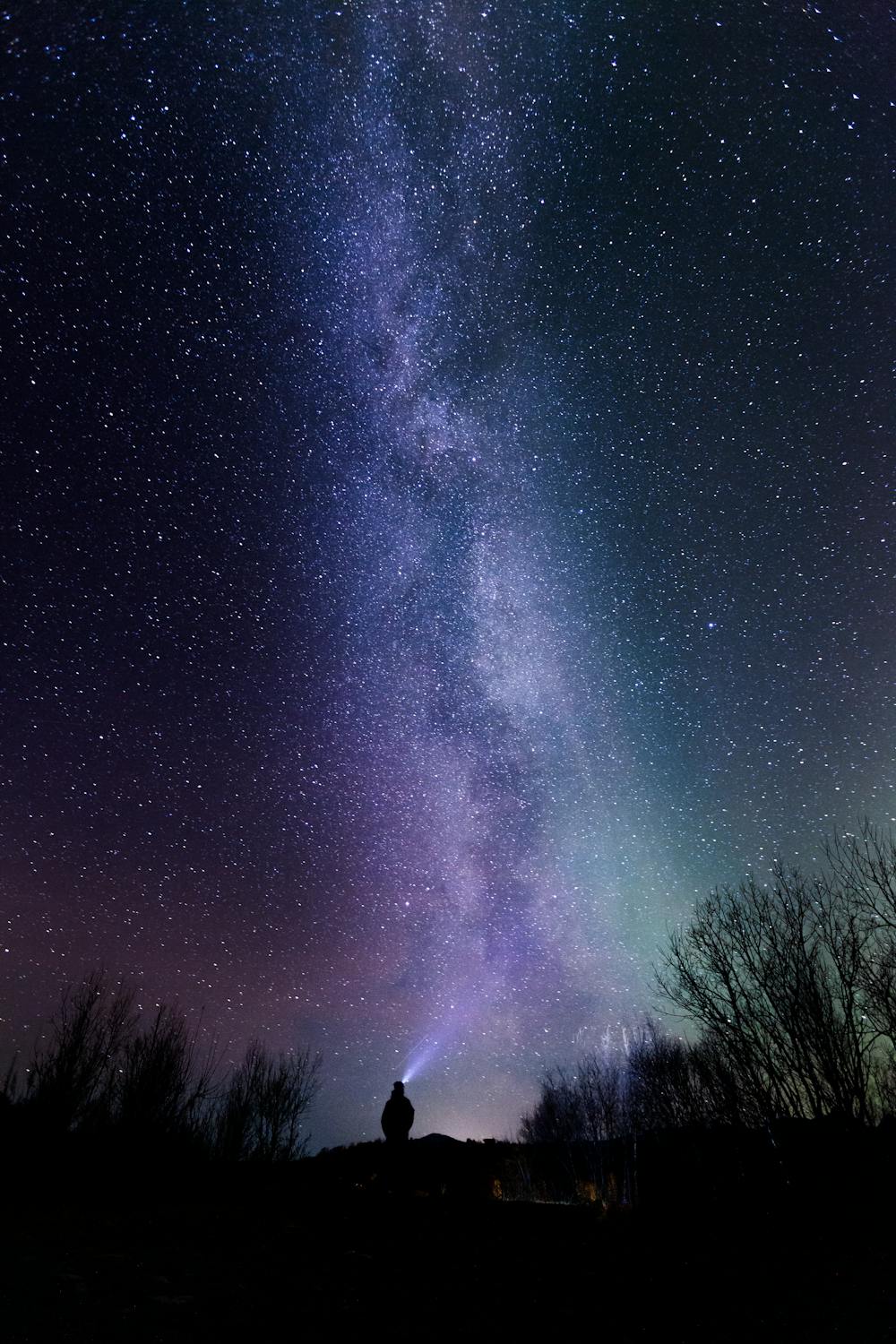 Photo credit on Pexels
Part 3: Nocturnal Wildlife Adventures
Night Safari and Wildlife Walks
Borneo Night Walk (Danum Valley or Kinabatangan, Malaysia) Borneo’s rainforest comes alive at night. Guided night walks reveal species invisible during the day: slow lorises with enormous reflective eyes, sleeping hornbills, flying squirrels launching between trees, and an astonishing diversity of frogs, insects, and reptiles. The Danum Valley Conservation Area offers some of the best night walks in Southeast Asia.
Madagascar Night Walks Madagascar’s lemurs include several nocturnal species that you will never see during the day. Night walks in Ranomafana, Andasibe, or Kirindy reveal mouse lemurs (the world’s smallest primate, weighing 30 grams), aye-ayes (the strangest primate on Earth, with their elongated finger for extracting grubs), and chameleons sleeping on branches.
African Night Safari (Kruger, Sabi Sands, or Hwange) Nocturnal game drives with spotlights reveal the night shift: leopards hunting, aardvarks and pangolins foraging, genets stalking prey, and the haunting calls of spotted hyenas. Many lodges in private conservancies adjacent to major parks offer guided night drives that are not available in the national parks themselves.
Bioluminescence Kayaking
Bioluminescent bays and coastlines offer the most magical night water experience available. When you paddle through water containing dinoflagellates (single-celled organisms that produce light when disturbed), every stroke of your paddle creates a trail of blue-green light. Fish darting beneath the kayak leave glowing trails. Drops of water falling from your paddle hit the surface in tiny explosions of light.
Best bioluminescence kayaking locations:
- Mosquito Bay, Vieques, Puerto Rico (brightest bioluminescence bay in the world)
- Luminous Lagoon, Jamaica
- Toyama Bay, Japan (firefly squid, March to June)
- San Juan Island, Washington (seasonal, summer months)
- Gippsland Lakes, Australia (seasonal blooms)
Night Hiking
Night hiking strips away the visual dominance of daytime and replaces it with a multi-sensory experience that is genuinely transformative. Full-moon hikes are the most popular format: enough light to see the trail without a headlamp but dark enough that the landscape feels alien and new.
Best night hikes:
- Angels Landing, Zion National Park (full moon, summer)
- Stromboli Volcano, Italy (eruptions visible at night)
- Fuji sunrise hike, Japan (start at midnight, summit for dawn)
- Table Mountain, Cape Town (full moon guided hikes)
Planning a Night Adventure Trip
Multi-Activity Night Itinerary: The Southwest US (5 Days)
Day 1: Carlsbad Caverns, New Mexico Tour the Big Room, one of the largest cave chambers in North America, during the day. At sunset, watch 400,000 Brazilian free-tailed bats spiral out of the cave entrance in a column visible from kilometers away. This bat flight occurs from May through October and is one of the most spectacular wildlife events in North America.
Day 2: White Sands National Park, New Mexico The white gypsum dunes are surreal in daylight and otherworldly under a full moon. The park offers monthly Full Moon Hikes (register in advance; they sell out) where rangers lead groups through the dunes under moonlight. The white sand reflects moonlight so effectively that you can read a book.
Day 3: Drive to Bryce Canyon, Utah Bryce Canyon is an IDA-certified Dark Sky Park and one of the darkest places in the continental US. The park hosts annual Astronomy Festivals and regular ranger-led stargazing programs with telescopes. The Milky Way arching over the hoodoos is one of the most photographed night sky scenes in the world.
Day 4: Zion National Park, Utah Night hike the Watchman Trail or Pa’rus Trail under a full moon. The moonlit canyon walls create dramatic shadows and the silence of the canyon at night is profound. Note: Angels Landing is not recommended for night hiking due to exposure.
Day 5: Lehman Caves, Great Basin National Park, Nevada Great Basin is one of the darkest parks in the National Park System. Tour Lehman Caves during the day, then attend the park’s stargazing program. The nearest light pollution is over 100 kilometers away. Great Basin regularly achieves Bortle 2 readings, making it one of the best stargazing locations in the lower 48 states.
Night Adventure Safety
Night activities carry inherent additional risks from reduced visibility:
- Always carry two light sources. A headlamp and a backup flashlight. If your only light fails underground or in remote terrain, you are in trouble.
- Tell someone your plan. Night activities are harder to locate for rescue. Leave detailed itineraries.
- Move slower. Terrain that is straightforward in daylight becomes treacherous in the dark.
- Wildlife awareness. Many dangerous animals (snakes, spiders, predators) are more active at night. Watch where you step and sit.
- Cold preparation. Temperatures drop dramatically after sunset, especially at altitude and in deserts. Carry extra insulation layers.
Essential Night Adventure Gear
Regardless of which night activity you pursue, certain gear is universal:
Headlamp with red light mode: White light destroys night vision (which takes 20 to 30 minutes to develop fully). A red light preserves your adapted vision while still providing enough illumination to navigate. The Petzl Tikka Headlamp ($30-45, 350 lumens, red light mode) is the versatile everyday standard — sufficient for most caving, night hiking, and stargazing setups. For serious caving, the Petzl Duo Z2 ($300, 430 lumens, waterproof, helmet-mountable) is the professional choice. If you are choosing a headlamp specifically for caving or night trails, our guide to the best headlamps for caving and night hiking breaks down every top-tested option by use case.
Warm layers: Night temperatures can drop 15 to 20 degrees Celsius below daytime highs. A packable down jacket, warm hat, and gloves should be in your pack even if the day is warm. In desert environments, the temperature swing can be even more extreme.
Tripod: For astrophotography, a tripod is not optional. Even a basic travel tripod ($30 to $80) enables long-exposure images that handheld shooting cannot achieve. Carbon fiber models ($200+) are lighter but any stable tripod works.
Star chart app: Stellarium (free) or Sky Guide ($3) overlays constellation names and celestial objects on your phone screen when you point it at the sky. These apps enhance stargazing by helping you identify planets, galaxies, and star clusters visible to the naked eye.
 A reliable headlamp is non-negotiable for every night adventure — Photo on Pexels
You Might Also Like
Get the best ThrillStays tips in your inbox
Weekly guides, deals, and insider tips. No spam, unsubscribe anytime.