Best Open Water Swimming Destinations 2026
The world's best open water swimming destinations for 2026 — Greek Islands to Lake Malawi. Water temps, distances, costs, gear list, and how to train for your first open water swim.

This post may contain affiliate links. Disclosure
Open water swimming has exploded in popularity over the past five years, growing from a niche endurance pursuit into a mainstream adventure travel activity. The reasons are not hard to understand: it requires almost no equipment, it is accessible to anyone who can swim, it takes you into natural environments that are stunningly beautiful, and it provides a physical and mental challenge that is deeply satisfying.
The global open water swimming market has grown by an estimated 25 percent since 2022, with organized swims, guided experiences, and swim-specific travel companies multiplying across every continent. The 2026 calendar is the strongest in years — new Oceanman events launching in the Maldives and Bali, Swim Miami returning to Miami Marine Stadium in April, and the BEST Fest at Colonia Sant Jordi (Spain) drawing swimmers of all levels across seven days in crystal-clear Mediterranean water.
Whether you want to swim between Greek islands, cross an alpine lake at sunrise, or complete a channel swim that puts you in an elite club of marathon swimmers, there is a destination and an experience waiting for you.
The Greek Islands: Island-to-Island Swimming
The Greek Islands offer what might be the most beautiful open water swimming in the world. The water is warm (24–27 degrees Celsius from June through September), impossibly clear, and colored in shades of blue and turquoise that look photoshopped. The distances between islands in many archipelagos — 1–5 km — are short enough to swim, creating the unique experience of arriving at an island under your own power.
The Cyclades, Saronic Islands, and Dodecanese all offer excellent swim routes. Organized swim events have proliferated in recent years. The Santorini Experience includes a 1.5 km open water swim in the caldera. The Authentic Marathon Swim retraces the ancient Greek messenger’s route across the Saronic Gulf. Several companies now offer multi-day guided swim-touring trips through the islands where you swim island to island with a support boat alongside and stay at each island overnight.
A 5-day swim tour through the Saronic Islands covering Aegina, Angistri, Poros, and Hydra runs approximately 3–5 km per day. The water temperature sits at 25 degrees in September, visibility reaches 15+ meters, and swimming into the harbor of a Greek island village and walking to a taverna for lunch is one of the best travel experiences available to any swimmer.
Water temperature: 22–27 degrees Celsius (June–September) Best swim distance: 1–5 km island-to-island crossings Difficulty: Beginner to intermediate (calm conditions, warm water, support boat available on guided trips) Best season: June through September Guided swim tours: From 1,200 EUR for 5 days including accommodation, support boat, and guide Where to stay: Island guesthouses from 30 EUR per night Getting there: Fly to Athens. Ferries to all island groups.
The Saronic Islands are the most accessible from Athens (1–2 hours by ferry) and offer the calmest conditions. The Cyclades are windier (the Meltemi wind blows strongly in July–August) and better suited to experienced open water swimmers.
Lake Zurich, Switzerland
Lake Zurich is the center of European open water swimming culture. On any summer morning you will see hundreds of swimmers in the lake, from casual bathers to serious distance swimmers training for channel crossings. The city of Zurich has built its relationship with its lake around swimming: public swimming areas (Badis) line the lakeshore, and the annual Zurichsee-Uberquerung (Lake Zurich Crossing) attracts over 10,000 swimmers for a 1.5 km crossing of the lake.
The water is clean enough to drink, the temperature is comfortable (20–24 degrees in summer), and the setting of alpine foothills rising above the lake is beautiful. For distance swimmers, the lake is 40 km long and offers point-to-point swims of any distance along its shore.
Water temperature: 18–24 degrees Celsius (June–September) Best swim distance: 1.5 km (lake crossing) to 40 km (length of lake) Difficulty: All levels Best season: June through September Events: Zurichsee-Uberquerung (July), various club-organized swims throughout summer Where to stay: Zurich has hostels from 35 CHF and hotels from 100 CHF Getting there: Fly to Zurich Airport (ZRH). The lake is a 15-minute tram ride from the city center.
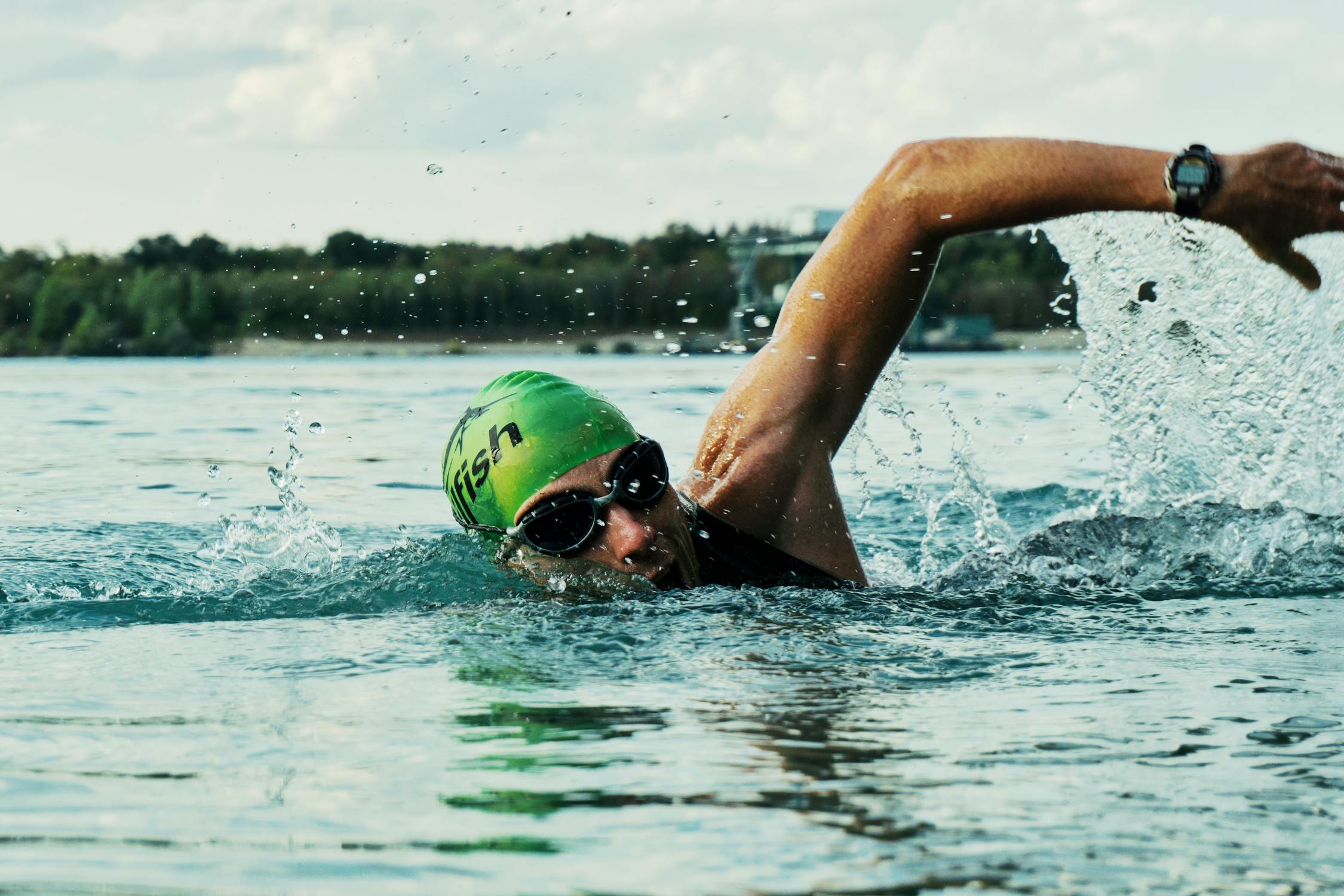 Photo credit on Pexels
Lake Malawi, Malawi/Mozambique/Tanzania
Lake Malawi is the warm-water swimming paradise that most people have never heard of. Africa’s third-largest lake stretches 580 km from north to south, with crystal-clear freshwater staying at 24–28 degrees Celsius year-round. The lake is home to over 1,000 species of cichlid fish — more freshwater fish species than any other lake on Earth — making it a simultaneous snorkeling and swimming destination.
The Lake Malawi Marathon Swim, held annually, has put the lake on the open water swimming map. But you do not need an organized event to enjoy swimming here. The beaches along the southern shore (Cape Maclear, Monkey Bay) and the island lodges on Likoma and Chizumulu offer perfect conditions for daily open water swims in warm, clear, fresh water.
Water temperature: 24–28 degrees Celsius year-round Visibility: 10–20 meters Difficulty: Beginner-friendly (warm, calm, freshwater) Best season: Year-round (May–October is dry season with slightly cooler, clearer water) Safety note: Bilharzia (schistosomiasis) risk exists in parts of the lake. Some areas are safe and some are not. Research your specific swimming location carefully and consult the CDC’s schistosomiasis page for health advice before entering. Where to stay: Cape Maclear has backpacker lodges from $10 USD per night. Island lodges from $30 USD. Getting there: Fly to Lilongwe (LLW). Bus to Monkey Bay or Cape Maclear (5 hours).
The English Channel: The Marathon Swimmer’s Everest
The English Channel crossing (33.8 km from Dover, England to Cap Gris-Nez, France) is the most prestigious open water swim in the world. It is the benchmark against which all other marathon swims are measured, and completing a solo Channel crossing places you in a club of fewer than 2,500 people — less than half the number who have summited Everest.
The Channel is challenging not primarily for its distance but for its conditions. Water temperatures range from 15–18 degrees Celsius during the swimming season (June–September). Tidal currents are strong and can add 10–20 km to the actual swimming distance. Jellyfish stings are common. And the weather can change rapidly, turning a flat calm crossing into a rough, disorienting ordeal.
A solo Channel crossing typically takes 10–16 hours. The swimmer must comply with Channel Swimming Association rules: no wetsuit (standard swimsuit only), no touching the support boat, and no artificial aids. The swimmer swims alongside a support boat that provides liquid nutrition handed on a pole every 30–45 minutes.
Distance: 33.8 km (straight line), 40–55 km actual due to tidal drift Water temperature: 15–18 degrees Celsius (June–September) Difficulty: Expert — requires 12–18 months of dedicated training, cold-water acclimatization, and a support crew Best season: July through September (warmest water, longest daylight) Cost: Support boat hire from 3,000 GBP. Channel Swimming Association registration from 120 GBP. Total cost including training camps and support: 5,000–8,000 GBP. Prerequisites: You must complete a 6-hour qualifying swim in water below 16 degrees Celsius.
Montenegro: The Bay of Kotor
The Bay of Kotor is a stunning, sheltered bay on the Adriatic coast of Montenegro that provides ideal conditions for open water swimming. The bay is essentially a fjord, surrounded by dramatic limestone mountains that rise 1,500 meters from the water. Medieval villages and Venetian fortifications line the shore. The water is warm (22–26 degrees in summer), calm (the bay is sheltered from open Adriatic swell), and clean.
The Kotor Bay Swim, held annually in August, is a 4.5 km cross-bay swim that attracts swimmers from across Europe. The bay offers swimming opportunities year-round, with numerous beaches, jetties, and swimming platforms along the 100+ km shoreline. Montenegro remains dramatically underpriced relative to Croatia — one of the best value swim destinations in Europe.
Water temperature: 20–26 degrees Celsius (May–October) Best swim distance: 1–5 km cross-bay swims Difficulty: Beginner to intermediate Best season: May through October Where to stay: Kotor old town has rooms from 25 EUR. Perast has boutique hotels from 60 EUR. Getting there: Fly to Dubrovnik (Croatia) or Tivat (Montenegro). Kotor is 1–2 hours from either airport.
The Bosphorus, Istanbul, Turkey
The annual Bosphorus Cross-Continental Swim is one of the most unique open water swimming events in the world. You swim 6.5 km across the Bosphorus strait from Asia to Europe, with container ships and ferries halted to allow thousands of swimmers to cross. The setting is extraordinary: two continents, Ottoman palaces, medieval fortresses, and the modern Istanbul skyline.
The event attracts over 2,500 swimmers each year and sells out months in advance. The water temperature is typically 20–22 degrees in August when the event is held, and the current assists your crossing, carrying you south toward the Sea of Marmara as you swim across.
Distance: 6.5 km Water temperature: 20–22 degrees Celsius (August) Difficulty: Intermediate (current-assisted, but 6.5 km requires solid fitness) When: Annual event in August. Registration opens in spring and sells out quickly. Cost: Registration from 100 EUR Getting there: Fly to Istanbul (IST or SAW)
2026 New Events Worth Booking
Swim Miami (April 12, 2026): The East Coast’s longest-standing open water event since 1989, ranked among the top 25 globally by the World Open Water Swimming Association (WOWSA). Miami Marine Stadium. Register at swimmiami.net.
Oceanman Maldives (April 2026): The first Oceanman event in the Maldives, launching at Maafushi Island. Crystal-clear Indian Ocean water, beginner-friendly distances available.
BEST Fest, Colonia Sant Jordi, Spain: Europe’s largest open water swimming festival, seven days of swimming in the clear waters of southeast Mallorca. Swimmers of all levels from beginner to elite.
Comparison: Open Water Swimming Destinations
| Destination | Water Temp | Distance Range | Difficulty | Cost Level | Best For |
|---|---|---|---|---|---|
| Greek Islands | 22–27°C | 1–5 km | Beginner–Int | Medium | Scenic island-to-island swims |
| Lake Zurich | 18–24°C | 1.5–40 km | All levels | High | European swim culture |
| Lake Malawi | 24–28°C | Any | Beginner | Low | Warm freshwater, budget |
| English Channel | 15–18°C | 34+ km | Expert | High | Marathon swimming prestige |
| Bay of Kotor | 20–26°C | 1–5 km | Beginner–Int | Low–Medium | Sheltered scenic swimming |
| Bosphorus | 20–22°C | 6.5 km | Intermediate | Medium | Unique cultural experience |
Essential Open Water Swimming Gear
Goggles: Invest in well-fitting, leak-free open water goggles with tinted or mirrored lenses for bright conditions. Brands like Zoggs Predator Flex, Speedo Rift, and THEMAGIC5 (custom-molded to your face) are popular. $15–60.
Wetsuit (optional): A triathlon-specific wetsuit provides buoyancy and warmth. Permitted in most organized swims when water temperature is below 20 degrees. Not permitted in English Channel swims or some traditional marathon events. $150–500.
Swim skin: A non-neoprene bodysuit providing minimal thermal protection and UV coverage without the buoyancy of a wetsuit. Used in warm-water swims and events that prohibit wetsuits. $50–150.
Tow float: An inflatable buoy that attaches to your waist with a short leash and trails behind you. It makes you visible to boats and provides emergency flotation. The Royal Life Saving Society recommends tow floats for all open water swimmers. Essential for any unsupervised swim. $20–40.
Ear plugs: Cold water in the ear canal causes disorientation and, over time, surfer’s ear (exostosis). Silicone ear plugs from $5.
Anti-chafe balm: Long swims cause friction burns at the neck, armpits, and groin. Apply liberally before any swim over 2 km. Body Glide or Vaseline. $5–10.
GPS watch: A swim-specific GPS watch tracks your distance, pace, and route. The Garmin Swim 2, Apple Watch Ultra 2, or COROS Pace 3 are the most widely used options. More on GPS tech in our best GPS watches for adventure travel guide.
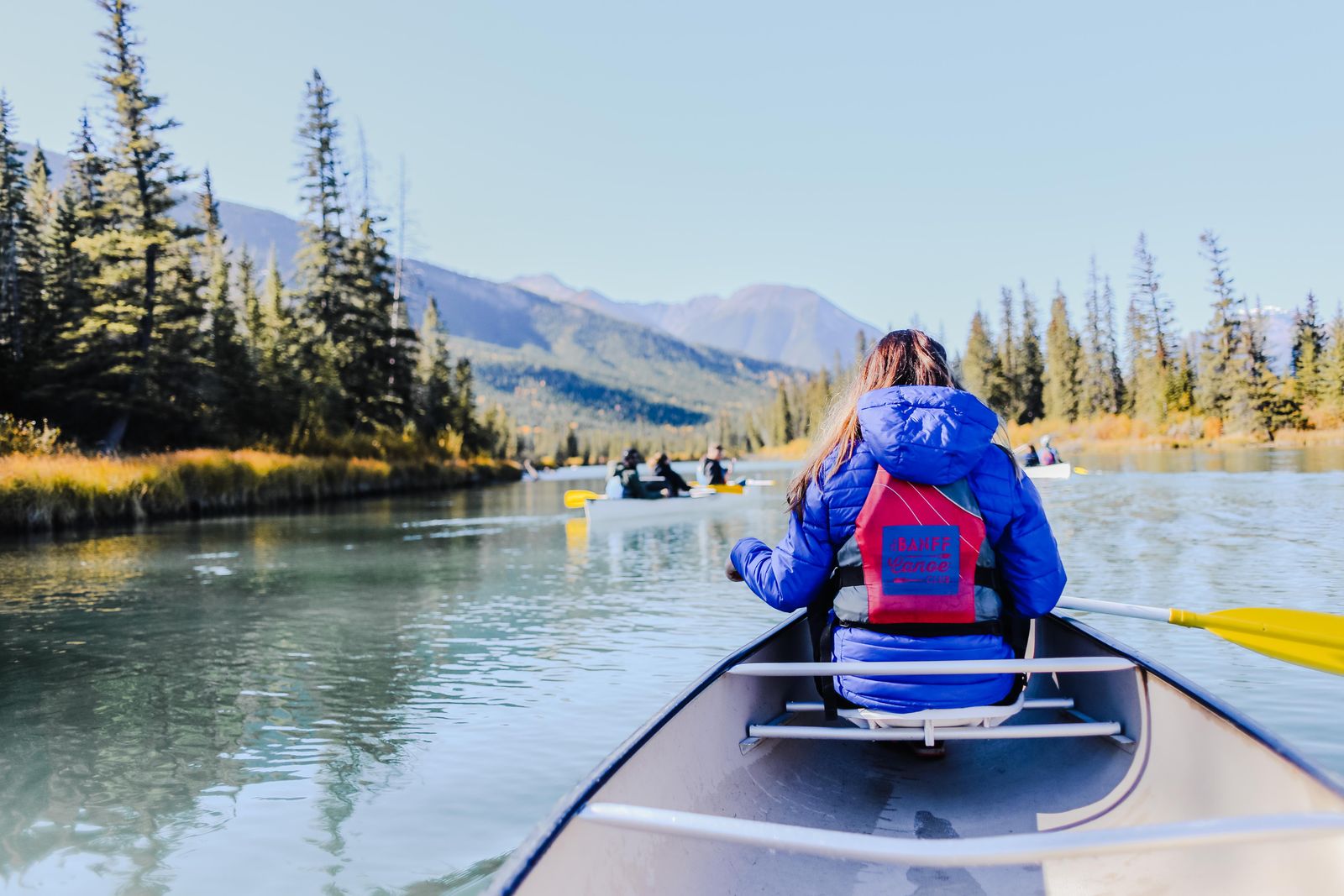
Building Up to Your First Open Water Swim
If you are a pool swimmer considering your first open water experience, here is a progression:
Month 1–2: Swim in open water 1–2 times per week in a supervised environment (a beach with lifeguards or an organized open water swimming group). Focus on sighting (lifting your head to navigate), breathing in waves, and getting comfortable without pool walls and lane lines.
Month 3–4: Build up to continuous swimming of 2+ km in open water. Practice feeding (drinking from a water bottle while treading water). Learn to draft behind another swimmer — swimming in their wake reduces energy expenditure by up to 20 percent.
Month 5–6: Enter your first organized open water swimming event (1–3 km). Experience swimming in a group, managing the start, and racing in open water.
Month 7+: Progress to longer distances (5–10 km) and more challenging conditions (cooler water, currents, waves). Consider a guided swim trip to one of the destinations in this guide.
The key psychological challenge in open water swimming is managing the disorientation. There are no lane lines, no black lines on the bottom, and no walls to push off. You navigate by lifting your head every 6–10 strokes to sight on a landmark — a building, a buoy, a point of land. This is called sighting, and it is the fundamental skill that separates open water swimming from pool swimming.
Safety Principles for Open Water Swimming
-
Never swim alone. Always swim with a buddy or within sight of a support boat, kayak, or lifeguard.
-
Know the water. Research currents, tides, water quality, and any specific hazards (boats, jellyfish, underwater obstacles) before entering.
-
Wear a tow float. This makes you visible to boats and provides emergency flotation.
-
Acclimatize to cold water gradually. Cold water shock (the gasp reflex triggered by sudden immersion in cold water) causes more drowning deaths than hypothermia. Enter the water slowly and breathe deliberately through the initial cold shock.
-
Tell someone your plan. Before every swim, tell someone where you are going, how far you plan to swim, and when you expect to be back.
-
Carry a whistle. A whistle attached to your goggles can summon help if you get into difficulty.
For comprehensive adventure-specific safety planning, our adventure travel safety guide covers aquatic and open-water emergencies in detail.
Related Reading
Get the best ThrillStays tips in your inbox
Weekly guides, deals, and insider tips. No spam, unsubscribe anytime.