Best Paragliding Destinations: Where to Soar in 2026
World's best paragliding spots for every budget and skill level. Tandem flights from $25 in Bir Billing to Alps classics in Interlaken. 2026 prices and booking tips.
This post may contain affiliate links. Disclosure
Few experiences in adventure travel match the pure, unfiltered freedom of paragliding. You launch from a mountainside, catch a thermal, and suddenly you are a thousand feet above the ground with nothing between you and the landscape below but air. No engine noise, no cabin walls, just you, a fabric wing, and the wind.
Paragliding has become one of the most accessible aerial sports in the world. You do not need a pilot’s license to try a tandem flight (where you fly strapped to a certified instructor), and the barriers to entry for learning solo are lower than you might expect. In 2026, with the sport growing rapidly in destinations across every continent, there has never been a better time to take flight.
This guide covers the world’s finest paragliding destinations, from legendary sites that have hosted world championships to hidden gems where you can learn to fly for a fraction of the cost elsewhere.
Oludeniz, Turkey
Oludeniz is, for many paragliders, the most iconic launch site on Earth. The tandem flight from the 1,969-meter summit of Babadag Mountain down to the turquoise waters of the Blue Lagoon is consistently ranked among the best paragliding experiences anywhere. The flight takes 25-45 minutes depending on conditions, and the views are staggering. You soar above a coastline that looks like a postcard, with the Aegean Sea stretching to the horizon in one direction and the Taurus Mountains rising in the other.
The annual Oludeniz International Air Games, held every October, transforms the beach into an aerial festival drawing pilots from 40+ nations — an extraordinary time to visit even as a spectator.
Best for: First-time tandem flights, photography Flight time: 25-45 minutes (tandem) Best season: April through November. Summer months (June-September) have the most reliable thermals. Cost: Tandem flights from $95-115 USD (2026 pricing), including photos and video. Where to stay: Oludeniz has budget pensions from $20 per night and beachfront hotels from $60 per night. Nearby Fethiye offers even more options. Pro Tip: Book an early morning or late afternoon flight for the best light and calmest conditions. Midday thermals can be turbulent, which some people love and others find nauseating.
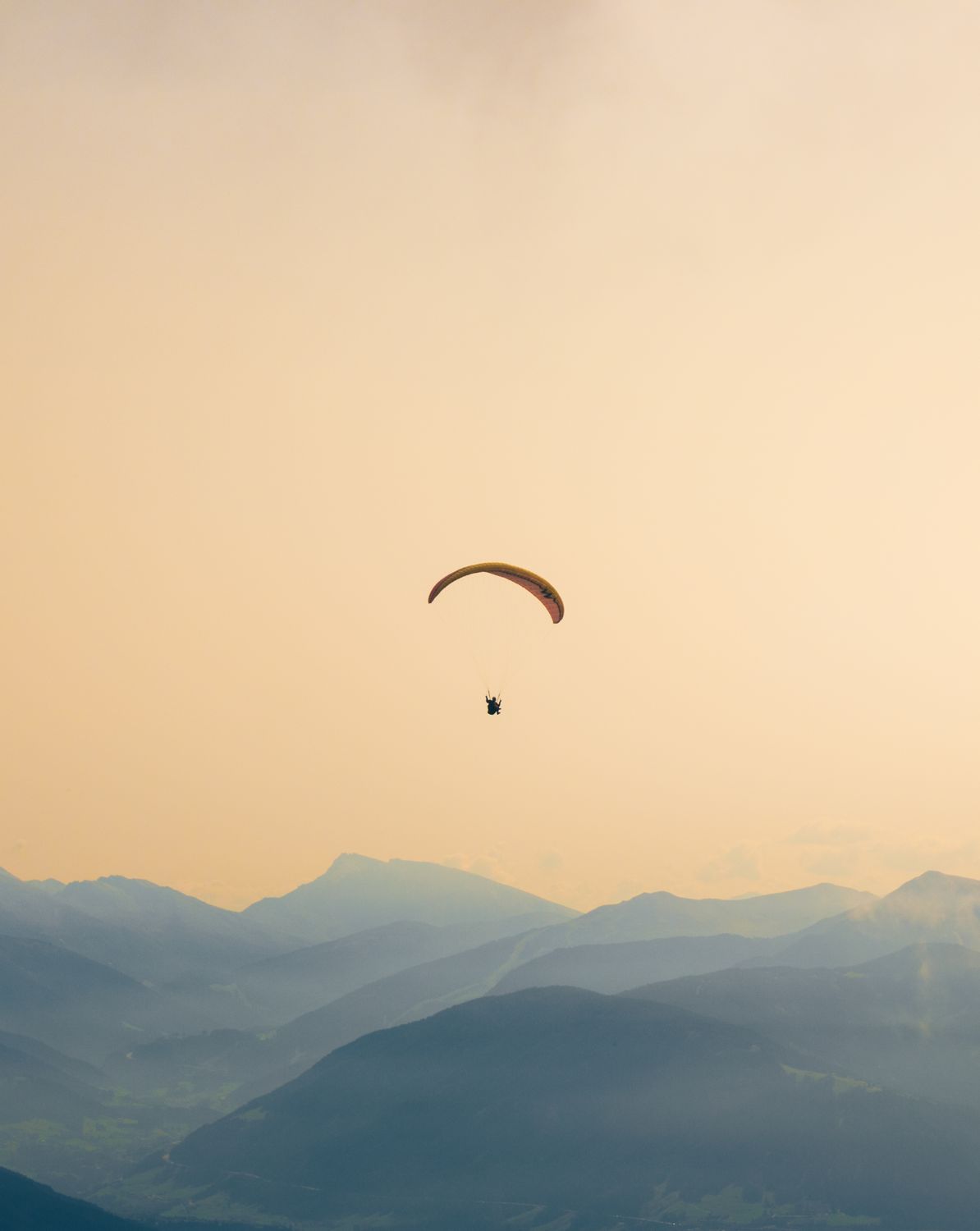 Photo credit on Pexels
Pokhara, Nepal
Pokhara might be the best-value paragliding destination on the planet, and the Nepal Tourism Board lists it as the country’s top aerial adventure destination. For about $63-80 USD, you get a one-hour tandem flight with a certified pilot, roundtrip transportation from your hotel, and a package of photos and videos. But it is not just about the price. Flying above Phewa Lake with the Annapurna massif as your backdrop, at over 8,000 meters, is a visual experience that borders on the spiritual. The thermals are strong and reliable, and on a good day, you can stay airborne for hours.
Pokhara is also one of the best places in Asia to learn to paraglide independently. Several reputable schools offer multi-day courses starting from $500-800 for a full P1-P2 certification program.
Best for: Budget travelers, learning to fly, tandem flights with Himalayan views Flight time: 30-60 minutes (tandem) Best season: October through March (dry season). November and December are optimal. Cost: Tandem flights from $63 USD. Solo courses from $500 for P1-P2. Where to stay: Lakeside (Pokhara’s tourist district) has guesthouses from $8-15 per night and mid-range hotels from $25-50 per night.
Interlaken, Switzerland
Switzerland practically invented recreational paragliding, and Interlaken remains one of the sport’s spiritual homes. The valley between Lake Thun and Lake Brienz, surrounded by the Eiger, Monch, and Jungfrau peaks, provides some of the most scenic flying in Europe. Swiss tandem pilots are among the most highly trained in the world, which means that even first-timers can feel confident about safety. Flights launch from Beatenberg or Amisbul and land in the grassy fields of the Hohematte, right in the center of Interlaken.
Best for: Scenic tandem flights, experienced pilots seeking alpine flying Flight time: 15-30 minutes (tandem), hours for licensed pilots riding thermals Best season: April through October. Summer offers the longest days and strongest thermals. Cost: Tandem flights from 170-220 CHF ($190-245 USD). This is Switzerland, so it is not cheap, but the experience is unmatched. Where to stay: Hostels from 35 CHF per night. Budget hotels from 80 CHF. Consider Balmers hostel, a legendary backpacker institution.
Pro Tip: If you are already a licensed pilot, bring your own gear and fly for free (after obtaining a temporary Swiss airspace permit, which is straightforward). The cross-country potential from Interlaken is phenomenal.
Bir Billing, India
Bir Billing in Himachal Pradesh has risen from obscurity to become one of the world’s premier paragliding sites. The take-off at Billing (2,400 meters, making it the world’s second-highest commercial paragliding launch point) and landing at Bir (1,525 meters) provides a 900-meter altitude differential, giving you a long, scenic flight over tea gardens, Tibetan monasteries, and pine forests with the Dhauladhar range as a backdrop. Bir Billing hosted the Paragliding World Cup in 2015, putting it firmly on the international map. Since then, the infrastructure has only improved, with numerous schools, equipment shops, and experienced tandem operators.
Best for: Affordable tandem flights, pilot certification courses, cross-country flying
Flight time: 15-30 minutes (tandem), 2+ hours for thermal flights
Best season: March through June and September through November. October is considered the best month.
Cost (2026 pricing): 15-20 minute tandem flight ₹3,000 ($35 USD). 20-30 minute extended flight ₹4,200 ($50 USD). Pilot courses from $400-700 for P1-P2 certification.
Where to stay: Guesthouses and hostels from $5-15 per night. Bir has a relaxed, hippie vibe with cafes and yoga studios.
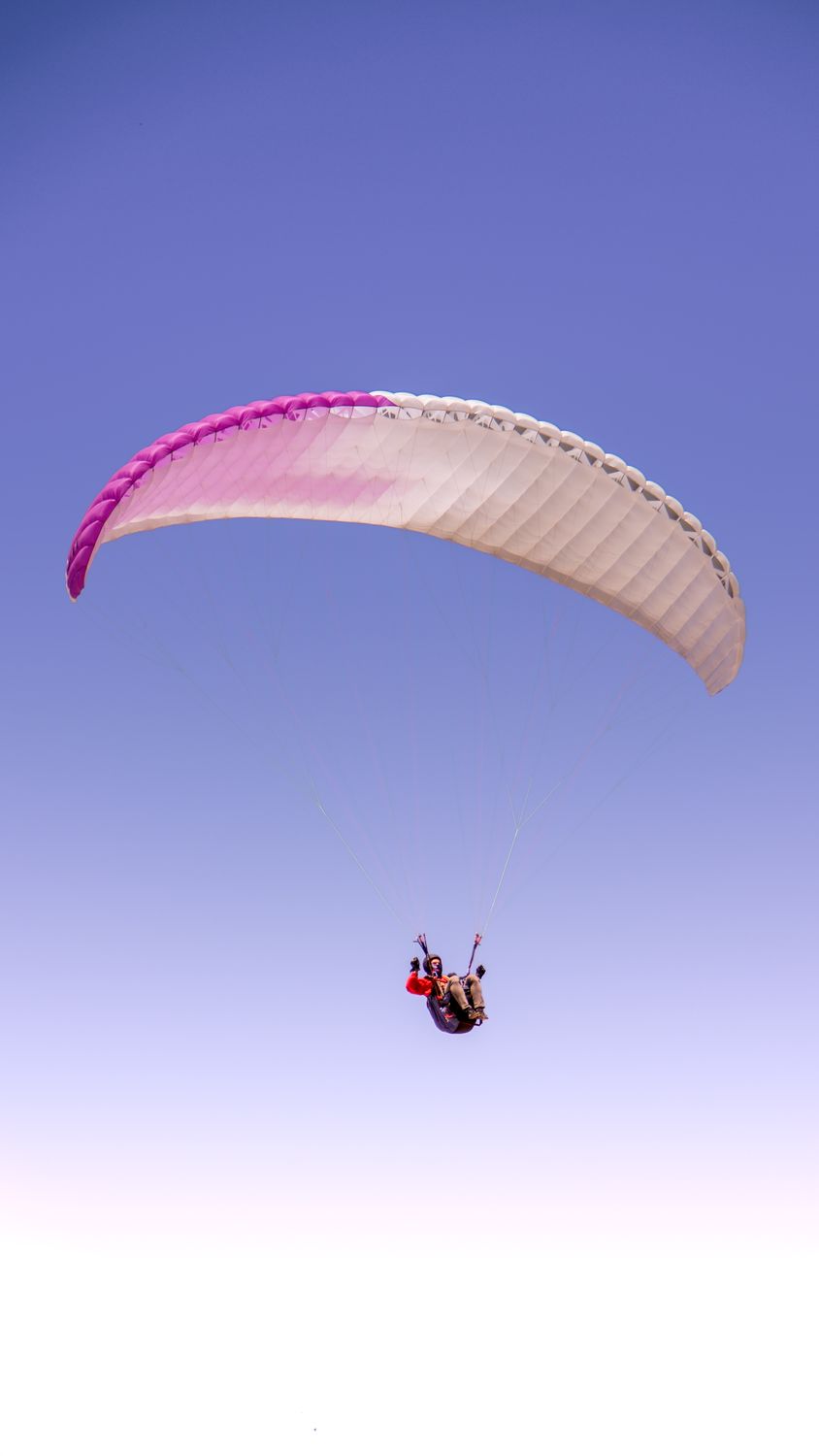 Photo credit on Pexels
Annecy, France
Annecy is known in the paragliding world for two things: stunning beauty and safety. The lake below acts as a natural landing zone, and the site is frequently used for SIV (Simulation d’Incident en Vol) safety courses, where pilots practice emergency maneuvers over water. The flying itself is spectacular. Launching from Col de la Forclaz, you soar above Lake Annecy, one of the cleanest lakes in Europe, with the French Alps rising on all sides. The old town of Annecy, with its canals and medieval architecture, makes for a perfect post-flight exploration.
Best for: Safety courses, experienced pilots, scenic tandem flights Flight time: 15-25 minutes (tandem) Best season: May through September Cost: Tandem flights from 90-120 euros. SIV courses from 500-800 euros for a multi-day program. Where to stay: Hostels from 30 euros per night. Hotels from 70 euros. Campgrounds along the lake from 20 euros.
Medellin, Colombia
Medellin’s consistent thermals and year-round warm weather make it an increasingly popular paragliding destination. The most common launch site is in San Felix, about 45 minutes from the city, where you soar above the lush green Aburra Valley. What sets Medellin apart is the combination of affordable flying, great food, vibrant nightlife, and a welcoming local paragliding community. It is becoming a hub for digital nomads who fly in the mornings and work in the afternoons.
Best for: Budget tandem flights, year-round flying, combining adventure with city culture Flight time: 15-25 minutes (tandem) Best season: Year-round, with December through March and July through August being optimal. Cost: Tandem flights from $50-70 USD. Pilot courses available from $600-1,000. Where to stay: Hostels in El Poblado from $10-20 per night. Apartments from $30-50 per night. The Colombia adventure travel guide has hostel recommendations for extended stays.
Iquique, Chile
Iquique is a paraglider’s paradise for one simple reason: the coastal cliffs provide near-perfect ridge lift conditions almost every day of the year. The Atacama Desert’s thermal dynamics create reliable, smooth wind that makes Iquique one of the safest and most consistent flying sites on the planet. The signature experience is soaring along the 600-meter-high coastal cliffs, with the Pacific Ocean below and the Atacama stretching endlessly behind you. The conditions are so predictable that novice (P1) pilots come here specifically to build their hours.
Best for: Beginner pilots building hours, ridge soaring, year-round flying Flight time: 30 minutes to several hours Best season: Year-round (one of the most consistent sites globally) Cost: Tandem flights from $60-80 USD. Equipment rental from $30-40 per day. Where to stay: Hostels from $15 per night. Beach apartments from $40 per night.
Point of the Mountain, Utah, USA
Point of the Mountain (also known as “The Point”) near Salt Lake City is one of the most popular paragliding training sites in the United States. The consistent, smooth wind conditions created by the Jordan Valley’s geography make it exceptionally predictable, which is exactly what you want when learning to fly. The site has north and south launch areas, so you can fly in almost any wind direction. There is a large, active paragliding community and several schools operating out of the area.
Best for: Learning to fly, consistent conditions, large pilot community Flight time: Variable (training flights to hour-long soaring sessions) Best season: March through November. Spring and fall are optimal. Cost: Ground handling courses from $200. Full P2 certification from $2,000-3,000. Where to stay: Salt Lake City accommodation varies. Budget motels from $60 per night.
Photo credit on Pexels
Roldanillo, Colombia
Roldanillo in Valle del Cauca is South America’s cross-country paragliding capital. The Cauca Valley’s thermal dynamics produce strong, consistent lift that allows experienced pilots to fly 100+ kilometer cross-country routes. The site has hosted numerous international competitions.
Best for: Cross-country flying, competitions, experienced pilots Flight time: Hours (thermal and cross-country flights) Best season: December through February (best thermals) Cost: Launch fees are minimal. Accommodation from $10-20 per night. Where to stay: Basic hostels and guesthouses in Roldanillo from $10-20 per night.
Kamshet, India
Located in western India, about 100 kilometers from Mumbai, Kamshet has rapidly developed into a world-class paragliding training center. The terrain features multiple launch sites at various elevations, and the thermals are generally gentle and forgiving, making it ideal for students.
Best for: Pilot training, affordable flying, accessibility from Mumbai and Pune Flight time: Variable Best season: October through May Cost: Tandem flights from $20-30 USD. P2 certification courses from $350-500. Where to stay: Training centers often include accommodation. Guesthouses from $8-15 per night.
Getting Started: What You Need to Know
Tandem vs. Solo
If you have never paraglided before, a tandem flight is the perfect introduction. You are strapped into a harness in front of a certified pilot who handles all the technical aspects. All you have to do is run a few steps at launch (the hardest part for most people) and enjoy the ride. If you want to fly independently, you will need to complete a certification program. The standard progression is:
- P1 (Beginner): Basic ground handling and short flights under supervision (2-5 days)
- P2 (Novice): Independent flying at approved sites (10-15 days of training)
- P3 (Intermediate): Cross-country flying, thermal techniques (experience-based)
- P4/P5 (Advanced/Expert): Competition and extreme conditions
Cost of Getting Certified
| Location | P2 Certification Cost | Living Costs (per day) |
|---|---|---|
| Pokhara, Nepal | $500-800 | $15-25 |
| Bir Billing, India | $400-700 | $10-20 |
| Kamshet, India | $350-500 | $10-15 |
| Point of the Mountain, USA | $2,000-3,000 | $60-100 |
| Annecy, France | $1,500-2,500 | $50-80 |
Essential Gear
For tandem flights, you need nothing beyond comfortable shoes and a light jacket. For solo flying, your essential kit includes:
- Wing (paraglider): $2,500-4,500 new, $1,000-2,500 used
- Harness: $400-1,000
- Reserve parachute: $400-700
- Helmet: $80-200 (certified paragliding helmet)
- Variometer/GPS: $200-600
- Radio: $50-150
Cross reference gear selection with the adventure travel gear guide for packing strategies on multi-destination flying trips.
Safety Considerations
Paragliding is a real aviation activity with real risks. Key safety principles:
- Always check weather conditions before flying
- Never fly in strong or gusty wind as a beginner
- Maintain your equipment and inspect your wing regularly
- Fly within your skill level
- Take an SIV course once you have some experience
- Always carry a reserve parachute
- Stay connected with the local flying community for site-specific advice
Review the full adventure travel safety guide before your first flight — understanding risk management applies directly to aerial sports.
Paragliding Travel Tips
Traveling with Paragliding Gear
A complete paragliding setup weighs 12-18 kg and packs into a large backpack. Most airlines treat it as regular checked luggage (within weight limits). Tips:
- Use a dedicated paragliding rucksack (like the Gin Yeti or Advance Lightness) that doubles as your flying harness
- Protect your reserve parachute handle from accidental deployment during transport
- Carry your reserve and harness in your carry-on if possible (some airlines allow this)
- Never check your reserve parachute without protecting the handle and pins
Choosing a Tandem Operator
Not all tandem operators are created equal. Look for:
- Certified pilots: USHPA (US), BHPA (UK), FSVL (Switzerland), or equivalent national certification
- Insurance: The operator should carry liability insurance
- Equipment condition: Modern, well-maintained tandem wings and harnesses
- Reviews: Check Google, TripAdvisor, and paragliding-specific forums
- Photo/video service: Most operators offer in-flight photography packages ($10-40 extra)
Weather Reading for Pilots
Understanding weather is the most important skill for independent paragliding. Key concepts:
- Thermals: Rising columns of warm air that allow you to gain altitude. Triggered by sun heating the ground unevenly. Stronger thermals develop around dark surfaces (plowed fields, asphalt, rock faces) and south-facing slopes (in the Northern Hemisphere).
- Wind speed and direction: Check at multiple altitudes. Surface wind may differ significantly from wind at launch altitude.
- Cloud development: Cumulus clouds indicate thermal activity. Overdeveloped cumulus (towering, darkening) warns of thunderstorm development, which is extremely dangerous for paragliders.
- Inversions: A temperature inversion layer can trap you below a ceiling. Recognize when thermals are not breaking through and adjust your plans.
Building Flight Hours
After certification, the key to becoming a competent pilot is accumulating flight hours in diverse conditions. Aim for:
- 50+ hours before your first cross-country attempt
- 100+ hours before flying in strong thermal conditions
- Regular flying (at least twice per month) to maintain skills
- Flying at different sites to experience varied conditions
Final Thoughts
Paragliding offers something that very few adventure sports can match: accessible, affordable, genuine flight. Whether you are taking a tandem flight above the turquoise waters of Oludeniz or learning to thermal above the Himalayas in Bir Billing, the sensation of free flight is transformative. The destinations on this list represent the best the sport has to offer, covering every budget, skill level, and landscape. Start with a tandem flight somewhere that inspires you. If the sky calls you back — and it probably will — start looking into certification courses in one of the budget-friendly training destinations.
The sky is not the limit. It is just the beginning.
Recommended Gear for Paragliding Travel
The one item worth packing for any tandem or solo paragliding trip: the GoPro HERO13 Black. It mounts directly to a paragliding helmet or harness, shoots 4K 60fps stabilized footage that handles the motion and altitude changes of an Oludeniz or Bir Billing flight, and is compact enough to not affect aerodynamics. Operator-provided video at most paragliding destinations costs $40-80; your own camera pays for itself in 2-3 flights and captures better angles.
 GoPro for capturing your flights from above — Photo on Pexels
Related Reading
Get the best ThrillStays tips in your inbox
Weekly guides, deals, and insider tips. No spam, unsubscribe anytime.