Solo Male Adventure Travel: Best Destinations 2026
Definitive 2026 guide to solo male adventure travel: best destinations, real budgets, safety strategies, and beating loneliness on the road. Plan your trip now.
This post may contain affiliate links. Disclosure
Updated for 2026 — Accurate as of February 2026.
I took my first solo trip at 25, booking a one-way ticket to Nepal with a backpack, a sleeping bag, and a vague plan to trek to Everest Base Camp. I knew nobody in the country, spoke zero Nepali, and had never been above 3,000 meters. It was the most formative three weeks of my life. Not because I reached base camp (I did), but because solo travel stripped away every social crutch I relied on and forced me to become a more resourceful, confident, and open version of myself.
Solo male adventure travel occupies a strange space in the travel conversation. There is extensive content about solo female travel, and rightfully so, given the specific safety considerations women face. But men traveling alone encounter their own set of challenges that rarely get addressed: loneliness and the reluctance to admit it, the assumption that you should be fearless because of your gender, the difficulty of forming authentic connections without the social lubricant of a travel companion, and the physical risks that come with solo adventure activities where there is nobody to call for help if something goes wrong.
According to data from Solo Traveler World, 64% of solo travelers are female and 36% are male. Among adventurers specifically, men are more likely to choose physically demanding activities: trekking, climbing, cycling, and motorsport account for 68% of solo male trip activities. The 2026 trend data from Much Better Adventures shows over 70% of adventure travel bookings are made by individual travelers, with Kyrgyzstan recording a 119% increase in solo visitors in 2025. This is a growth market — and the infrastructure reflects it.
This guide is practical, specific, and based on personal experience and extensive research. It covers where to go, what to expect, and how to navigate the unique dynamics of being a man traveling alone.
Best Destinations for Solo Male Adventure Travel
1. Nepal
Nepal is arguably the world’s best destination for solo male adventure travelers. The country is purpose-built for trekking, the infrastructure along popular routes is excellent, and the culture is warm and welcoming to solo travelers. Permit and entry rules were updated in 2025: solo trekkers on restricted routes like Manaslu and Tsum Valley now require a licensed guide, a rule that is actively enforced.
Why it works for solo males: The teahouse trekking system means you do not need a tent, cooking gear, or even a detailed plan. You walk from village to village, sleeping in family-run lodges for $3 to $10 per night, eating dal bhat (unlimited rice and lentils for $3 to $5), and meeting other trekkers every evening.
Top treks:
- Everest Base Camp: 12 to 14 days, moderate difficulty, the classic solo trek. Well-marked trail, abundant teahouses. Social by default — you will not feel alone unless you want to.
- Annapurna Circuit: 14 to 21 days, moderate to strenuous. More varied landscapes than EBC, from subtropical jungle to 5,416-meter Thorong La Pass.
- Manaslu Circuit: 14 to 18 days, strenuous. Requires a guide by regulation, but the route sees a fraction of the traffic of Annapurna. This is for experienced solo trekkers who want wildness.
Budget: $25 to $50 per day on the trail, including food, lodging, and permits. A three-week trip runs $1,500 to $3,000 all-in from most origin cities.
For a thorough breakdown of what you will encounter on the trail and beyond, see our Nepal trekking guide.
2. New Zealand
New Zealand is the adventure capital of the English-speaking world. Its compact size, excellent safety record, and outdoor-focused culture make it ideal for solo males. The Great Walks system, bungee jumping, skydiving, jet boating, and mountaineering are all easily accessible to solo travelers.
Why it works for solo males: The backpacker infrastructure (hostels, campervan rentals, shuttle buses between adventure hubs) is designed for independent travelers. Kiwi culture is friendly but not intrusive, and there is no language barrier.
Must-do solo adventures:
- Milford Track (4 days, book DOC huts months ahead)
- Tongariro Alpine Crossing (1 day, best single-day hike in the country)
- Abel Tasman coastal kayaking (3 to 5 days)
- Queenstown bungee, skydiving, or jet boating
- Mount Cook area hiking and ice climbing
Budget: $60 to $120 per day with hostel or campervan accommodation. A three-week adventure loop costs $3,000 to $5,500.
Our New Zealand adventure travel guide covers every region in depth, including the best time to visit each island.
3. Georgia (Country)
Georgia has emerged as one of the most exciting adventure destinations in the world, and it is exceptionally welcoming to solo male travelers. The Caucasus Mountains rival the Alps in grandeur but cost a fraction of the price. Georgian hospitality is legendary — it is genuinely difficult to walk through a village without being invited in for wine and food.
Why it works for solo males: Georgia has a strong tradition of male hospitality. The supra (Georgian feast) culture means you will be welcomed at tables of strangers. Citizens of 95 countries can stay up to one year without a visa, and the combination of mountains, wine regions, and ancient culture provides weeks of varied adventure.
Top adventures:
- Tusheti trekking (5 to 7 days through one of Europe’s most remote regions)
- Svaneti to Ushguli trek (4 days past medieval stone towers)
- Paragliding over Gudauri ski resort
- Rafting on the Aragvi River
- Caving in Prometheus Cave and Sataplia
Budget: $20 to $50 per day. Georgia is one of the cheapest adventure destinations in the world. A two-week trip costs $700 to $1,500 including flights from Europe.
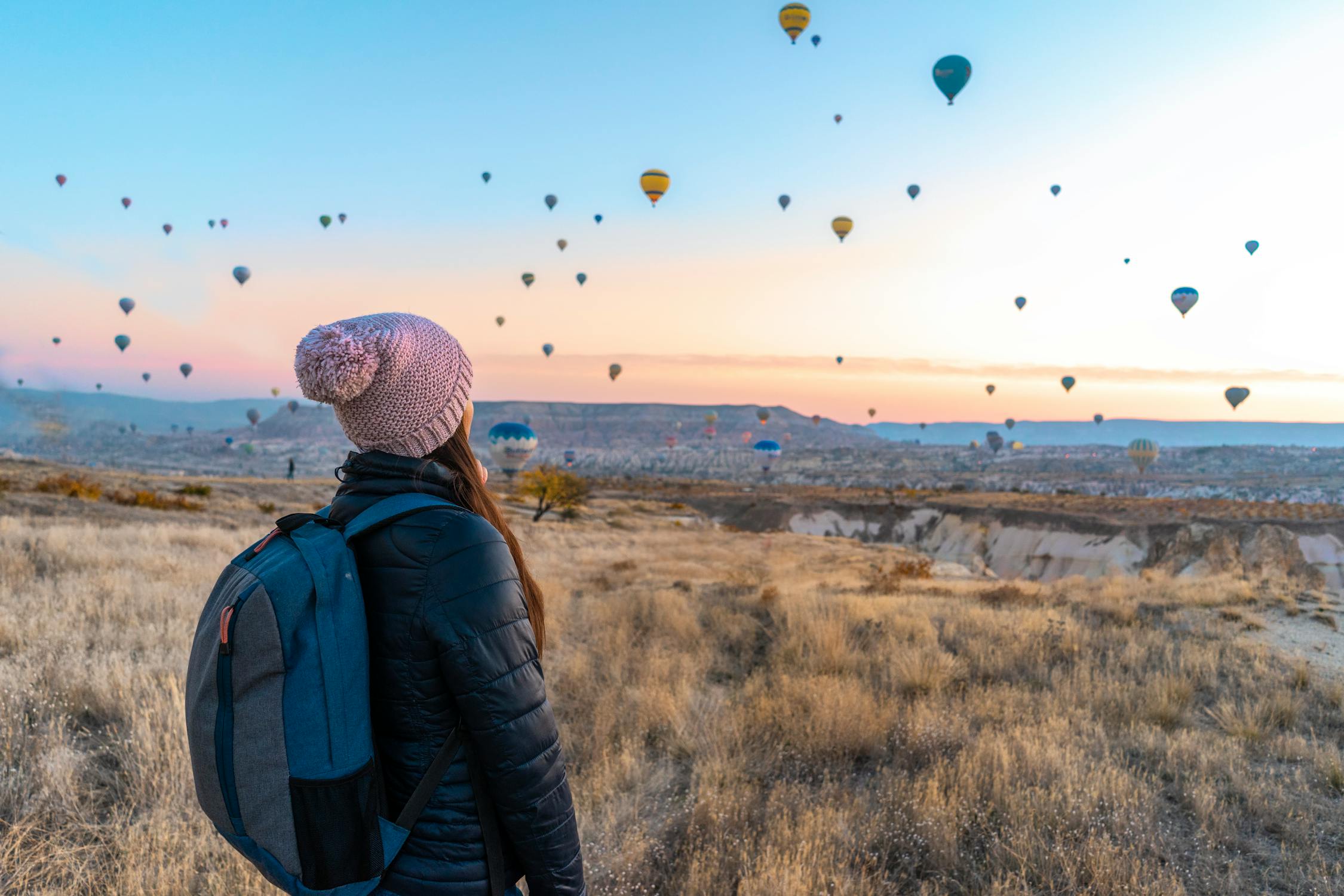 Photo credit on Pexels
4. Colombia
Colombia has undergone one of the most remarkable tourism transformations of any country. A decade ago it was considered dangerous; today it is one of South America’s top adventure destinations. For solo male travelers, Colombia offers Caribbean coast, Andean mountains, Amazon jungle, and Pacific surf within a single country.
Why it works for solo males: Colombian culture is gregarious and social. Hostels in Medellin, Bogota, and Cartagena are full of solo travelers. The adventure activities — Lost City trek, paragliding in Bucaramanga, diving in Providencia, hiking in Cocora Valley — attract a young, international crowd.
Must-do solo adventures:
- Lost City trek (4 to 6 days through jungle to pre-Columbian ruins, $350 to $450 guided)
- Paragliding in San Gil or Bucaramanga ($40 to $70 per tandem flight)
- Cocora Valley hiking (tallest palm trees in the world, free entry)
- Tatacoa Desert stargazing
- Diving or snorkeling in San Andres and Providencia
Budget: $30 to $60 per day. A three-week Colombian adventure costs $1,500 to $3,000.
5. Morocco
Morocco is a sensory overload in the best possible way, and its adventure offerings extend far beyond the famous souks. The Atlas Mountains, Sahara Desert, and Atlantic coast create a diverse adventure landscape. Solo male travelers have an easier time navigating Moroccan culture than solo females, though respectful behavior and cultural sensitivity are essential regardless of gender.
Top adventures:
- Toubkal summit (2 days, highest peak in North Africa at 4,167 meters, guide recommended but not required)
- Sahara Desert camping and camel trekking from Merzouga
- Surfing in Taghazout and Imsouane (board rental $8 to $15 per day)
- Todra Gorge rock climbing
- Mountain biking in the Atlas foothills
Budget: $30 to $70 per day. A two-week adventure circuit costs $1,200 to $2,500. See our complete Morocco adventure travel guide for route details and permit requirements.
6. Kyrgyzstan
Kyrgyzstan is the breakout solo adventure destination of 2025 and 2026, with visitor numbers up 119% year-over-year according to adventure booking data. The Tian Shan mountains offer serious alpine terrain — peaks above 7,000 meters, passes above 4,000 meters, and entire valleys accessible only on horseback — at prices that make Nepal look expensive.
Why it works for solo males: The nomadic yurt culture means accommodation appears naturally along trekking routes. Locals are accustomed to visitors and often invite you in for kumiss (fermented mare’s milk) and conversation. Bishkek is a functional, safe capital city to use as a base.
Top adventures:
- Ala-Archa National Park day hiking and mountaineering (30 minutes from Bishkek)
- Son Kul Lake yurt stay (high alpine lake at 3,016 meters)
- Sary-Chelek Biosphere Reserve trekking (UNESCO)
- Lenin Peak base camp (7,134 meters, one of the world’s most accessible 7000ers)
- Horse trekking across the Fergana Range
Budget: $15 to $35 per day. A two-week Kyrgyz adventure costs $600 to $1,200 including flights from Europe.
Solo Male Adventure Destination Comparison
| Destination | Daily Budget | Safety Rating | Social Ease | Adventure Variety | Visa |
|---|---|---|---|---|---|
| Nepal | $25-$50 | High | Very Easy | Excellent | On arrival |
| New Zealand | $60-$120 | Very High | Easy | Excellent | E-visa |
| Georgia | $20-$50 | High | Very Easy | Very Good | Visa-free (95 countries) |
| Colombia | $30-$60 | Moderate | Easy | Excellent | Visa-free |
| Morocco | $30-$70 | Moderate | Moderate | Very Good | Visa-free |
| Kyrgyzstan | $15-$35 | High | Moderate | Very Good | Visa-free (76 countries) |
| Scotland | $70-$130 | Very High | Easy | Good | Visa-free/ETA |
| Norway | $80-$150 | Very High | Moderate | Excellent | Schengen |
The Psychology of Solo Male Travel
Let me address something that most solo travel guides skip: loneliness. Men are socialized to be independent and self-reliant, which makes admitting loneliness on the road feel like failure. It is not. Loneliness during solo travel is universal and temporary, and the way you handle it determines whether your trip is transformative or just tolerable.
Days 1-3: The Adjustment Period
The first few days of a solo trip are often the hardest. You are jet-lagged, disoriented, and acutely aware that you have nobody to share experiences with. This is normal. Resist the urge to bury yourself in your phone. Instead:
- Stay in social accommodation. Hostels with communal kitchens and common rooms force interaction. A private room in a hotel isolates you.
- Join a group activity immediately. A city walking tour, a cooking class, or a group hike creates low-pressure social situations.
- Eat at communal tables. Solo dining can feel awkward. Hawker centers, food markets, and restaurants with shared seating solve this.
Days 4-10: The Sweet Spot
Once you adjust, solo travel hits its stride. You develop a rhythm, start recognizing familiar faces in your accommodation or on the trail, and begin to enjoy the absolute freedom of deciding everything yourself. This is when the personal growth happens.
Days 11+: Deep Travel
Extended solo travel produces a meditative state that is difficult to describe. You become more observant, more present, and more open to spontaneous experiences. Some of the most meaningful encounters of my travel life have happened in week three or four of solo trips, when I was relaxed enough to say yes to unexpected invitations and confident enough to navigate whatever resulted.
Safety Considerations for Solo Males
Men face different but real safety risks while traveling alone. Before departure, review our adventure travel safety guide for region-specific threat assessments.
Scams and Theft
Solo men are targets for scams in many destinations, particularly “friendly local” scams where someone befriends you and leads you to an overpriced bar, restaurant, or shop where they receive a commission. This is common in Turkey, Thailand, and parts of South America. The rule is simple: if a stranger approaches you in a tourist area with an unsolicited offer of friendship, be cautious.
Pickpocketing and bag snatching affect solo men as much as anyone. Wear a money belt for passport and backup cards. Keep your phone in a zipped front pocket.
Physical Safety in Remote Areas
The biggest risk for solo male adventure travelers is not crime but accidents in remote locations with nobody to call for help. A twisted ankle on a solo trek, a wrong turn while mountain biking, or a rip current while surfing can escalate from inconvenience to emergency without a companion to raise the alarm.
Mitigation strategies:
- Carry a satellite communicator (Garmin inReach Mini 2 or SPOT Gen4) on any solo backcountry activity. Our satellite communicator review compares both devices head to head.
- Share your itinerary with someone at home and check in daily
- Tell accommodation staff where you are going and when you expect to return
- Carry a basic first aid kit and know how to use it
- Know your limits — solo adventure means nobody will talk you out of a bad decision
- Check your adventure travel insurance covers solo backcountry activities before departure
Alcohol and Nightlife
Solo male travelers often drink more than they would at home, partly from boredom and partly from the social lubrication alcohol provides. This increases vulnerability to theft, scams, and poor decisions. Set limits before you go out, avoid drinking alone in unfamiliar areas, and never walk back to your accommodation intoxicated in an unfamiliar city.
Building Connections on the Road
Fellow Travelers
- Hostel common rooms: Still the best place to meet other solo travelers. Bring a card game or a portable speaker and you become the social hub.
- Group tours and activities: Multi-day treks, surf camps, and adventure tours are designed around strangers becoming friends. The shared experience of challenge creates bonds fast.
- Digital platforms: Couchsurfing Hangouts, Meetup, and Reddit’s r/solotravel are useful for finding travel companions for specific activities.
Local Connections
- Sport: Joining a local football match, running group, or pickup basketball game is the fastest way to connect with local men. Sport transcends language.
- Shared meals: In cultures with communal eating traditions (Middle East, Central Asia, West Africa), accepting a meal invitation is both culturally appropriate and deeply connecting.
- Learn basic language: Even 20 phrases in the local language dramatically changes how locals perceive and interact with you.
Practical Tips for Solo Male Adventure Travel
- Pack light. With nobody to watch your bag, you carry everything everywhere. A 40-liter backpack forces discipline and keeps you mobile. The Osprey Farpoint 40L Backpack is carry-on compliant and designed specifically for this type of travel — it handles everything from Himalayan teahouse circuits to urban hostel hopping.
- Sort insurance before you leave. Solo activities in remote terrain require specialist adventure travel insurance — standard travel policies exclude most of what makes solo adventure travel dangerous. Get the right coverage before you board. The Garmin inReach Mini 2 complements your insurance with satellite SOS and two-way messaging in areas where cell service ends — as a solo traveler, this is the device that gets help moving when no one else is with you to summon it.
- Take photos of yourself. Solo travelers often return with hundreds of landscape photos and zero personal ones. Set up a tripod, use a timer, or ask another traveler.
- Schedule rest days. Solo travel is mentally exhausting because every decision falls on you. Build in a full rest day every five to seven days.
- Journal. Without a companion to process experiences with, journaling serves as your debrief mechanism. Write for 15 minutes each evening. These entries become your most valuable souvenirs.
- Know your budget ceiling. Solo travel is expensive when you stop watching costs. Use budget adventure strategies to make your money last twice as long.
 Pack smart and stay connected — solo adventure essentials — Photo on Pexels
Related Reading
Get the best ThrillStays tips in your inbox
Weekly guides, deals, and insider tips. No spam, unsubscribe anytime.