Whitewater Rafting: Family Trips to Class V Rivers
The complete whitewater rafting guide for every skill level. Best rivers, outfitter tips, gear essentials, and what to expect from your first rafting trip.

This post may contain affiliate links. Disclosure
Whitewater rafting is one of the most accessible adventure sports on the planet. You do not need to be an elite athlete. You do not need years of training. You just need to show up, listen to your guide, paddle when they tell you to paddle, and hold on when the water gets wild. In return, you get an experience that combines genuine thrills, stunning scenery, and the kind of team bonding that no corporate retreat could ever manufacture.
From gentle Class I floats suitable for toddlers to the boat-flipping chaos of Class V rapids, there is a rafting trip for everyone. In 2026, with outfitters operating on rivers across every continent, the hardest part is choosing where to go. This guide breaks down the best rafting destinations by difficulty level so whether you are planning a family vacation or a hardcore expedition, you will find the right river.
Understanding the International Scale of River Difficulty
Before choosing a trip, understand what the rapid classes mean:
- Class I: Easy. Moving water with small waves, no obstacles. Suitable for everyone including young children.
- Class II: Novice. Straightforward rapids with wide channels. Some maneuvering required. Ages 6+.
- Class III: Intermediate. Irregular waves, strong eddies, narrow passages. Moderate rapids requiring significant maneuvering. Ages 10+.
- Class IV: Advanced. Powerful rapids requiring precise boat handling. Turbulent water, large waves, tight passages. Ages 14+ with most outfitters.
- Class V: Expert. Extremely long, obstructed, or violent rapids. Serious risk to life. Ages 16–18+. Strong swimmers only.
- Class VI: Nearly impossible. Extreme danger. Rarely commercially run.
Family-Friendly Rivers (Class I–II)
Snake River Float, Wyoming, USA
A gentle float through Grand Teton National Park with the dramatic Teton Range as your backdrop. Moose, bald eagles, and osprey are commonly spotted along the banks. This is rafting as meditation, perfect for families with young children.
Class: I–II Duration: 3–4 hours Cost: $80–100 per adult, $60–80 per child Best season: June through September Minimum age: 4 years Where to stay: Jackson Hole accommodation from $80/night.
Rio Grande, Big Bend, Texas, USA
The Rio Grande through Santa Elena Canyon in Big Bend National Park offers a stunning desert river experience. Canyon walls rise 1,500 feet on both sides, and gentle rapids make it family-suitable while the scenery commands the full attention of adults.
Class: I–II (occasional III in high water) Duration: Half-day to multi-day Cost: Half-day trips from $70–90 per person Best season: October through April (cooler temperatures)
Ardeche River, France
The Ardeche Gorge in southern France is one of Europe’s classic river trips. The two-day, 30-kilometer descent passes through dramatic limestone gorges, under the famous Pont d’Arc natural arch, and through gentle rapids perfect for families and beginners.
Class: I–II Duration: 1–2 days Cost: Canoe/kayak rental from €25–40 per person (self-guided). Guided rafting from €40–60. Best season: April through October Where to stay: Campgrounds along the river from €15–20/night.
 Photo credit on Pexels
Intermediate Rivers (Class III–IV)
Arkansas River, Colorado, USA
The Arkansas River is Colorado’s most popular rafting river, and the Brown’s Canyon section (Class III–IV) is the star attraction. Consistent rapids, beautiful scenery, and excellent outfitter infrastructure make this one of the best intermediate river trips in the US.
Class: III–IV (Brown’s Canyon), II–III (Family section) Duration: Half-day to full-day Cost: Half-day from $60–80. Full-day from $100–140. Best season: May through August (peak flows in June) Where to stay: Buena Vista and Salida have hostels from $30 and motels from $70.
Tara River, Montenegro
The Tara River Canyon is the deepest canyon in Europe (1,300 meters) and a UNESCO World Heritage Site. The river flows through pristine forested gorges with emerald-green water and dramatic cliff faces. The whitewater is exhilarating but manageable for fit beginners.
Class: III–IV Duration: 1–3 days Cost: Day trips from €50–80. Multi-day from €150–250. Best season: May through October Where to stay: Zabljak hostels from €15, guesthouses from €30.
Noce River, Val di Sole, Italy
The Noce River drops steeply through an alpine gorge, creating continuous Class III–IV whitewater with excellent play spots throughout. Widely considered one of the best commercial rafting rivers in Europe.
Class: III–IV Duration: Half-day Cost: €40–60 per person Best season: May through September (snowmelt in June provides biggest water) Where to stay: Val di Sole hotels from €40/night.
Kicking Horse River, British Columbia, Canada
Named by the survey expedition that built the Canadian Pacific Railway, the Kicking Horse delivers big water in a spectacular Rocky Mountain setting. The lower section is a Class IV roller coaster of standing waves and powerful hydraulics.
Class: III–IV (lower section), II–III (upper section) Duration: Half-day to full-day Cost: Half-day from $80 CAD. Full-day from $140 CAD. Best season: June through September Where to stay: Golden, BC motels from $80 CAD, hostels from $35 CAD.
Advanced Rivers (Class IV–V)
Gauley River, West Virginia, USA
The Gauley is widely considered the best whitewater rafting river in the eastern United States. During “Gauley Season” (September–October), when the Summersville Dam releases water, the river becomes 28 miles of nearly continuous Class IV–V rapids. The Upper Gauley features rapids like Pillow Rock, Lost Paddle, and Sweet’s Falls — genuinely intimidating even from a raft. The Lower Gauley is slightly mellower but still delivers serious whitewater.
Class: IV–V (Upper), IV (Lower) Duration: Full-day Cost: $100–150 per person Best season: September through October (dam release season) Where to stay: Fayetteville, WV hostels from $25, motels from $60.
Pro Tip: If this is your first Class V experience, start with the Lower Gauley to build confidence, then tackle the Upper on day two.
Futaleufú River, Chile
The Futa is equally spectacular from a raft. Turquoise water, Patagonian scenery, and big powerful rapids create a rafting experience consistently rated among the world’s best. Multiple outfitters — including OARS, Earth River Expeditions, and Bio Bio Expeditions — run 5–7 day all-inclusive packages.
Class: IV–V Duration: Multi-day (5–7 days typical) Cost: $1,500–$3,500 per person (all-inclusive multi-day trip) Best season: December through March
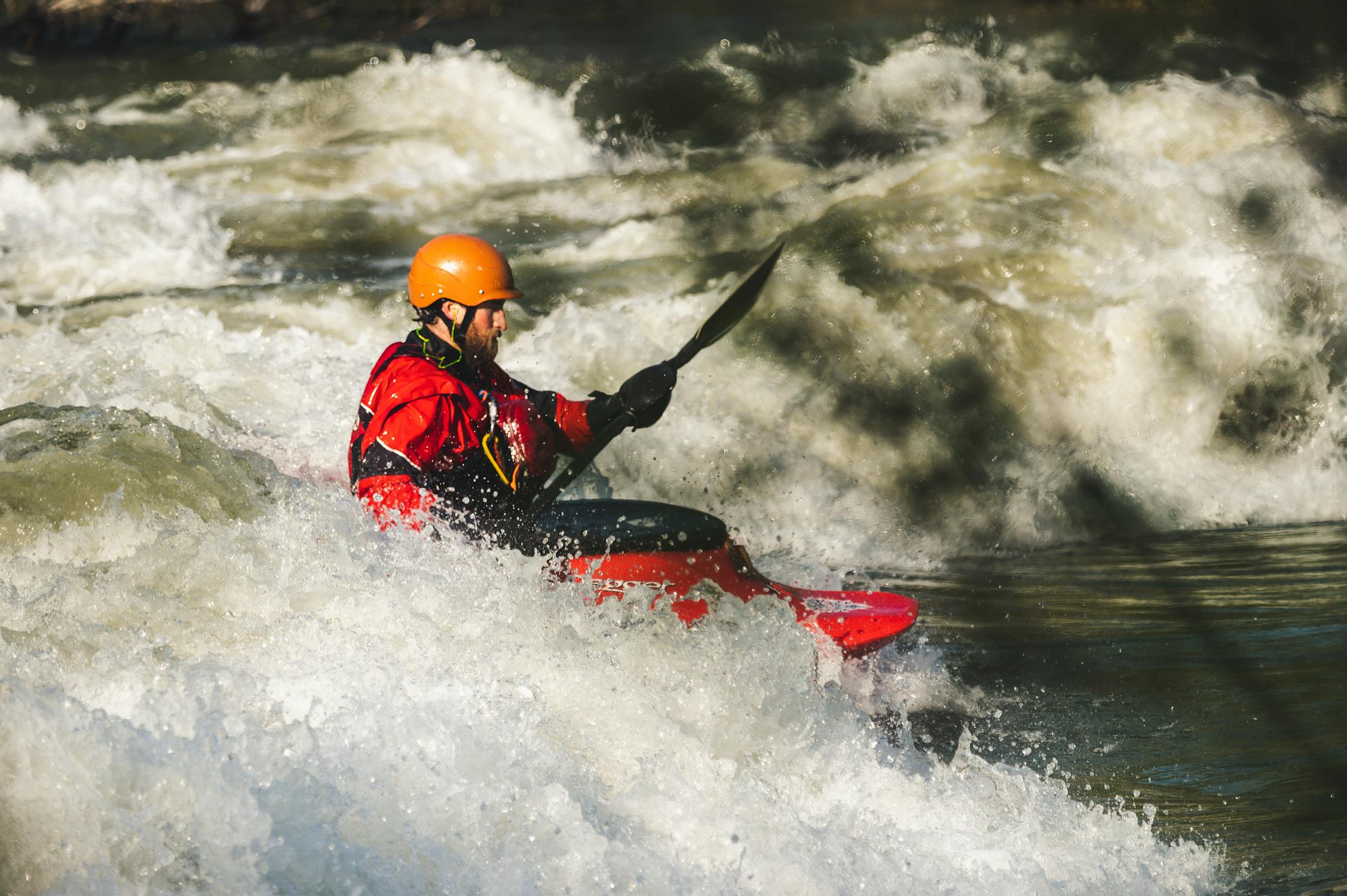 Photo credit on Pexels
Zambezi River, Zambia/Zimbabwe
The Zambezi below Victoria Falls is one of the most iconic whitewater experiences on Earth. Massive Class V rapids with names like The Devil’s Toilet Bowl, Gnashing Jaws of Death, and Oblivion thunder through a deep basalt gorge, with the spray of Victoria Falls visible in the background.
Class: IV–V Duration: Full-day Cost: $150–180 per person Best season: August through December (low water, biggest rapids) Where to stay: Livingstone, Zambia backpacker lodges from $15/night.
North Fork of the Payette River, Idaho, USA
One of the most intense commercially rafted rivers in North America. Class V rapids through a tight forested canyon demand a high level of fitness and swimming ability from all participants.
Class: V Duration: Half-day to full-day Cost: $100–150 per person Best season: June through July (snowmelt) Requirement: Most outfitters require prior Class IV rafting experience.
Apurimac River, Peru
The Apurimac is the source of the Amazon River and one of the most remote commercial rafting expeditions in the world. The 4–5 day trip takes you through a deep Andean canyon with powerful Class IV–V rapids, ancient Inca ruins, and condors overhead.
Class: IV–V Duration: 4–5 days Cost: $800–$1,500 per person (all-inclusive) Best season: May through October (dry season)
What to Expect on Your First Rafting Trip
Before You Get on the Water
- Safety briefing: Your guide will explain paddling commands, safety procedures, and what to do if you fall out (it happens, even on easy runs).
- Gear fitting: You will be fitted with a PFD, helmet (on Class III+ rivers), and possibly a wetsuit depending on water temperature.
- Paddle practice: Forward paddle, back paddle, and high-side commands on flat water before entering rapids.
What to Wear
- Quick-dry clothing: Synthetic materials or wool. Never cotton.
- Swimsuit underneath: You will get wet. Plan for it.
- Secure footwear: Water shoes, sport sandals with heel straps, or old sneakers. No flip-flops.
- Waterproof SPF 30+ sunscreen: Reapply frequently.
- Sunglasses with retention straps: Croakies or similar.
What to Bring
- Dry bag for camera, phone, and car keys (many outfitters provide these)
- Change of dry clothes for after the trip
- Towel and water bottle
- Snacks for longer trips
- Tip for your guide ($10–20 per person is standard in the US)
Choosing an Outfitter
A good outfitter makes the difference between a great day and a dangerous one. Look for:
- Safety record: Ask about protocols, guide certification, and emergency action plans.
- Guide experience: Guides should hold current swift water rescue certification and have extensive experience on the specific river.
- Equipment quality: Boats, PFDs, and helmets should be in good condition and properly maintained.
- Group size: Smaller groups (6–8 per raft) generally provide a better experience.
- Reviews: Check Google, TripAdvisor, and adventure travel forums for recent feedback.
Before any international rafting trip, make sure you have appropriate coverage — see our adventure travel insurance guide.
Budget Comparison
| River | Class | Day Trip Cost | Multi-Day Cost |
|---|---|---|---|
| Snake River (WY) | I–II | $80–100 | — |
| Arkansas (CO) | III–IV | $60–140 | $250–400 |
| Tara (Montenegro) | III–IV | $50–80 | $150–250 |
| Gauley (WV) | IV–V | $100–150 | $200–300 |
| Zambezi (Zambia) | IV–V | $150–180 | — |
| Futaleufu (Chile) | IV–V | — | $1,500–3,500 |
| Apurimac (Peru) | IV–V | — | $800–1,500 |
 Photo credit on Pexels
Multi-Day Rafting: The Ultimate River Experience
While day trips are fun, multi-day rafting expeditions are transformative. Spending several days on a river — camping on sandy beaches, cooking over a campfire, falling asleep to rushing water — creates something that day trips cannot.
What to Expect
Most multi-day trips are fully outfitted: the outfitter provides all food, camping gear, cooking equipment, and guides. Your job is to paddle, eat, and enjoy. The typical daily rhythm:
- Morning: Coffee and a hot breakfast prepared by guides. Break camp, load gear onto rafts.
- Mid-morning to afternoon: Paddle through rapids interspersed with calm sections. Lunch on a riverside beach.
- Late afternoon: Arrive at camp. Swim, explore, relax.
- Evening: Gourmet dinner (multi-day outfitters take food seriously), campfire socializing, stargazing.
Best Multi-Day Rafting Trips
| Trip | Days | Cost | Why It Stands Out |
|---|---|---|---|
| Middle Fork Salmon (ID) | 5–6 | $2,000–3,000 | Hot springs, pristine wilderness |
| Rogue River (OR) | 3–4 | $800–2,000 | Lodge-supported option available |
| Grand Canyon (AZ) | 6–18 | $3,000–5,000 | The ultimate American river trip |
| Pacuare (Costa Rica) | 2 | $250–400 | Jungle lodge overnight |
| Apurimac (Peru) | 4–5 | $800–1,500 | Source of the Amazon |
| Tara (Montenegro) | 2–3 | $150–250 | Europe’s deepest canyon |
Permits and Planning
Some of the best multi-day rivers require competitive permits:
- Grand Canyon: Weighted lottery system. The 2026 application window ran February 1–25, 2025, for 450 total permits. Apply at grcariverpermits.nps.gov. Application fee: $25.
- Middle Fork Salmon: Lottery system. Apply in January. Success rates around 20%.
- Main Salmon River: First-come, first-served permit system.
- Rogue River: Lottery for peak season. First-come, first-served in shoulder season.
If you miss the lottery, commercial outfitters hold their own permit allocations and can typically accommodate bookings with less advance planning.
The Magic of Rafting
Whitewater rafting works magic on people. Put a group of strangers in a boat, point them at a wall of whitewater, and watch them transform into a team in minutes. The shared adrenaline, the collective paddle strokes, the eruption of cheering when you punch through a big rapid — it creates bonds that are immediate and real.
Find a river. Book a trip. Paddle hard. If rafting inspires you, consider whitewater kayaking for an even more immersive river experience. Our budget adventure travel guide can help you make any of these trips financially viable.
And if you want to take adventure further off the beaten track, our off-grid wilderness camping guide covers everything you need for self-supported expeditions.
Gear Worth Bringing on Any Rafting Trip
Two pieces of kit that guides wish more clients would pack: the GoPro HERO13 Black is waterproof to 33 ft and captures your run in 5.3K — no housing needed on Class III or above, and the stabilization actually holds up through rapid chaos. And the Earth Pak Waterproof Dry Bag (Wirecutter pick) keeps your phone, wallet, and camera gear completely dry through any swim or capsize — roll the top three times and it floats.
 Capture the run and keep your gear dry — Photo on Pexels
Related Reading
Get the best ThrillStays tips in your inbox
Weekly guides, deals, and insider tips. No spam, unsubscribe anytime.