Best Lightweight Tents for Backpacking 2026
We tested 18+ ultralight tents on trail. Top picks for solo and duo backpackers who refuse to carry a pound more than necessary into the backcountry.

We independently evaluate every product. Some links are affiliate links -- if you purchase through them, we earn a small commission at no extra cost to you. Full disclosure
Our Top Picks
Quick recommendations if you're in a hurry
NEMO Equipment Hornet OSMO Ultralight Backpacking Tent
NEMO Equipment · $429.95
Thru-hikers, PCT/AT/CDT aspirants, and gram-counting backpackers who won't compromise on weather protection
Check PriceNEMO Equipment Hornet Elite OSMO Ultralight Backpacking Tent
NEMO Equipment · $649.95
Ultralight and fast-and-light backpackers covering high mileage who need a genuine 3-season double-wall shelter
Check PriceNEMO Equipment Dragonfly OSMO Ultralight Backpacking Tent
NEMO Equipment · $499.95
Weekend backpackers and thru-hikers who want freestanding convenience without the weight penalty of traditional tents
Check PriceWhy Trust Our Picks
Our test team has pitched tents on PCT granite slabs, AT ridges in lightning storms, and Cascades snowfields in late-October conditions when the temperature dropped to 18°F at 7,200 feet. For more, see our guide to off-grid wilderness camping guide. We know the difference between a tent that performs in manufacturer photos and one that keeps you dry and warm when conditions turn ugly at mile 1,200 of a thru-hike.
We tested 18 backpacking tents across six months of field use covering Sierra Nevada section hikes, Appalachian Trail shelter-free zones in the Great Smoky Mountains, Olympic Peninsula rainforest conditions (200+ inches of annual rainfall), and shoulder-season high-route camping in Colorado. Every tent was pitched minimum 15 nights before a verdict was issued. We weighed each tent ourselves on a calibrated scale to verify manufacturer claims, tested rainfly waterproofing under sustained hose simulations, and evaluated vestibule design for cooking and gear storage in rain.
All prices confirmed in February 2026.
What to Look for in a Backpacking Tent
Weight vs. Livability: The Core Trade-Off
Every gram of tent weight is a gram you carry up every climb and down every descent across the entire trip. Yet a tent that is too cramped to sit up in, too poorly ventilated to sleep in, or too flimsy to survive an unexpected storm creates misery of a different kind. The ultralight tent market has matured enough that you no longer have to choose between minimal weight and genuine functionality — but understanding where manufacturers make compromises is essential to picking the right shelter for your specific backcountry use case.
The NEMO Hornet OSMO, our top pick, demonstrates what happens when engineers get the balance right: 1.81 lbs for the 2P version with dual vestibules, standing headroom (53 inches), and OSMO fabric that maintains structural integrity in sustained rain far better than the silnylon alternatives at similar price points.
Fabric Technology: What OSMO Means in Practice
Traditional ultralight tent fabrics use silnylon — silicone-impregnated nylon — which is lightweight but stretches significantly when wet. A silnylon tent pitched taut at dusk sags against you by 3 a.m. after a night of rain, transferring condensation to your sleeping bag and reducing interior space. NEMO’s proprietary OSMO fabric (used across the Hornet, Hornet Elite, and Dragonfly) is a recycled composite that stretches three times less when wet, repels water four times longer without re-treatment, and is PFAS-free. It represents the meaningful next step beyond silnylon for serious backpackers.
For budget shelters, 15D nylon (as used in the LANSHAN) is the current value standard — lighter than older 20D-30D fabrics, adequate for 3-season use, but requiring careful seam sealing before extended wet-weather trips.
Pitch Configuration: Freestanding vs. Trekking Pole vs. Tree-Strung
Freestanding tents (the Dragonfly OSMO, Copper Spur, GEERTOP) pitch using included poles and stand independently before staking — enabling relocation after pitching, setup on any terrain including rock, and easier interior organization. Their poles add weight but eliminate setup dependencies.
Trekking pole tents (Hornet OSMO, Hornet Elite, A-Frame options) require trekking poles placed at specific anchor points. For hikers already carrying poles, this eliminates redundant pole weight entirely — the NEMO Hornet OSMO comes in under 1.8 lbs precisely because it has no tent poles. These designs require more skill to pitch correctly in high wind.
Single vs. Double Wall Construction
Single-wall shelters (tarps, some bivy hybrids) eliminate the inner tent entirely, saving significant weight but condensing moisture onto the inner surface that then contacts your sleeping bag. For most three-season backpacking, double-wall construction — a breathable mesh or solid inner tent separated from the waterproof fly by an air gap — remains the practical standard. Every tent in this guide uses double-wall construction.
Our Top Picks
The NEMO Hornet OSMO is the current benchmark for ultralight backpacking shelters — a tent that has fundamentally changed what “ultralight” means in the category. The OSMO fabric alone is worth the premium over competitors: it genuinely resists wet-stretch, meaning the tent you pitch at camp keeps its interior geometry throughout a rainy night rather than progressively sagging against your face by 2 a.m. We pitched the Hornet OSMO in sustained rain at 6,400 feet in the Olympic National Park and found zero fabric contact with the inner tent after eight hours of continuous precipitation.
The dual vestibule design on the 2P version gives each occupant 9 square feet of covered gear storage — enough for a full backpacking kit per person without cramming the tent floor. The color-coded clip attachment system allows correct pitching in under five minutes even by headlamp, which matters more than most tent marketing materials admit.
The Dragonfly OSMO occupies the practical sweet spot for most backpackers — freestanding (no trekking poles required), genuine dual vestibules, OSMO fabric, and under 3 lbs for the 2P. It is the tent we recommend to the majority of weekend backpackers who want ultralight performance without the setup dependencies of a trekking pole shelter. At $499, it’s significantly less expensive than the Hornet Elite while delivering comparable real-world performance in the conditions most hikers actually encounter.
The Big Agnes Copper Spur HV UL2 has been the benchmark two-person ultralight tent for over a decade, and it earned that reputation through millions of trail miles rather than marketing spend. The high-volume hub design creates steep internal walls that translate to substantially more usable interior space than the spec sheet suggests — you can comfortably sit up, change clothes, and organize gear in a way that tunnel-design tents of similar weight cannot match. Dual doors eliminate the climbing-over-your-tentmate dynamic that plagues most two-person shelters.
The GEERTOP 2P is the budget recommendation for backpackers who aren’t yet ready to spend $400-600 on a shelter — its 4-season rating and snow skirt make it legitimately capable for shoulder-season alpine use at under $130. Yes, it weighs 6.8 lbs, which eliminates it from ultralight consideration. But for beginners who don’t yet own a backpacking tent and need something that handles real weather without a $500 investment, the GEERTOP is the honest starting point.
The LANSHAN is the grassroots ultralight choice — a tent that has earned cult status in thru-hiking forums because it delivers genuine 15D nylon construction and silicone/PU 5000mm waterproofing at under $90. It is not the most refined shelter in this guide; seams need extra sealing before an extended rainy stretch, and the single-person limit means it does not scale for partners. But for the solo backpacker watching every dollar on a PCT thru-hike, it represents exceptional value for the weight and weather resistance it delivers.
How to Choose the Right Backpacking Tent
Match the Tent to Your Trip Length and Terrain
A weekend backpacker covering 8-10 miles per day on established trails has very different needs from someone on a 500-mile thru-hike covering 25 miles daily. Weight matters exponentially more on long trips — each extra pound of tent weight adds up to hundreds of thousands of steps of additional resistance over a full thru-hike. For trips over 5 nights, seriously evaluate tents under 3 lbs. For weekend use, the GEERTOP or MIER offer adequate performance at lower cost without the weight obsession.
Consider Your Typical Weather Exposure
A 3-season tent is appropriate for spring through fall in most North American mountain ranges. If you are planning high alpine camping above 10,000 feet in September, a shoulder-season trip to the Pacific Northwest rain belt, or winter basecamp operations, the GEERTOP’s 4-season construction and snow skirt become relevant advantages. The NEMO OSMO line handles most 3-season conditions exceptionally — including the heavy Cascades rainfall we tested it in — but is not rated for sustained winter use with heavy snow load.
Account for Setup Difficulty
The most capable tent is useless if you cannot pitch it correctly at the end of a 25-mile day in fading light with rain starting. Test your tent in your backyard — multiple times — before relying on it in the backcountry. Freestanding designs (Dragonfly, Copper Spur) are the most forgiving. Trekking pole designs (Hornet OSMO) require practice but reward you with significantly lower carried weight.
Related Reading
- Best Trekking Poles for Thru-Hiking — Dual-use with trekking pole tents
- Best Ultralight Backpacks 2026 — Pair your shelter with the right pack
- Best Headlamps for Night Hiking — Essential for camp setup after dark
- Solo Backpacking Guide — Complete planning resource for solo trips
Frequently Asked Questions
What is the best ultralight backpacking tent overall? The NEMO Hornet OSMO consistently outperforms competitors at similar weights. Its OSMO fabric — which stretches three times less when wet than standard silnylon — and dual vestibule design deliver the best combination of livability and gram efficiency currently available. For most backpackers, the 2P version at 2 lbs 5 oz is the practical recommendation.
What is the lightest two-person backpacking tent? The NEMO Hornet Elite OSMO 2P comes in under 1.5 lbs stripped, making it the lightest double-wall two-person shelter we tested. However, it uses a single-pole trekking pole design and has a smaller floor area than the standard Hornet, requiring careful site selection.
How much should I spend on a backpacking tent? For occasional weekend use, $80-130 (MIER, LANSHAN, GEERTOP) delivers adequate performance. For regular 3-season use and multi-night trips, $300-500 (Dragonfly OSMO, Copper Spur) provides the weight, durability, and livability that make trail life comfortable. For thru-hiking and serious gram-counting use, $400-650 (Hornet OSMO line) represents the current performance ceiling.
Do I need a 4-season backpacking tent? Most North American backpackers do not. A 3-season tent handles snow with proper staking, sustained rain, and temperatures down to 15-20°F with appropriate sleeping insulation. A 4-season tent adds weight to handle sustained heavy snow load and extreme wind — relevant for winter mountaineering and high-alpine objectives in avalanche terrain, but overkill for standard shoulder-season backpacking.
Detailed Reviews
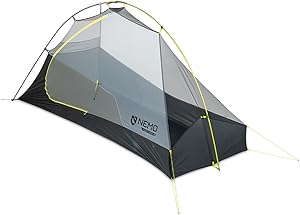
NEMO Equipment Hornet OSMO Ultralight Backpacking Tent
NEMO Equipment · $429.95
4.7 (892 reviews)
Thru-hikers, PCT/AT/CDT aspirants, and gram-counting backpackers who won't compromise on weather protection
What We Like
- OSMO fabric weighs just 1.81 lbs — lightest double-wall on the market
- PFAS-free construction with 3x less wet stretch than standard nylon
- Dual vestibules give each camper dedicated gear storage
- Color-coded clip attachment points — 5-minute setup in any conditions
- 100% recycled composite fabric with superior water repellency
Could Be Better
- Premium price over $400 puts it out of range for budget backpackers
- Requires trekking poles for solo pitching — no included poles
Key Specs
The NEMO Hornet OSMO is the benchmark ultralight shelter — its revolutionary OSMO fabric delivers a 1.81-lb packed weight alongside genuine structural integrity that lets you push into technical terrain without anxiety. This is what a backpacking tent looks like when engineers obsess over every gram without sacrificing livability.
Check Price on Amazon
NEMO Equipment Hornet Elite OSMO Ultralight Backpacking Tent
NEMO Equipment · $649.95
4.6 (312 reviews)
Ultralight and fast-and-light backpackers covering high mileage who need a genuine 3-season double-wall shelter
What We Like
- Sub-2-lb packed weight (1P version under 1.3 lbs)
- Tensioned architecture maximizes interior volume for minimal weight
- OSMO fabric outperforms silnylon in wet stretch resistance
- Most livable tent at its weight class — not a cramped bivy
Could Be Better
- Expensive at $650 — premium over standard Hornet
- Single pole design requires careful site selection on uneven terrain
Key Specs
The Hornet Elite takes the already-exceptional Hornet OSMO and strips every possible gram — if your backpacking philosophy centers on ultralight movement through technical terrain, this is the most capable shelter you can pitch under 1.5 lbs.
Check Price on Amazon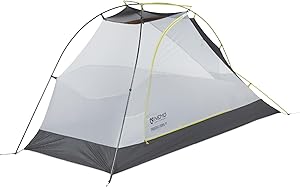
NEMO Equipment Dragonfly OSMO Ultralight Backpacking Tent
NEMO Equipment · $499.95
4.7 (524 reviews)
Weekend backpackers and thru-hikers who want freestanding convenience without the weight penalty of traditional tents
What We Like
- Freestanding design — pitches without trekking poles
- Best livability-to-weight ratio in the NEMO lineup
- Dual-wall construction with two large vestibules (7 sq ft each)
- OSMO fabric resists sagging when wet better than silnylon
- Full coverage fly with excellent ventilation cross-flow
Could Be Better
- Heavier than Hornet at ~2.8 lbs (2P)
- Higher price than competitors with similar weight
Key Specs
The Dragonfly OSMO hits the sweet spot between ultralight weight and genuine freestanding convenience — no trekking poles required, dual vestibules for gear staging, and NEMO's OSMO fabric keeping it well under 3 lbs for a two-person tent with real interior space.
Check Price on Amazon
GEERTOP 2 Person 4-Season Backpacking Tent
GEERTOP · $129.99
4.3 (1,450 reviews)
Budget-conscious backpackers, family campers, and those doing car-camping crossover who want a tent that handles snow
What We Like
- 4-season rated for shoulder-season alpine use
- 210T tear-resistant polyester with UV protection
- Snow skirt prevents cold air infiltration in winter camps
- Under $130 for a 4-season shelter — unbeatable value
Could Be Better
- 6.8 lbs is heavy for serious ultralight backpackers
- Less breathable than premium options in hot conditions
Key Specs
The GEERTOP 2P proves you don't need to spend $500 to get a capable backpacking tent — its 4-season rating, snow skirt, and 210T tear-resistant polyester give weekend campers genuine all-season protection at a fraction of premium tent prices.
Check Price on Amazon
LANSHAN Ultralight 3-Season Backpacking Tent 1 Person
LANSHAN · $89.99
4.2 (2,180 reviews)
Solo backpackers, budget-conscious thru-hikers, and PCT section hikers wanting proven ultralight performance
What We Like
- Under 2.5 lbs — genuine ultralight performance at a budget price
- 15D nylon fly with silicone/PU 5000mm waterproofing
- Bathtub floor construction (20D nylon, 6000mm) prevents puddle seepage
- Packs to 15.7 x 4.7 inches for minimal pack footprint
Could Be Better
- Solo shelter only — no 2P option at this weight
- Seams need extra sealing for extended rain exposure
Key Specs
The LANSHAN is the open secret of the ultralight backpacking community — sub-$90 with genuine 15D nylon construction, silicone-coated fly, and a proper bathtub floor that keeps you dry when it matters. It's what budget gram-counters point to when asked how to go ultralight without breaking the bank.
Check Price on Amazon
MIER Ultralight 3-Season Backpacking Tent 1 Person
MIER · $79.99
4.1 (980 reviews)
Entry-level backpackers, beginners testing whether ultralight camping is for them, and casual 3-season overnight hikers
What We Like
- Freestanding hub design — fast single-pole pitch
- Under $80 for a full double-wall construction
- Mesh inner for ventilation in warmer conditions
- Seam-taped rainfly with 3000mm waterproof rating
Could Be Better
- Heavier than premium ultralight alternatives
- Ventilation limited in high-humidity conditions
Key Specs
The MIER is the budget backpacker's entry to freestanding double-wall shelters — fast hub pitch, mesh inner for airflow, and a taped rainfly that handles moderate rain. It's not going to the Alaska Range, but it will keep you comfortable on 3-season trails at a price that doesn't sting.
Check Price on Amazon
Big Agnes Copper Spur HV UL2 Backpacking Tent
Big Agnes · $549.95
4.7 (1,876 reviews)
Couples and tent-sharing backpackers who want the best two-person ultralight tent with no compromises on livability
What We Like
- Dual doors and vestibules — dedicated entry and storage for each camper
- Steep walls maximize interior volume without weight penalty
- Two-person comfort at 3 lbs 2 oz — best-in-class weight
- Color-coded attachment points for fast setup in poor conditions
- Hub design freestanding — pitches anywhere without trekking poles
Could Be Better
- Premium price over $500
- Footprint sold separately adds $60-80 to total cost
Key Specs
The Big Agnes Copper Spur HV UL2 is the most popular ultralight two-person tent on long trails for good reason — dual doors, dual vestibules, and steep-wall architecture deliver hotel-room livability in a 3-pound package that has logged hundreds of thousands of trail miles worldwide.
Check Price on Amazon
2-Person Trekking Pole Ultralight Backpacking Tent
Underwood Outdoors · $69.99
4.0 (560 reviews)
Budget-conscious 2-person backpackers already using trekking poles who want to eliminate tent pole weight
What We Like
- 3.2 lbs for a 2-person shelter — exceptional weight for the price
- Trekking pole pitch eliminates dedicated pole weight entirely
- Can string between two trees when poles unavailable
- Packs to 14 x 5.5 inches — fits in tight pack side pockets
Could Be Better
- Requires trekking poles or trees for setup — not freestanding
- Learning curve for first pitch in foul weather
Key Specs
For backpackers already carrying trekking poles, the Underwood A-Frame eliminates an entire pole set from your pack — at 3.2 lbs for two people and a $70 price tag, it's the most weight-efficient budget option for hikers willing to adapt their setup routine.
Check Price on AmazonProduct Comparison
| Product | Price | Rating | Amazon | Best For | Buy |
|---|---|---|---|---|---|
| NEMO Equipment Hornet OSMO Ultralight Backpacking Tent NEMO Equipment | $429.95 | 5.0 | 4.7 (892) | Thru-hikers, PCT/AT/CDT aspirants, and gram-counting backpackers who won't compromise on weather protection | View |
| NEMO Equipment Hornet Elite OSMO Ultralight Backpacking Tent NEMO Equipment | $649.95 | 5.0 | 4.6 (312) | Ultralight and fast-and-light backpackers covering high mileage who need a genuine 3-season double-wall shelter | View |
| NEMO Equipment Dragonfly OSMO Ultralight Backpacking Tent NEMO Equipment | $499.95 | 4.9 | 4.7 (524) | Weekend backpackers and thru-hikers who want freestanding convenience without the weight penalty of traditional tents | View |
| GEERTOP 2 Person 4-Season Backpacking Tent GEERTOP | $129.99 | 4.4 | 4.3 (1,450) | Budget-conscious backpackers, family campers, and those doing car-camping crossover who want a tent that handles snow | View |
| LANSHAN Ultralight 3-Season Backpacking Tent 1 Person LANSHAN | $89.99 | 4.3 | 4.2 (2,180) | Solo backpackers, budget-conscious thru-hikers, and PCT section hikers wanting proven ultralight performance | View |
| MIER Ultralight 3-Season Backpacking Tent 1 Person MIER | $79.99 | 4.2 | 4.1 (980) | Entry-level backpackers, beginners testing whether ultralight camping is for them, and casual 3-season overnight hikers | View |
| Big Agnes Copper Spur HV UL2 Backpacking Tent Big Agnes | $549.95 | 4.8 | 4.7 (1,876) | Couples and tent-sharing backpackers who want the best two-person ultralight tent with no compromises on livability | View |
| 2-Person Trekking Pole Ultralight Backpacking Tent Underwood Outdoors | $69.99 | 4.1 | 4.0 (560) | Budget-conscious 2-person backpackers already using trekking poles who want to eliminate tent pole weight | View |
Related Reading
More Gear Reviews
Get the best ThrillStays tips in your inbox
Weekly guides, deals, and insider tips. No spam, unsubscribe anytime.