Best Basecamp Hotels and Lodges in Leh, Ladakh for 2026
Nine verified basecamp hotels in Leh, Ladakh for 2026, from a heritage palace to $35-a-night rooms, with real prices, booking links, and altitude logistics.

This post may contain affiliate links. Disclosure
Leh sits at roughly 3,500 m (11,500 ft), which makes it the mandatory acclimatization stop before any Ladakh trek or Khardung La motorbike run - not a scenic detour, a physiological requirement. The town’s market, main bus stand, and most gear and guide outfits sit within a 10-minute walk of each other, so the hotel you pick doubles as your logistics hub. We pulled nine verified stays that cover the full range, from a 19th-century heritage palace outside town to a $35-a-night central budget room, each with a real booking link, a real price band where one exists, and the specific tradeoffs - distance, storage, season - that actually matter when you’re staging a high-altitude trip.
Short answer: Leh sits at 3,500 m, so plan 24 to 48 hours in town before attempting a high pass or a long trekking day; skipping that window is the most common way to lose your first week. Nine verified basecamps run from $35-a-night rooms to the Stok Palace heritage hotel. June through September is the main season.
Why Leh Is the Ultimate Basecamp

At 3,500 m, Leh forces the acclimatization schedule on you whether you like it or not. Plan on 24 to 48 hours in town before attempting a high pass or a long trekking day - the Adventure Basecamp Guide’s Leh lodging notes back up what every guide on the ground already tells clients, and skipping that window is the single most common way to ruin the first week of a trip. Summer, June through September, is the main window when the high passes are open and weather is stable enough for trekking and motorbike routes. Autumn (September-October) trades a little warmth for clear skies and the best photography light of the year. Spring (March-May) is the shoulder season - temperatures climb, but sudden snowfall can still close mountain roads with little warning.
Price-wise, Leh is forgiving. Average nightly rates across town run around $71, climbing to about $132 in high season. Rock-bottom budget rooms - Royal Hills Ladakh and Togochey Boutique are two often cited - can run as low as $17 to $22 a night, and some basic 2-star listings have shown up online for the rupee equivalent of roughly $7. At the other end, the nine stays below top out near $300. Because the market, bus stand, and adventure outfitters cluster within that same 10-minute radius, and because Kushok Bakula Rimpochee Leh Airport sits only about 1.9 miles (3 km) from the town center, you can land, check in, buy last-minute gear, and be on a bus or a bike within a couple of hours - once you’ve put in your acclimatization time.
The Nine Best Places to Stay

These are the nine verified stays, ordered roughly luxury to budget. Every price band below is what’s publicly listed - where a property doesn’t publish one, we say so rather than guess.
Ladakh Sarai Resort
Saboo, 7 km from Leh Main Bazaar - $155-185
A luxury resort on the outskirts of town with panoramic Himalayan views and heated rooms that feel more like an alpine chalet than a trekking hotel. It’s one of the few properties on this list with dedicated luggage and gear storage plus an in-house tour desk that can book everything from yak treks to motorbike rental.
Pros: spacious rooms, private parking, a garden lounge, 24-hour front desk, shuttle service. Cons: pricey for backpackers, and the 7 km distance means a short drive before you reach the gear shops in town. Check rates
The Zen Ladakh
Leh city centre, near the market - $160-180
A 4-star hotel that pairs modern comfort with traditional Ladakhi decor, plus free Wi-Fi, parking, and transfer help. The central location puts the market and bus stand within a short walk, and travelers have reported early check-in is often workable for red-eye arrivals.
Pros: premium service, mountain views, central location. Cons: on-site gear storage is limited, so bulky trekking or bike gear needs an external locker. Check rates
The Grand Dragon Ladakh
Leh city centre - 10-minute walk from Leh Palace and the market, 5-minute walk from the Main Bus Stand - $85-120
The in-house restaurant serves Kashmiri, Indian, Chinese, and Continental food, useful when you land back in town hungry after a long trekking day. It’s about 1.9 miles from the airport and a five-minute walk from the Main Bus Stand, confirmed on the property’s Booking.com listing and priced on Kayak. Free cancellation is a real cushion given how often mountain-season plans shift.
Pros: central, free cancellation, varied dining, easy transport links. Cons: can get crowded during peak trekking months. Check rates
Stok Palace Heritage Hotel
Stok village, about 16 km (10 mi) north of Leh - $250-300
A boutique stay inside an actual 19th-century palace, with heated, spacious rooms overlooking the Indus valley - current rates are also listed via RentByOwner. It’s the most atmospheric option on this list by a wide margin, but the 16 km distance means budgeting an extra 30 minutes each way to reach Leh’s gear shops and guide offices.
Pros: unique heritage setting, panoramic valley views, heated rooms built for cold nights. Cons: extra travel time to reach Leh’s adventure hub. Check rates
The Bodhi Tree Ladakh
Leh city centre - price not publicly listed
Guest reviews put this one at 4.9/5 on TripAdvisor, an unusually strong score, and travelers on forum threads report flexible early check-in for anyone landing on a morning flight before the standard check-in window. Price details aren’t published, but the review strength suggests solid value for a central location.
Pros: strong guest ratings, early check-in flexibility. Cons: no public price band, and gear-storage details aren’t listed. Check rates
Hotel Dragon Leh
Central Leh, near the Main Bazaar - price not publicly listed
Built around secure luggage storage and valet parking for both bikes and backpacks, plus a dry-cleaning service that’s genuinely useful after a muddy trek. Free Wi-Fi and reliable heating round out a quiet, low-key setup with an on-site restaurant.
Pros: secure gear storage, central location, dependable heating, on-site restaurant. Cons: no dedicated bike-repair workshop on the property. Check rates
Padma Ladakh
Leh town, close to Leh Market - price not publicly listed
Dedicated luggage lockers, daily housekeeping, and a 24-hour front desk make this a practical pick for early arrivals who need somewhere safe to stash expensive gear before check-in time - amenities also confirmed on Agoda. Standard rooms run on the higher side, but the convenience factor is real for groups staging equipment.
Pros: secure lockers, 24-hour service, close to the market and guide offices. Cons: higher price tier for standard rooms. Check rates
Hotel The Palace Ladakh
Leh city centre - $35-45
The budget anchor of this list, still within easy reach of the bus stand and airport. Rooms start around $38 a night, a real option for backpackers who need a clean, simple place to crash after a day on the trail rather than a full-service hotel.
Pros: very affordable, central, easy transport links. Cons: minimal on-site amenities, no restaurant on the property. Check rates
The Indus Valley Leh
Downtown Leh - price not publicly listed
Billed as the only luxury hotel in downtown Leh, with in-house gear-friendly lockers and panoramic Himalayan views built for post-trek recovery. It’s a central option for teams that want a comfortable hub without leaving town, though the lack of a public price band makes it harder to budget for in advance.
Pros: luxury finishes, central location, secure gear lockers. Cons: limited budget options for solo trekkers, and pricing isn’t published. Check rates
Getting Around: Airport, Bus Stand, and Gear Shops
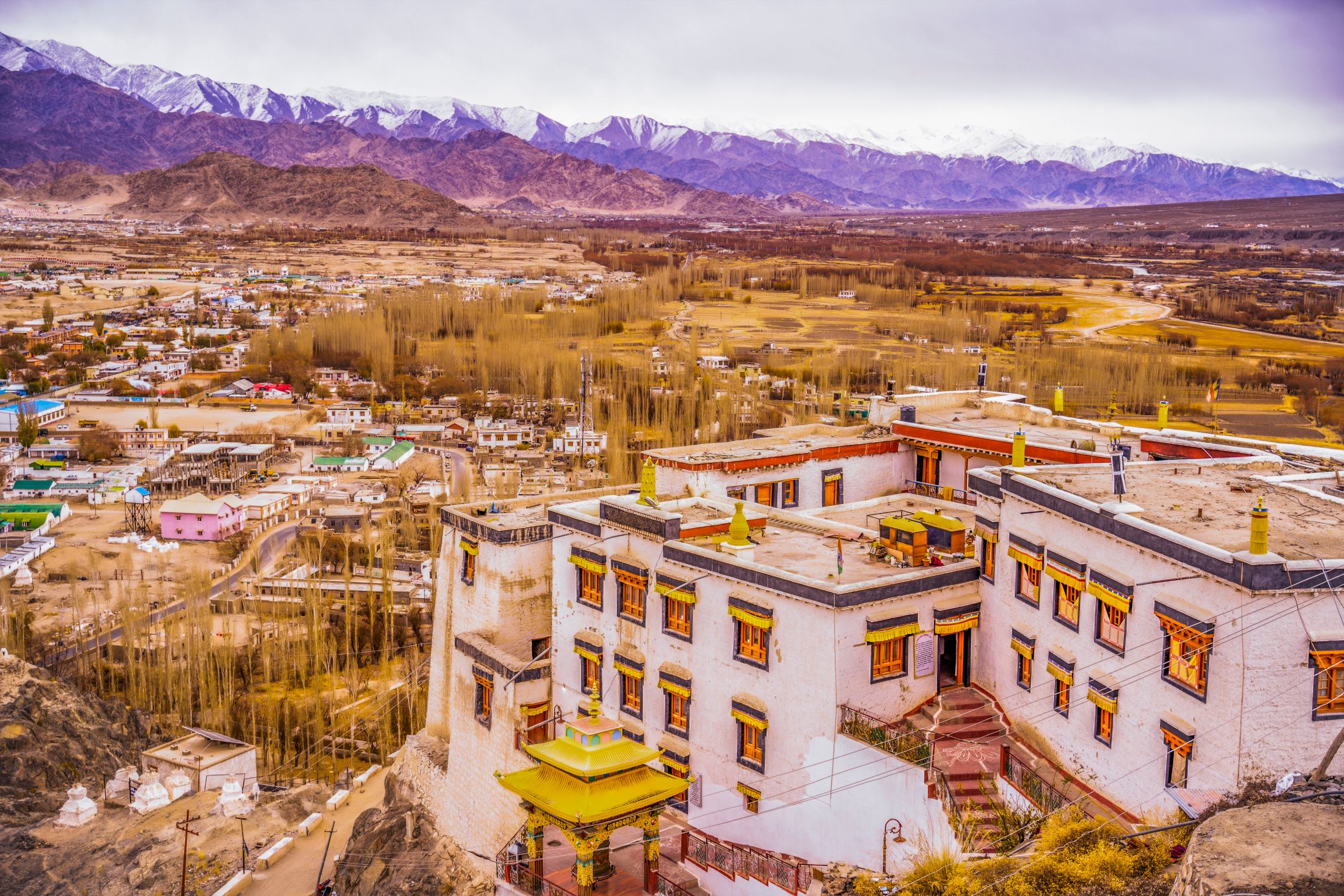
Kushok Bakula Leh Airport sits about 1.9 miles (3 km) from the town center, so a taxi or shared van gets you to almost any hotel on this list in under 10 minutes. The Main Bus Stand, a five-minute walk from The Grand Dragon Ladakh, handles both local and inter-city routes and hosts a handful of gear-rental stalls, which matters if you’re short a piece of equipment before an early departure. Because the market, bus stand, and most adventure outfitters sit within that same 10-minute walking radius, you can drop gear, grab a bike part, and meet a guide without ever needing a taxi between stops.
The exception is Stok Palace Heritage, 16 km out - budget a 30-minute drive each way, and ask the property about a pickup-drop package that bundles gear transport with the ride. Road conditions shift fast in the shoulder seasons, so before locking in a spring or late-autumn itinerary, check current status on the Government of India portal rather than assuming last year’s road report still holds.
Safety, Permits, and What to Know Before You Go
The US State Department currently rates India Level 2: Exercise Increased Caution - the same tier assigned to a long list of popular adventure destinations, so it’s worth reading as a baseline advisory rather than a red flag specific to this trip (source: travel.state.gov). Ladakh’s on-the-ground profile runs calmer than that national rating might suggest; the region doesn’t see the crime or unrest flashpoints that drive some of the advisories tied to other parts of the country, and Leh’s economy runs on the same predictable trekking-season rhythm year after year. That said, the rating stands as issued, and it’s smart to plan around it rather than around wishful thinking.
The UK Foreign, Commonwealth and Development Office, in guidance updated June 4, 2026, advises avoiding protests, demonstrations, rallies, and large public gatherings - including at religious sites - following instructions from local authorities and your tour operator, and keeping an eye on local media and any curfew restrictions in the area you’re visiting. If you need help, the police helpline is 100, the national emergency number is 112, and there’s a dedicated women’s helpline as well (source: gov.uk/foreign-travel-advice/india). None of this changes the fundamentals of a Ladakh trip: book through a licensed operator, keep your ID and any required travel documents on you, and treat the altitude - not the headlines - as the actual risk you’re managing in Leh.
Practical Tips and Common Mistakes

Acclimatization is not optional. Skipping the 24-to-48-hour hold in Leh to save a day is the single most reliable way to end up sick on your first high pass. Drink more water than feels necessary, skip the alcohol for the first day or two, and keep the first day’s activity light.
Don’t assume every hotel has gear storage. Of the nine stays above, only Ladakh Sarai Resort, Hotel Dragon Leh, Padma Ladakh, and The Indus Valley Leh explicitly advertise secure lockers or dedicated storage. If you’re hauling a motorbike’s worth of gear or a full trekking kit, confirm storage before you book rather than after you arrive.
Watch for budget traps. The town average sits around $71 a night, but plenty of “mid-range” listings tack on extra fees for heating, Wi-Fi, or early check-in that don’t show up until checkout. The Grand Dragon’s free cancellation policy is a genuine safety net if your dates shift - read the fine print on any listing that doesn’t offer the same.
Buses to Manali, Srinagar, and the trailheads for the high passes tend to leave early, often before 7 a.m. Arrange your hotel shuttle the night before; missing the first departure can cost you a full day.
Seasonal road closures are real. Spring (March-May) can bring sudden snowfall that shuts the Manali-Leh highway with little warning, while autumn (September-October) trades that risk for clear skies and colder nights that make in-room heating non-negotiable. Check the Government of India portal before locking in shoulder-season travel dates.
Leh’s medical clinics are limited relative to what you’d find in a major city, so carry a basic first-aid kit, any altitude-sickness medication your doctor has cleared, and a copy of your travel insurance. A hotel offering laundry or dry-cleaning, like Hotel Dragon Leh, is a convenience - it is not a substitute for carrying your own basic medical supplies.
Budget vs Luxury: How to Choose Your Basecamp
If you’re counting every rupee, Hotel The Palace Ladakh’s $35-45 range sits well below the town’s roughly $71 average, freeing up budget for a longer trek or better gear. The tradeoff is fewer amenities - there’s no on-site restaurant, and heating quality at this price point tends to be basic, which matters when nighttime temperatures drop well below freezing for much of the trekking season.
Mid-range picks like The Grand Dragon Ladakh ($85-120) and The Zen Ladakh ($160-180) strike a workable balance: central location, reliable Wi-Fi, and in the Grand Dragon’s case, on-site dining that matters after a cold day outside. Both keep you within the 10-minute walking radius of the market, bus stand, and guide offices.
At the top end, Ladakh Sarai Resort, Stok Palace Heritage, and The Indus Valley Leh run from $155 up to $300 a night, and they earn it with heated rooms, private parking, panoramic views, and in some cases dedicated gear lockers. For a group that needs multiple rooms and secure storage for expensive equipment, the higher nightly rate can actually work out cheaper than paying for external lockers and taxis across town.
Match the hotel to the itinerary rather than the other way around. Three nights in Leh before heading into the Markha Valley favors a central mid-range stay like The Zen Ladakh, where early check-in and a short walk to the bus stand matter more than a spa. A solo trekker on a tight budget is better served by Hotel The Palace Ladakh’s proximity without the luxury markup. And a small expedition that values smooth logistics over cost will get the most out of Ladakh Sarai Resort’s shuttle service and in-house tour desk, which can save a full day of running between outfitters in town.
Related Reading
Get price-drop alerts and new guides from BoldTripGuide
One email a week: price drops on the gear we recommend, new guides, and what changed. No spam, unsubscribe anytime.