Alaska Car Rental Guide 2026: What Adventurers Need to Know
Plan your 2026 Alaska road trip: seasonal rental costs, age and license rules, insurance gaps, restricted gravel roads, and gear for backcountry explorers.

This post may contain affiliate links. Disclosure
Alaska isn’t a destination you drive through - it’s a playground you earn by mastering miles of raw, open road. From the icy ribbons of the Dalton Highway to the sun-kissed passes of the Kenai, the right rental can be the difference between a summit push and a stranded night in the tundra. This 2026 guide breaks down every gritty detail you need before you slam the ignition: age limits, seasonal price swings, insurance quirks, which gravel routes are off-limits, and the gear that keeps you moving when the elements get real. Strap in, read the fine print, and get ready to chase the horizon with confidence.
Short answer: Alaska agencies rent from age 21, add a young-driver surcharge under 25, and tighten requirements further in winter. Budget roughly $67-90 a day for economy, about $113 for a standard SUV, and $180 or more for the gravel-rated 4x4 you need on the Dalton Highway, Denali Highway or McCarthy Road.
Requirements & Documentation 
Alaska’s rental market is surprisingly uniform when it comes to who can sit behind the wheel. Most companies - Hertz, Avis, Thrifty, Dollar, Budget, Enterprise, Alamo, National, plus local outfits like Alaska 4x4 Rentals, GoNorth Car & RV Rental, Alaska Auto Rental, Alaska Overlander, Keys to Denali, and Denali Highway Jeep - set the minimum renter age at 21. If you’re under 25, expect a daily young-driver surcharge (theoffroading.com). Winter is stricter: many agencies demand renters be 25 and have at least three years of cold-weather driving experience (theoffroading.com), a rule that exists because black ice and whiteout conditions punish drivers who’ve never handled a vehicle below freezing.
A valid driver’s license is non-negotiable for every renter, no exceptions. International travelers must also present a passport and, if the home-country license isn’t in the Roman alphabet, an International Driving Permit (theoffroading.com) - a detail that trips up plenty of visitors who assume their license alone will clear the counter. Finally, the rental card must be a credit or debit card in the renter’s own name; corporate or shared cards are usually rejected, so don’t plan on swiping a buddy’s card to save on the deposit.
None of these rules are unique to one company. Whether you’re booking an economy sedan from a national brand or a gravel-rated rig from a specialist outfitter, the 21-and-up baseline (25 in winter) and the documentation checklist apply across the board. Sort this out before you land in Anchorage or Fairbanks - a counter agent turning you away over a missing IDP or a mismatched card is the fastest way to torch the first day of a trip you planned for months.
Cost by Vehicle Class 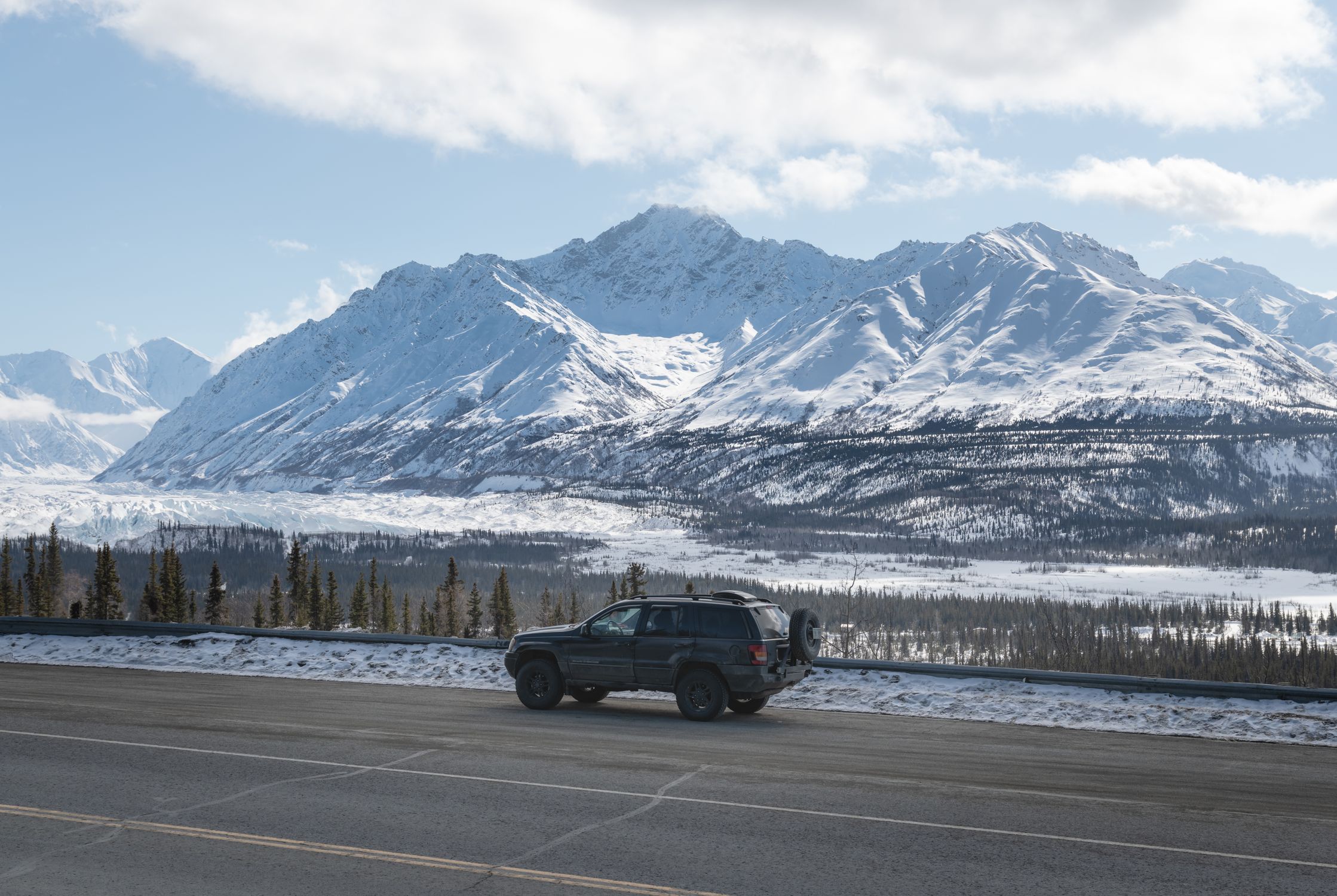
Pricing in the Last Frontier swings hard with the season and the rig you choose. During peak summer months, daily rates hover between $100-$150 for a standard sedan or compact SUV (ALASKA.ORG). Shoulder months - May and September - drop dramatically to $30-$50 per day, making them the sweet spot for budget-savvy explorers (ALASKA.ORG).
Broken down by class:
- Economy/Small cars: $67-$90/day average. Good for Anchorage-to-Fairbanks hops if you stay on paved highways.
- Standard SUVs: $113/day average; the go-to for glacier-side campouts where you need a bit of ground clearance.
- 4x4/Gravel-rated rigs (Keys to Denali, Denali Highway Jeep): $180+/day; essential for Dalton, Denali, or McCarthy Road.
- Overland rigs (Alaska Overlander): $299+/day; fully equipped with roof-top tents, dual-fuel tanks, and snorkels.
Fairbanks averages about $81/day across the board, with a seasonal low of $49/day in November and a June peak of roughly $145/day (Momondo). That’s close to a 3x swing between the cheapest week of fall and the busiest week of summer - proof that timing your trip matters almost as much as picking the right vehicle class.
One-way Anchorage-to-Fairbanks rentals often carry no extra drop fee, since companies shuffle fleets across the state to keep both hubs stocked. Picking up from a downtown office instead of the airport shaves 12-15% off the base rate, because airport concessions add a hidden surcharge that a city-center branch skips entirely. On a multi-day trip, that discount alone can cover a tank of gas or two.
The math is simple once you line the tiers up side by side: a paved-highway loop in an economy car costs a fraction of a gravel-rated 4x4, and the overland rigs sit in a different category altogether. Match the vehicle to the actual roads on your itinerary instead of defaulting to the biggest rig on the lot - paying $299/day for an Alaska Overlander build-out only makes sense if you’re genuinely camping off it, not just parking it at a lodge every night.
Insurance Explained 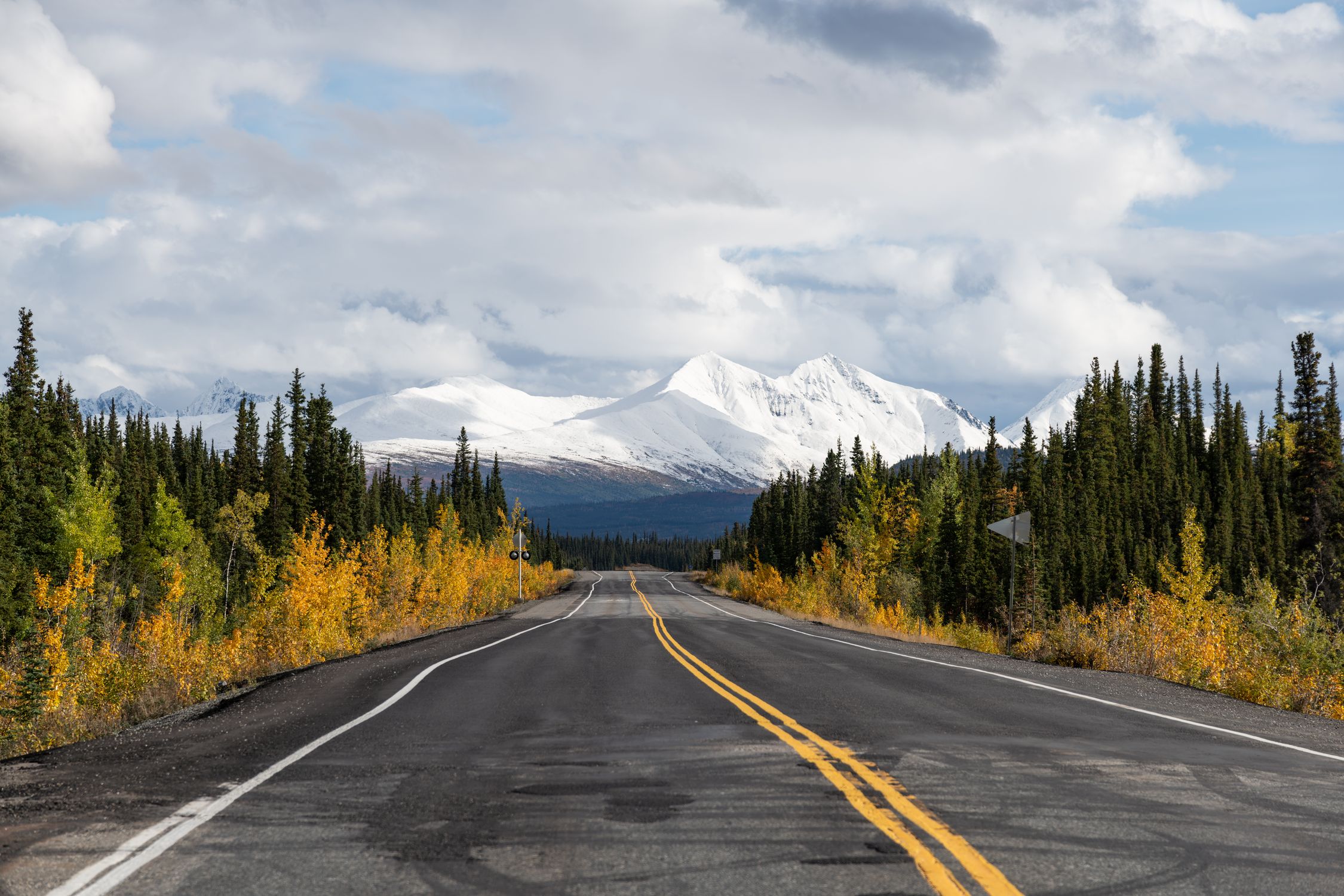
Collision Damage Waiver (CDW) is the safety net most renters assume comes standard, but Alaska throws curveballs. At Alaska Auto Rental, CDW is not offered for gravel-highway-rated vehicles; you must confirm eligibility before you sign (Alaska Auto Rental). The company also runs a fleet-monitoring GPS system that flags any unauthorized gravel-road travel, instantly voiding coverage (Alaska Auto Rental) - so don’t assume a quiet dashboard means nobody’s watching where you drove.
A cheap add-on worth the extra $3/day is windshield chip protection - rock chips are a daily hazard on the Kenai and the Denali Highway, and a single crack can force a full windshield swap mid-trip if you skip it. Remember: driving on unpaved or restricted roads without explicit permission nullifies both CDW and any supplemental coverage you purchase (valerievalise.com). That means the extra insurance you paid for at the counter is worthless the moment you turn onto a forbidden gravel stretch without sign-off.
If you’re eyeing the Dalton Highway, you’ll need a specialist like Alaska 4x4 Rentals or GoNorth Car & RV Rental, which issue their own insurance packages that stay valid on those gravel corridors (ALASKA.ORG). These operators build their business around covering exactly the routes a standard agency won’t touch, so their premiums reflect real gravel-road risk instead of a blanket exclusion. Confirm what’s covered - tire damage, undercarriage strikes, windshield cracks - before you sign, since “gravel-rated” doesn’t automatically mean “fully insured for everything the road throws at you.”
Treat the insurance conversation as part of the vehicle-selection decision, not an afterthought at the counter. A major agency’s cheapest daily rate can look tempting next to a specialist’s gravel-ready quote, but if your route touches even one restricted corridor, the “savings” evaporate the moment a claim gets denied for driving somewhere the standard policy never covered.
Road Realities & Restricted Corridors 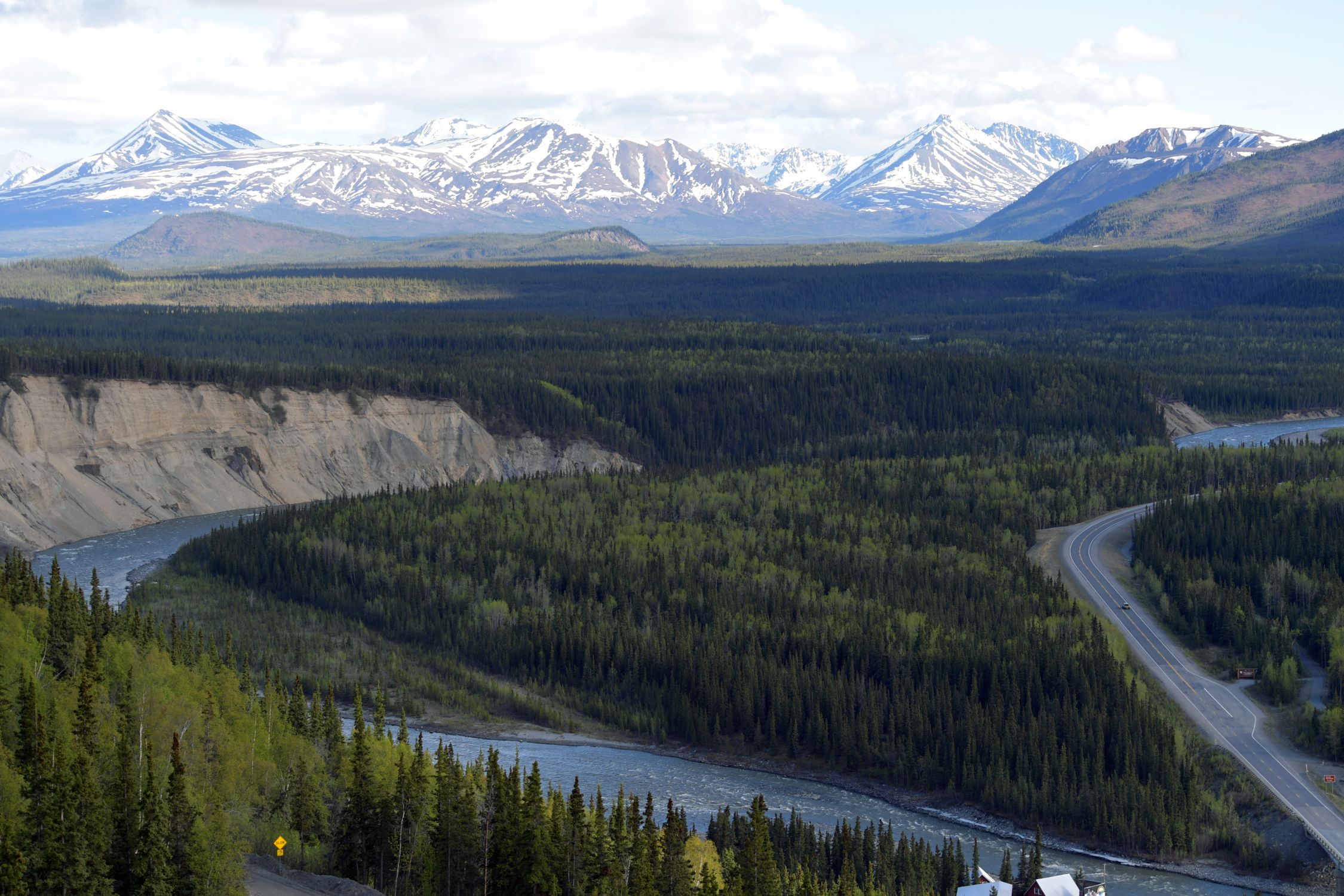
Alaska’s road network is a patchwork of paved highways and raw gravel arteries. Seven routes carry explicit rental restrictions:
- Hatcher Pass
- Denali Highway
- Dalton Highway
- Elliott Highway (final ~80 mi unpaved)
- McCarthy Road
- Steese Highway (unpaved near Central)
- Taylor Highway
Standard contracts forbid the Dalton Highway because of its gravel surface, heavy truck traffic, and weather volatility (valerievalise.com). Choosing a 4WD SUV from Hertz or Enterprise does not automatically grant you permission to tackle these routes - the vehicle can handle the terrain, but the contract still says no. If you need to traverse them, lock in a vehicle from a specialist - Alaska 4x4 Rentals, GoNorth Car & RV Rental, or Alaska Overlander - which explicitly authorizes travel on the Dalton, Denali, McCarthy, Top of the World, and Steese Highways (ALASKA.ORG). Denali Highway Jeep and Keys to Denali are two more gravel-focused outfitters worth quoting if you’re comparing options for a 4x4 rig.
Real-time conditions are posted on Alaska 511; the system streams camera feeds, closures, and weather alerts for the Dalton and other state routes (Alaska DOT&PF). Before you set out, pull up the latest report at Alaska 511 and plan for sudden washouts or snow drifts. A road that’s clear at 7 a.m. can be a closed washout by noon once a summer storm rolls off the Alaska Range, and a standard rental agreement won’t cover you for finding that out the hard way.
Tips for Booking & Saving Money 
- Book early for summer trips. Prices climb steeply in the weeks leading up to June-July, and inventory of 4x4 rigs disappears fast, since the gravel-rated fleet is small statewide and specialist outfitters sell out first.
- Travel in shoulder season (May or September). Daily rates dip to $30-$50, and crowds thin out, giving you more campsite options and shorter waits at popular pull-offs.
- Pick up downtown - Anchorage’s city office or Fairbanks’ main street locations - rather than the airport. The 12-15% airport surcharge disappears, and you often avoid the extra paperwork that comes with an airport concession counter.
- Add windshield chip protection. At $3/day it’s a small price to pay for a full windshield replacement after a single rock hit on a gravel shoulder.
- Secure gravel-road permission in writing. Have the rental contract explicitly state you’re cleared for Hatcher Pass, Denali, or any other unpaved stretch you plan to hit - a verbal “sure, that should be fine” from a counter agent won’t hold up if the GPS flags you later.
- Use a price-comparison tool like DiscoverCars to scan rates across Hertz, Avis, and the local outfits in one glance, since the majors and the specialists rarely show up side-by-side on any single company’s own site.
- Check the 511 system before each long leg; a sudden closure on the Elliott Highway can add 200 miles of detour, and you want to know that before you’re already committed to a route with no easy turnaround.
Following these steps keeps your budget lean and your adventure leaner.
What to Pack
Your vehicle gets you to the trailhead; this gear keeps you found, charged, and safe once the pavement ends.
Garmin fēnix 8 Solar Sapphire 51mm
The ultimate expedition watch, with up to 149 hours of GPS on solar boost and a dive-rated 40 m case. Multi-band GPS/GLONASS/Galileo/BeiDou and a titanium build with a built-in LED flashlight make it the pick for serious adventurers who need maximum battery life and full-featured navigation. The tradeoff: a premium price over $1,100 and a heavier 89g build than some rivals. Garmin fēnix 8 Solar Sapphire 51mm
COROS VERTIX 2S Adventure GPS Watch
Offers 40 days of smartwatch battery and 118 hours of GPS, with a sapphire screen and titanium bezel built for canyons and cold. Dual-frequency GPS keeps tracking precise even when the signal bounces off rock walls, and it’s a strong value pick for trail-runners and mountaineers. It has a smaller third-party app ecosystem than Garmin and skips the built-in flashlight. COROS VERTIX 2S Adventure GPS Watch
SUUNTO Vertical Adventure GPS Solar Watch
Solar-assisted 60-day battery life and a large 1.4” touchscreen loaded with free global offline maps make this the pick for hikers and multisport athletes who want a big screen for route planning. It packs 95+ sport modes with detailed training metrics, though the touchscreen can lag in cold conditions and heart-rate accuracy trails a chest strap. SUUNTO Vertical Adventure GPS Solar Watch
Pack these watches alongside a rugged dry-bag, a portable power bank, and a compact first-aid kit. The extra battery life and reliable satellite reception will keep you on track when the road ends and the trail begins.
Common Mistakes & FAQ
These are the slip-ups that trip up renters most often, plus the questions worth settling before you touch down.
Mistake #1 - Assuming any SUV can hit the Dalton. Standard rentals forbid the Dalton; driving there without a specialist’s clearance voids CDW and can land you with a hefty repair bill. Always verify permission in writing before you leave the lot.
Mistake #2 - Skipping windshield chip coverage. A single stone can crack a windshield beyond repair on gravel shoulders. The $3/day add-on pays for itself after the first chip.
Mistake #3 - Ignoring the 511 updates. Road closures happen without notice. Check the Alaska 511 system before each leg; a missed alert can add hours of driving on rough gravel or strand you at a washout.
FAQ
Q: Can I rent a car in Fairbanks for under $50? A: Yes - during the November low season the average daily rate drops to about $49, well under the roughly $81/day Fairbanks average (Momondo).
Q: Do I need an International Driving Permit if my license is in English? A: No, only non-Roman alphabet licenses require an IDP (theoffroading.com).
Q: Is there an extra fee for dropping the car off in a different city? A: Anchorage-to-Fairbanks one-way rentals often have no drop fee because companies rebalance their fleets across the state.
Q: What’s the best way to avoid the airport surcharge? A: Choose a downtown pickup location; you’ll save roughly 12-15% on the base rate.
Q: What if my itinerary includes the Dalton Highway itself? A: Book directly with a specialist that authorizes Dalton travel, such as Alaska 4x4 Rentals or GoNorth Car & RV Rental - a standard 4WD from a major agency still won’t have permission, no matter how capable the vehicle is.
Related Reading
Get price-drop alerts and new guides from BoldTripGuide
One email a week: price drops on the gear we recommend, new guides, and what changed. No spam, unsubscribe anytime.