Big Island Hawaii Car Rental Guide 2026 for Adventurers
2026 guide to renting a car on the Big Island. Learn costs, 4WD rules, insurance, road tips, and packing gear for surf, hike, and climb adventures.

This post may contain affiliate links. Disclosure
The Big Island isn’t a place you skim from a resort brochure - you’re here for lava-strewn trails, midnight surf, and summit stargazing. That kind of freedom only comes when you control the wheels, and in 2026 the rental market is a mix of national chains and local outfits that can make or break your itinerary. From the economy hatchback that shuttles you between Hilo’s waterfalls to the 4x4 built for a Mauna Kea summit run, every choice carries a price tag, a set of restrictions, and a handful of hidden rules. This guide lays out the real numbers, the road restrictions rental companies don’t advertise, and the gear worth packing before your next wave or ridge.
Short answer: Every major Big Island agency requires a driver aged 21 or older, and renters under 25 pay a surcharge. Economy cars run about $27-51 a day in low season, with collision cover adding $15-30. Only Harper Rental and Big Island Jeep Rentals permit the Mauna Kea summit road, where standard insurance is void.
Requirements & Age Rules
Before you settle on a vehicle class, clear the island’s baseline rental checklist. All major agencies - Alamo, Avis, Budget, Dollar, Enterprise, Hertz, National, and Thrifty - plus local operators like Harper Rental, Big Island Jeep Rentals, Discount Hawaii Car Rental, and Island Discount Rentals require a valid driver’s license and a minimum age of 21. A handful of locations will rent to 18-year-olds, but only with a surcharge, and it’s rare to find that option on the island. Renters under 25 should expect a young-driver surcharge on top of the base rate at most counters, so factor that into your budget before you compare quotes.
A credit card in the renter’s own name is non-negotiable - it’s what the counter uses to hold the security deposit and cover any incidentals, and a debit card typically won’t do. Adding an extra driver costs $15 per day unless that driver is your spouse or domestic partner, in which case most agencies waive the fee.
Don’t overlook the child-seat law: rear-facing seats are required for kids under 1 year old or under 20 lbs, forward-facing seats for ages 1 through 4, and booster seats after that. Rental desks stock these seats, but they charge extra, so bring your own if you have the luggage space.
For a full rundown of who operates where, the Hawaii Department of Transportation’s Kona International Airport car rentals page confirms eight major companies - Alamo, Avis, Budget, Dollar, Enterprise, Hertz, National, and Thrifty - all run counters at KOA, so you’ll have plenty of choice the moment you land.
Costs by Vehicle Class
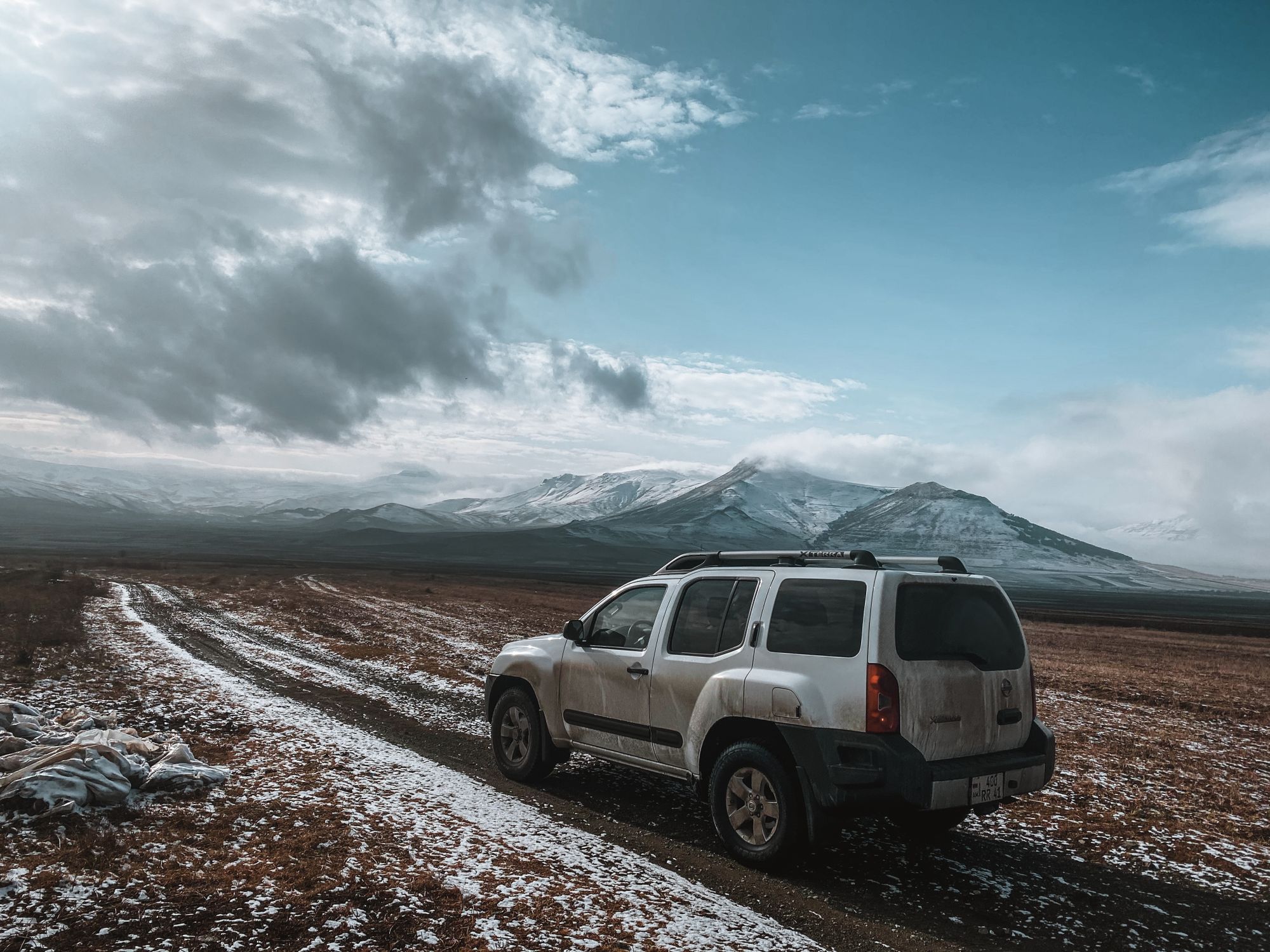
Understanding the price bands ahead of time keeps you from getting surprised at the counter. At KOA, economy cars run $27 to $51 per day in low season, while the average day rate for a standard Hertz vehicle sits around $51 to $60, per momondo’s fare-tracking data. During peak periods - December through March, June through August, and event weeks like the Ironman triathlon or the Merrie Monarch Festival - that same economy car can spike as high as $268 per day.
Mid-size vehicles booked for an eight-day stretch run $30 to $56 per day, with the rate dropping the closer you book to your arrival date, so last-minute flexibility can work in your favor here. If you’re staying 30 days or longer, skip the national chains altogether: local outfits like Island Discount Rentals in Hilo and Discount Hawaii Car Rental typically beat their monthly pricing by a wide margin.
A 4x4 or Jeep suitable for a Mauna Kea summit attempt carries a mandatory four-day minimum booking and costs noticeably more than a standard sedan, since it needs the low-range gearing that gets you up the graded gravel near the top. Only Harper Rental and Big Island Jeep Rentals officially permit their vehicles that far, so budget accordingly and don’t expect a national chain to offer the same option.
Whatever class you land on, add the Collision Damage Waiver to your math early - it typically runs $15 to $30 per day, and you’ll want it if there’s any chance you’ll touch unpaved ground (more on that below).
Insurance Explained Plainly

Most renters lean on the CDW add-on, but it has blind spots worth knowing before you sign. Driving on prohibited or unpaved roads - including the final stretch of the Mauna Kea summit track - voids the rental insurance entirely, leaving you liable for every scratch, dent, or shredded tire, according to Love Big Island. The credit-card secondary coverage many travelers assume they have also excludes large SUVs, trucks, and 4WD vehicles, so don’t count on it as a backup for anything bigger than a sedan.
Standard coverage doesn’t extend to lava-rock terrain either; volcanic ash can shred stock tires in minutes, and that damage falls squarely on you. Venture onto the Papakolea Green Sand Beach track or South Point Road and you’re breaching the rental agreement outright, insurance or not.
The safest play: buy the CDW for any 4WD you rent, read the fine print for off-road exclusions before you sign, and if you plan to stray off the paved network, carry a personal travel policy that specifically lists adventure-vehicle damage. It costs more upfront, but it’s cheaper than a shredded tire on lava rock, far from the nearest tow truck.
Road Realities on the Big Island

The island’s road network is mostly well-paved highways, but it also has narrow, winding backroads where drive time matters more than mileage. Saddle Road (Route 200), once off-limits to rental cars, has been open to standard 2WD vehicles since 2011, according to Go Visit Hawaii. It’s the fastest cross-island connector, but it runs windy and foggy at altitude, so keep your headlights on and stay alert for sudden weather shifts.
The Mauna Kea Access Road is paved from Saddle Road all the way up to the Visitor Information Station at roughly 9,200 to 9,300 feet, a stretch most sedans and minivans handle without issue. About 300 yards past the station, though, the pavement ends, and the remaining 4.5 miles to the 13,803-foot summit turn into steep, graded gravel that demands 4WD low-range. No national chain - not Alamo, not Avis, not Hertz - permits its vehicles beyond that Visitor Information Station.

Two other routes are flatly forbidden in most rental contracts: South Point Road and the descent into Waipio Valley. Both suffer from rockslides, steep grades, and a total lack of guardrails, which makes them high-risk even for a capable 4WD, per Go Visit Hawaii. The unpaved 4WD-only track to Papakolea, better known as Green Sand Beach, is also off-limits under every standard rental agreement.
Before you tackle Mauna Kea, check the Mauna Kea Visitor Information Station for current conditions. Fog, “invisible cows,” and sudden snow at elevation can turn a manageable climb into a genuinely dangerous one, so don’t treat the summit road as an afterthought.
Tips, Booking Strategies & When to Upgrade

-
Reserve a 2WD for most itineraries. The island’s paved highways and coastal routes - Hilo to Kona, Hawaii Volcanoes National Park, Kona coffee country - are all comfortably navigable in a compact or midsize sedan.
-
Upgrade to 4WD only if the Mauna Kea summit is on your list. Harper Rental and Big Island Jeep Rentals are the only firms that will let you cross the gravel stretch, and you’ll need to book four days out to satisfy their minimum rental period.
-
Book early for event weeks and peak season. The Ironman triathlon and the Merrie Monarch Festival both cause a surge in demand, on top of the standard December-through-March and June-through-August peak windows, so lock in a rate as soon as your travel dates firm up.
-
Monitor rates after you book. Platforms including DiscoverCars let you rebook if the price drops, especially inside the six-week-out window - set a price alert and be ready to cancel and re-reserve without penalty.
-
Consider long-term local rates. If you’re staying 30-plus days, check Island Discount Rentals in Hilo or Discount Hawaii Car Rental for monthly specials that undercut the national chains.
-
Compare airport-desk pricing against an in-town pickup. Some KOA counters carry an airport surcharge that a downtown office doesn’t, so it’s worth a quick comparison if you’re already staying near a hotel with its own pickup option.
-
Use the Hilo International Airport car rentals page for alternative pickup options on the east side of the island, especially if Hilo is your first base.
-
Pack a spare tire and a repair kit if you’re heading onto any volcanic-ash-covered roads. Standard rental tires aren’t built for sharp lava rock, and roadside assistance can be hours away out there.
What to Pack: Navigation & Survival Gear
A rental car gets you to the trailhead; it won’t help once you’re on foot chasing a summit or a surf break with no cell signal. These three GPS watches are built for exactly that gap.
Garmin fēnix 8 Solar Sapphire 51mm
The heavyweight of the group, with a 1.4-inch solar-charged touchscreen, up to 149 hours of GPS battery life, and a 40-meter dive-rated case built around multi-band GPS, GLONASS, Galileo, and BeiDou coverage. It’s the pick for serious adventurers who need maximum runtime and full-featured navigation, plus a built-in LED flashlight for early starts. The tradeoffs: a premium price over $1,100, and at 89 grams it’s heavier on the wrist than the other two.
COROS VERTIX 2S Adventure GPS Watch
A lighter-priced alternative at $699 that still delivers a 40-day smartwatch battery and 118 hours of full GPS tracking, wrapped in a sapphire touchscreen and titanium bezel. Dual-frequency GPS keeps you accurate in canyons and gulches where signal bounce is a problem, making it a solid fit for trail runners and mountaineers. Its gaps are a smaller third-party app ecosystem than Garmin’s and no built-in flashlight.
SUUNTO Vertical Adventure GPS Solar Watch
The longest daily-mode battery of the three at 60 days, thanks to solar assist, paired with a large 1.4-inch touchscreen and offline maps that work without your phone. At $649, it suits hikers and multisport athletes who want the biggest screen and don’t mind trading some GPS-only runtime (85 hours versus the Garmin’s 149) for it. Two honest caveats: the touchscreen can lag in cold conditions, and its heart-rate accuracy trails a dedicated chest strap.
All three hold up in the water - the Garmin to 40 meters, the COROS and SUUNTO to 100 meters - so any of them can go paddleboarding or snorkeling with you. Pick based on budget and how much battery margin you actually need; the fēnix 8 is the expedition-grade investment, while the COROS and SUUNTO deliver most of the same capability for less.
Mistakes to Avoid (FAQ)
Q: Can I drive a rental on the Mauna Kea summit trail? A: Only if you’ve booked a 4WD from Harper Rental or Big Island Jeep Rentals and met their four-day minimum. Every national chain forbids its cars beyond the Visitor Information Station.
Q: Is my credit-card insurance enough for a 4WD? A: No. Most credit-card policies exclude large SUVs and 4WDs outright, and any off-road use voids what coverage you do have. Buy the CDW add-on and consider a supplemental adventure-vehicle policy if you’re headed off pavement.
Q: Do I need a separate GPS device? A: Not if you bring one of the watches above. Since they don’t depend on cell signal, they’re a solid backup for the island’s more remote stretches where a phone map can lose its connection.
Q: Will I be fined for driving on South Point Road? A: You’re risking more than a fine - most rental agreements list South Point Road and the Waipio Valley descent as forbidden routes outright, and violating that contract voids your insurance along with it.
Q: When are rates cheapest? A: Outside the stated peak windows - December through March, June through August - and away from event weeks like the Ironman and the Merrie Monarch Festival, economy rates trend toward the lower end of the $27-to-$51 range. Book as early as your plans allow, then use the six-week rebooking trick above if a better rate shows up.
Related Reading
Get price-drop alerts and new guides from BoldTripGuide
One email a week: price drops on the gear we recommend, new guides, and what changed. No spam, unsubscribe anytime.