Canadian Rockies Car Rental Guide 2026 for Adventurers
Gear-forward guide to renting a car in the Canadian Rockies in 2026. Learn age rules, price bands, insurance, road tricks, and packing tips for mountain passes.

This post may contain affiliate links. Disclosure
The Canadian Rockies aren’t a road trip you take on a whim - you need a rig that can haul a pack, handle sudden snow, and get you to trailheads before the shuttle crowds roll in. In 2026 the rental market in Banff and Jasper is still dominated by the big four (Avis, Hertz, Alamo, Enterprise), but rates swing wildly between the shoulder-season and peak summer. This guide strips away the hype, lays out the hard numbers, and gives you the checklist you’ll need to keep the stoke high and the stress low when you hit Highway 93, the Icefields Parkway, and the backcountry passes that define the Rockies.
Short answer: Alberta rentals require age 21 with twelve months of clean driving and a credit card in the renter’s name; under-25 drivers pay roughly $25 USD a day extra. Compact cars start near $52 USD daily, averaging $40 in November and about $91 in July. Book 60-70 days ahead for the low end.
Requirements & Age Limits
Alberta’s rental rules are blunt: you must be 21 years old with at least 12 months of clean driving experience, and you need a valid driver’s licence with no learner-stage restrictions. A major credit card in the renter’s name is non-negotiable; some locations will accept a debit card but they’ll jack up the security deposit. If you’re under 25 you’ll face an extra daily surcharge (often around $25 USD) and a larger deposit, as detailed by Lanes Insurance.
Most companies will also ask to see proof of insurance, but the mandatory provincial liability coverage is already baked into the rental price, so you won’t need to bring a separate policy for basic protection. Keep your passport, driver’s licence, and credit card handy at the counter - rental agents in Banff move fast during peak season, and any missing doc can cost you a day’s worth of adventure. Show up with the paperwork sorted and you’ll be pulling out of the lot while the next renter in line is still hunting for their card.
Cost by Vehicle Class
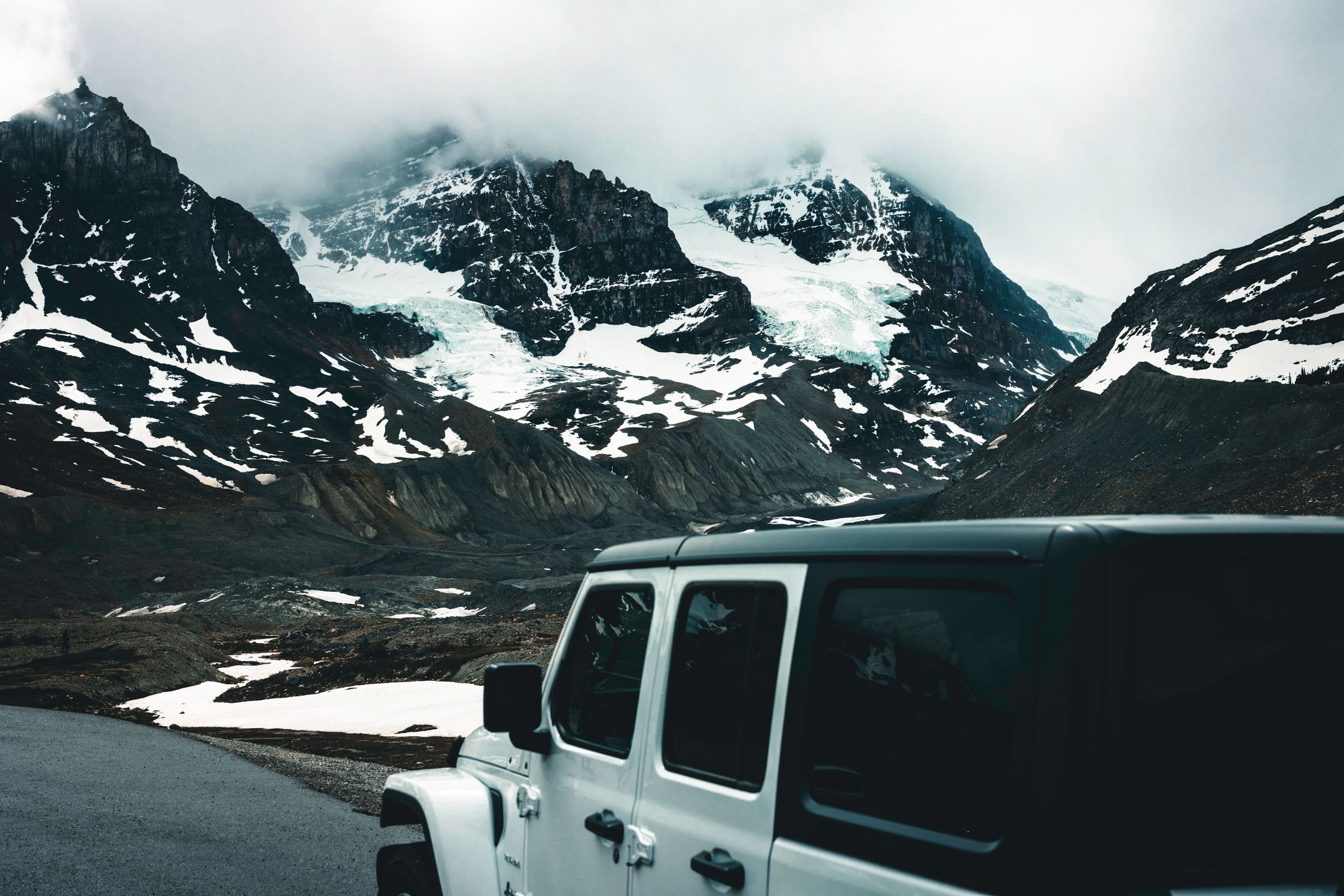
Pricing in the Rockies is transparent enough to let you budget by the mile. According to the latest KAYAK data, the cheapest daily rate for a compact car (Nissan Versa) sits at $52 USD. Economy models (e.g., Nissan Versa) range $52-61 USD/day, while compact cars (Kia Rio) sit at a flat $52 USD/day. Mid-size options (Toyota Corolla) hover between $58-62 USD/day, and larger sedans (Chevrolet Malibu) climb to $59-85 USD/day. If you’re hauling skis, a roof rack, or a couple of backpacks, the sweet spot is an SUV or crossover (Volkswagen Tiguan) at $60-68 USD/day. Luxury sedans jump to $166 USD/day - a price most backcountry crews can skip.
Seasonality matters. November is the budget-friendly month, averaging $40 USD/day, while July spikes to roughly $91 USD/day. Booking 60-70 days ahead is the only reliable way to lock in the low end of those bands, especially for the summer rush when every rental desk is booked solid.
The extra spread between a compact and an SUV isn’t just legroom - ground clearance and cargo space matter the moment you’re strapping on chains at a pullout on the Icefields Parkway, and a crossover swallows ski bags and coolers that a compact’s trunk simply can’t.
Enterprise and Avis each run two locations in Banff, the most of any brand, giving you a better chance of snagging a vehicle close to the townsite when you arrive. Compare all four companies side-by-side on DiscoverCars; the platform pulls live rates from each provider and flags any under-25 surcharges before you click reserve.
Insurance Basics
Alberta law mandates liability insurance - that’s the coverage that protects third parties if you crash. It’s already included in the rental price, so you won’t see a line item for it on your invoice. Beyond that, you have three optional layers:
-
Collision-Damage Waiver (CDW) / Loss-Damage Waiver - eliminates most out-of-pocket repair costs if the rental is damaged. If you have a credit card that offers rental-car collision coverage, you can decline the CDW, but read the fine print; luxury vehicles and certain high-risk routes (e.g., steep ice-covered passes) are often excluded.
-
Personal Accident Insurance - covers medical expenses for you and passengers. Most travelers already have this through health plans or travel insurance, so evaluate whether the extra $10-15 USD/day is worth it.
-
Personal Effects Coverage - protects gear against theft or damage. If you’re lugging a high-value GPS watch, camera kit, or climbing hardware, this can be a safety net, but again, many personal policies already cover personal belongings abroad.
When you pay with a credit card, activate the rental-car insurance feature before you book. The card will then act as a secondary insurer, stepping in after the rental company’s CDW (if you declined it). Keep the receipt and the credit-card statement handy; you’ll need them if you file a claim after a mountain pass incident.
The decision tree is simple: standard SUV on paved highway, credit-card coverage usually suffices. Luxury sedan, or any stretch of the Icefields Parkway where a chain requirement gets called, and the CDW’s exclusion clause is exactly the fine print that trips people up - pay for it, or confirm in writing that your card’s policy covers ice-pass driving before you leave the counter.
Road Realities & Passes
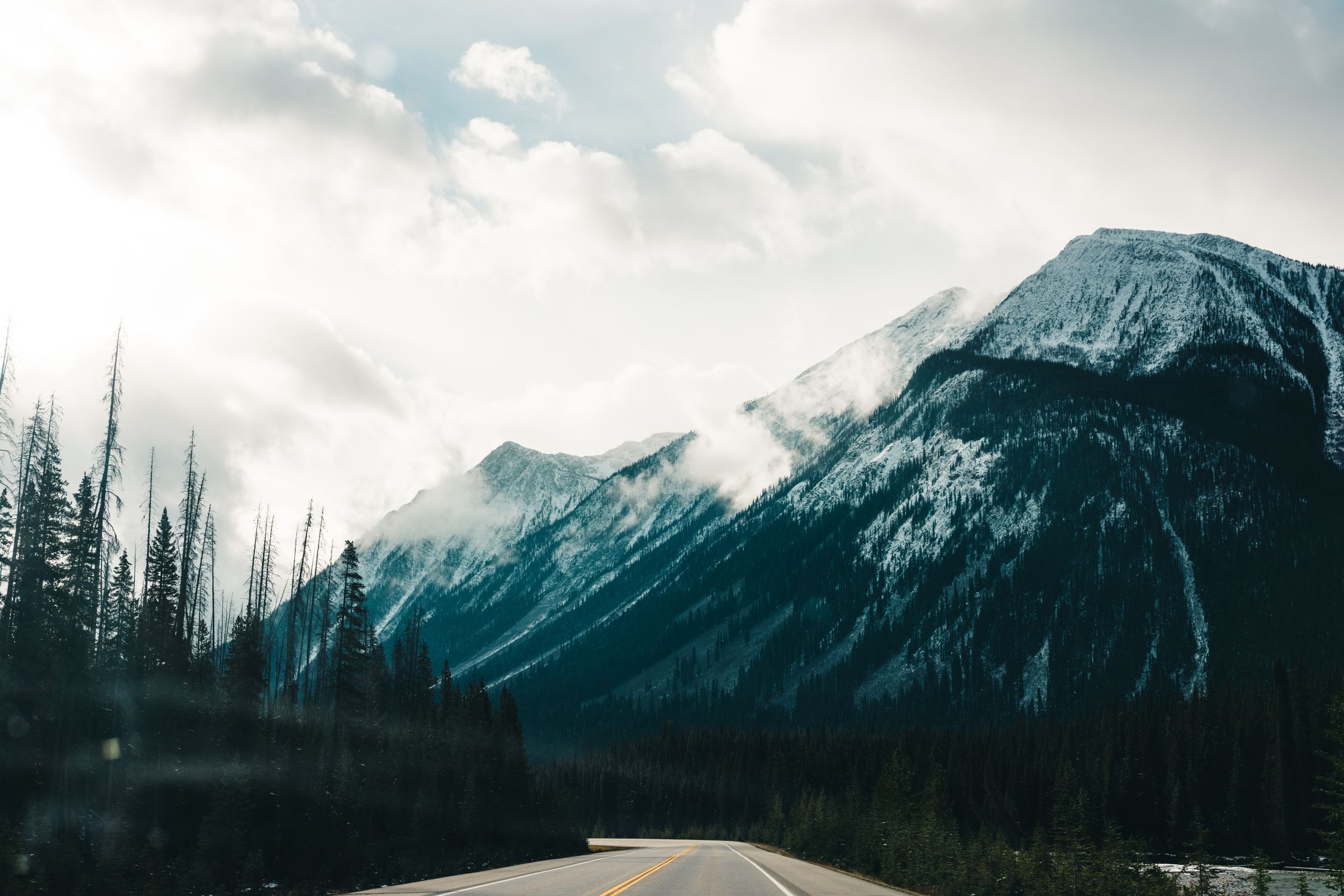
The Rockies are a living, breathing road system - snow and ice linger well into May, and sudden storms can drop chains or winter-tire requirements on the Icefields Parkway (Hwy 93). Local KAYAK users stress checking the latest chain conditions before you set out; a missed chain requirement can land you with a fine or, worse, a stranded vehicle on a narrow shoulder.
Parking is another choke point. In Banff townsite, on-street spots are scarce and often fee-based. National-park campgrounds reserve a few spaces for rentals, but they fill fast in July. Plan to arrive early at popular trailheads like Lake Louise or Moraine Lake; a personal car lets you beat the shuttle windows that open only from 7 am-9 am in peak season.
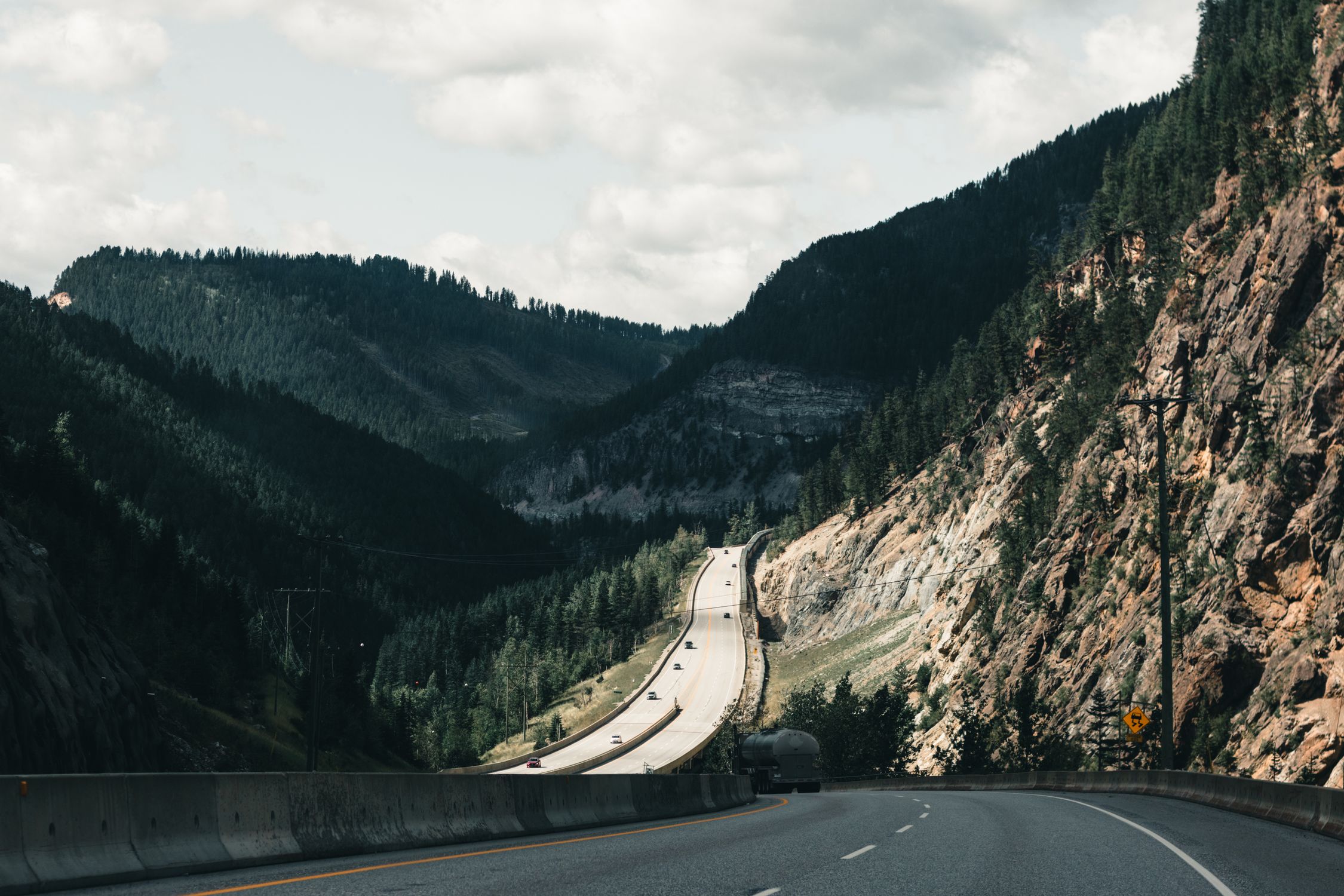
Fuel stations are plentiful in Banff and Jasper, but the Icefields Parkway is a long stretch with only a handful of pumps. Fill up in Jasper before you head north, and keep a spare can of fuel in the trunk if you’re pushing a heavy load. No toll roads exist in the corridor, but the fuel economy of an SUV drops noticeably when you’re climbing 2,000-plus-meter passes.

Booking & Timing Tips
-
Book Early - Aim for a reservation 60-70 days before your start date. This window captures the “early-bird” pricing tier and gives you flexibility to upgrade if weather forecasts demand a larger vehicle.
-
Choose the Right Class - For the Icefields Parkway, an SUV or crossover is non-negotiable. Even if you’re only carrying a daypack, the extra ground clearance and cargo space make chain installation easier and keep you safe on icy shoulders.
-
Leverage Late Returns - If your itinerary pushes you past the typical 10 am drop-off window, call the rental desk ahead and arrange a late return. Most locations will accommodate a few extra hours for a nominal fee, saving you a night in a pricey townsite hotel.
-
Use the DiscoverCars Comparison - The single link to DiscoverCars pulls rates from Avis, Hertz, Alamo, and Enterprise. Filter by “SUV” and “no under-25 surcharge” to see which company offers the cleanest deal for your age bracket.
-
Monitor Snow Reports - Parks Canada publishes daily road condition updates for Banff and Jasper. A quick glance at the Parks Canada driving guide before you leave the rental desk can alert you to sudden chain mandates or road closures.
What to Pack
Garmin fēnix 8 Solar Sapphire 51mm - The ultimate battery-monster for multi-day backcountry pushes. Solar charging pushes GPS time to 149 hours (up to 48 days in daily smartwatch mode), and the 40 m dive rating means you’re covered for glacier creek descents. Multi-band GPS/GLONASS/Galileo/BeiDou locks a fix fast even between narrow canyon walls, and at 89 g on the wrist you’ll barely notice it under a jacket cuff. At $1,199.99, it’s an investment, but the built-in LED flashlight and dual-frequency GPS are lifesavers on night-time route-finding. The trade-offs: it’s the priciest watch here, and that 89 g is heavier than either rival below. Garmin fēnix 8 Solar Sapphire 51mm
COROS VERTIX 2S Adventure GPS Watch - A lighter-priced alternative that still delivers 40 days of smartwatch battery and 118 hours of GPS. The sapphire screen and titanium bezel survive the slap of a rock-face scramble, dual-frequency GPS nails your position in deep canyons, and a 100 m water rating covers glacier-melt creek crossings without a second thought. At $699.00, it’s a sweet spot for trail runners who need precision without the Garmin price tag - though the third-party app ecosystem is smaller than Garmin’s and there’s no built-in flashlight, so pack a headlamp separately. COROS VERTIX 2S Adventure GPS Watch
SUUNTO Vertical Adventure GPS Solar Watch - If you prefer a larger touchscreen with offline maps, the Vertical gives you 60 days of smartwatch battery and 85 hours of GPS thanks to solar assist, plus a 100 m water rating and dual-band GNSS for accurate fixes on tree-covered switchbacks. The 1.4-inch screen makes route planning on the go a breeze, and the 95+ sport modes cover everything from alpine climbing to snowshoeing. At $649.00, it’s a solid middle ground for hikers and multisport athletes who prioritize screen size and battery endurance over ultimate precision, though the touchscreen can lag in sub-zero temps and heart-rate accuracy trails a dedicated chest strap. SUUNTO Vertical Adventure GPS Solar Watch
Mistakes to Avoid (FAQ)
Q: Can I rent a car with a debit card only? A: Some locations will accept a debit card, but they’ll raise the security deposit dramatically (often to $1,000 USD). Expect a hold on your account for the full rental period, which can tie up funds you need for gear purchases.
Q: Do I need chains on the Icefields Parkway in July? A: Not usually, but weather in the Rockies is fickle. A sudden snowstorm can drop a chain requirement even in late summer. Keep a set of standard tire chains in the trunk and check the Parks Canada road conditions each morning.
Q: Is it worth paying for CDW if my credit card covers collisions? A: Only if you’re renting a luxury sedan ($166 USD/day) or plan to drive on high-risk passes where the credit-card policy excludes coverage. For standard SUVs, the credit-card waiver usually suffices, provided you’ve activated it before booking.
Q: How do I avoid parking tickets in Banff townsite? A: Park only in designated rental-car zones and pay the meter or kiosk fee immediately. The town enforces strict time limits, and a $50 USD ticket can eat into your adventure budget faster than a missed sunrise.
Q: Should I book a “late checkout” if I’m leaving early morning? A: Absolutely. Early-morning trailhead access is a game-changer, and most rental desks will hold the car for you until 12 pm if you arrange it in advance. The extra fee is negligible compared to the value of beating the shuttle crowd.
Q: Is November actually worth the savings over July? A: At roughly $40 USD/day, November undercuts July’s $91 USD/day peak by more than half, but you’re trading that discount for shorter daylight windows and a higher chance of an early-season storm closing a pass without notice - fine for townsite exploring, riskier if the Icefields Parkway is the whole point of the trip.
Q: Why do Enterprise and Avis keep showing up as the easiest pickup? A: They each operate two rental locations in Banff, more than any other brand in town, so you’ve got better odds of a counter close to where you’re staying instead of a shuttle ride to the edge of the townsite.
Related Reading
Get price-drop alerts and new guides from BoldTripGuide
One email a week: price drops on the gear we recommend, new guides, and what changed. No spam, unsubscribe anytime.