Namibia Car Rental Guide 2026: What Adventurers Need to Know
Gear up for Namibia's epic roads with our 2026 car rental guide. Get cost breakdowns, insurance tips, road rules, and packing essentials for 4x4 adventurers.

This post may contain affiliate links. Disclosure
Namibia’s endless horizon, towering dunes, and rugged mountain passes demand a ride that can keep up with your pulse. Whether you’re chasing the sunrise over Sossusvlei, threading a canyon in the Fish River, or hauling a surfboard to the remote Swakopmund coast, the right rental can be the difference between a smooth line-up and a busted axle. In 2026 the market is mature, but the mix of cheap economy cars, hard-working sedans, and purpose-built 4x4s still requires a clear game plan. Below you’ll find the exact numbers, the paperwork checklist, insurance hacks, road-sense tips, and a stripped-down gear list that will keep you moving when the desert gets real.
Short answer: Namibia’s market is dominated by Avis, Hertz, Europcar, Budget and SIXT alongside local specialists, all within the 31-member Car Rental Association of Namibia. Daily rates average about $74: roughly $39 for an economy car on the tarred B1 and $84 for a Hilux-style 4x4. Demand peaks July-August, so book early.
Rental Companies & Booking Basics
Namibia’s rental scene is dominated by the global players Avis, Hertz, Europcar, Budget, and SIXT, plus local specialists Asco Car Hire, Advanced Car Hire, Namibia2Go, and Britz. Together they represent the 31 members of the Car Rental Association of Namibia (CARAN), which enforces age, mileage, and vehicle-age standards across the board. Because demand spikes in July-August, especially for 4x4s and camping rigs, lock in your reservation early - the same peak-season squeeze that pushes September’s average daily rate toward the high end of the range (more on seasonal pricing below). A single price-comparison portal - DiscoverCars - lets you view all providers side-by-side, saving you the hassle of hopping between sites.
Vehicle Classes & Pricing
Understanding the price bands helps you match budget to terrain. The average daily rental across all vehicle types sits at about $74, according to Kayak - though that number moves a lot with the calendar. December is the cheapest month to book, averaging around $49 per day, while September is the priciest, spiking to roughly $96 per day as dry-season demand peaks. If your travel dates are flexible, shifting your trip out of the July-September window can meaningfully cut your total spend.
If you’re cruising the tarred B1 between Windhoek and Swakopmund, a small economy car will do - average $39 per day. For longer highway legs with a bit more cargo, a medium sedan averages $43 daily.
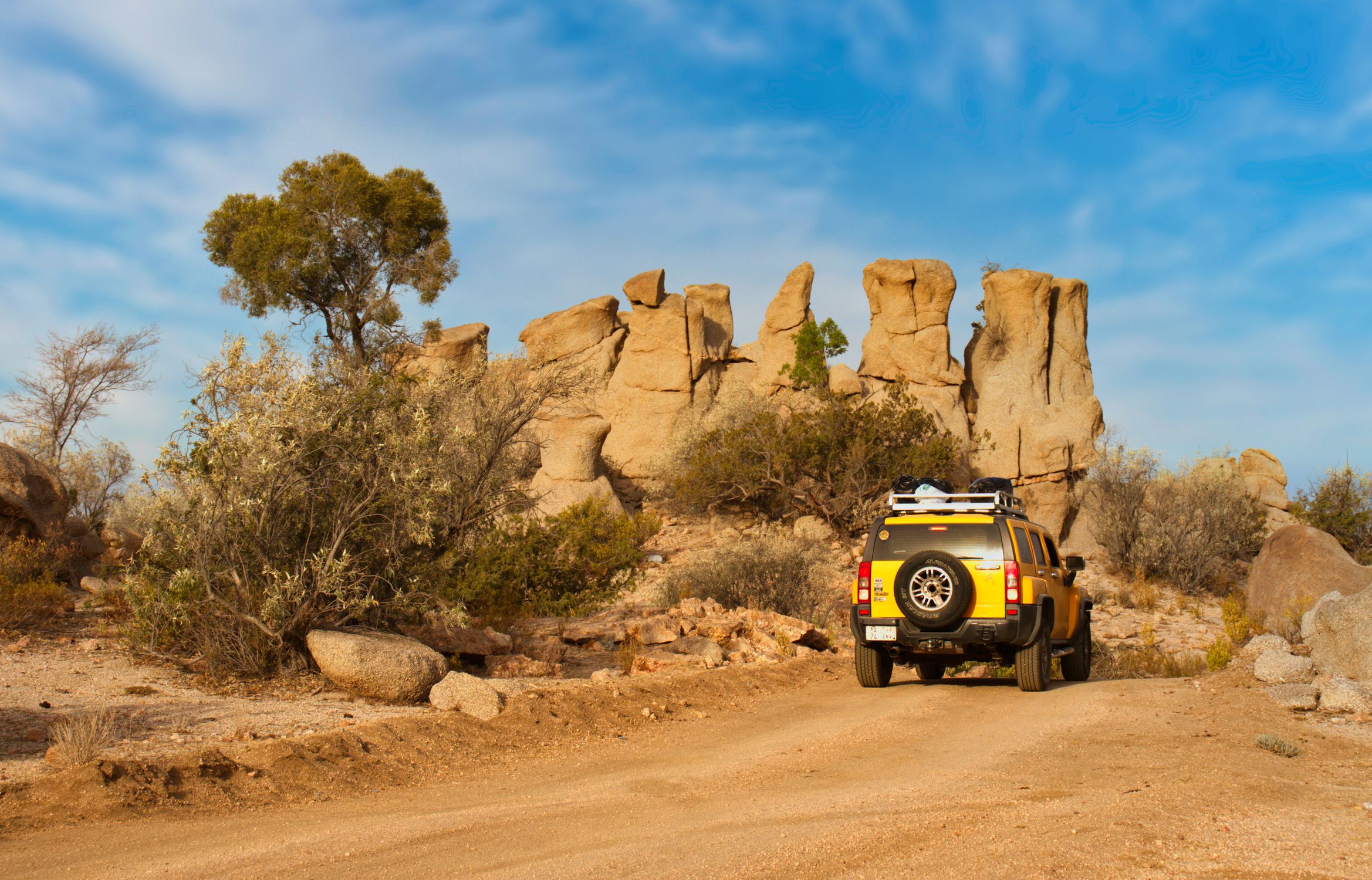
When the trail gets loose, a Toyota Hilux-style SUV or 4x4 jumps to $84 per day (Kayak). Local operator Asco Car Hire lists standard non-camping 4x4s from EUR66 to EUR160 per day, while fully equipped camping rigs for one- or two-person crews range EUR72-EUR231, depending on season and tier. Remember that the high-season surge can push a 4x4 well past $100, so budget accordingly and book the vehicle class you actually need - a 4x4 you never take off tar is money spent for nothing.
Driver Requirements & Age
All companies require a full, valid driver’s license - generally at least one year old - and a passport or ID at pickup. An International Driving Permit (IDP) is only needed if your home license isn’t printed in English (Live Like It’s the Weekend). Minimum age varies: most firms start at 18, but many impose a 23-year floor for 4x4s, with a young-driver surcharge for anyone under 25. CARAN members also demand that self-drive vehicles be no older than three years, with mileage caps of 100,000 km for sedans, 150,000 km for kombis/wagons, and 180,000 km for 4x4s (CARAN). Booking through a CARAN member matters in practice, not just on paper: it’s the difference between a guaranteed maximum vehicle age and mileage cap, and rolling the dice with an unregulated operator. Have your license and passport ready at the counter - the paperwork check is quick, but only if the names match your booking exactly.
Insurance & Excess Explained
Namibian rentals come with a standard third-party and collision cover that insures roughly 90% of the vehicle’s value. The renter remains liable for the remaining 10% excess, commonly set around N$40,000 and blocked on a Visa or Mastercard at pickup (Asco Car Hire). You can shave that figure down to N$20,000 for about EUR8 per day, or to N$5,000 for roughly EUR15 daily. For longer trips (8-10+ days) a zero-excess “Super Cover” is available at about EUR25 per day - on a 10-day rental that’s roughly EUR250 for full peace of mind, against banking on your own excess buffer if something goes wrong. As a rule of thumb, a short 3-5 day trip on mostly tar roads rarely justifies the extra Super Cover spend, but a two-week loop through remote gravel country changes that math fast.
Standard policies exclude glass, tyre, and sand-storm damage - so keep a spare tyre, a jack, and a small bottle of tyre sealant in the boot. If you opt for reduced excess, the insurer still won’t cover those exclusions, so a personal travel insurance rider that includes vehicle damage can be a smart backup.
Road Realities & Driving Tips
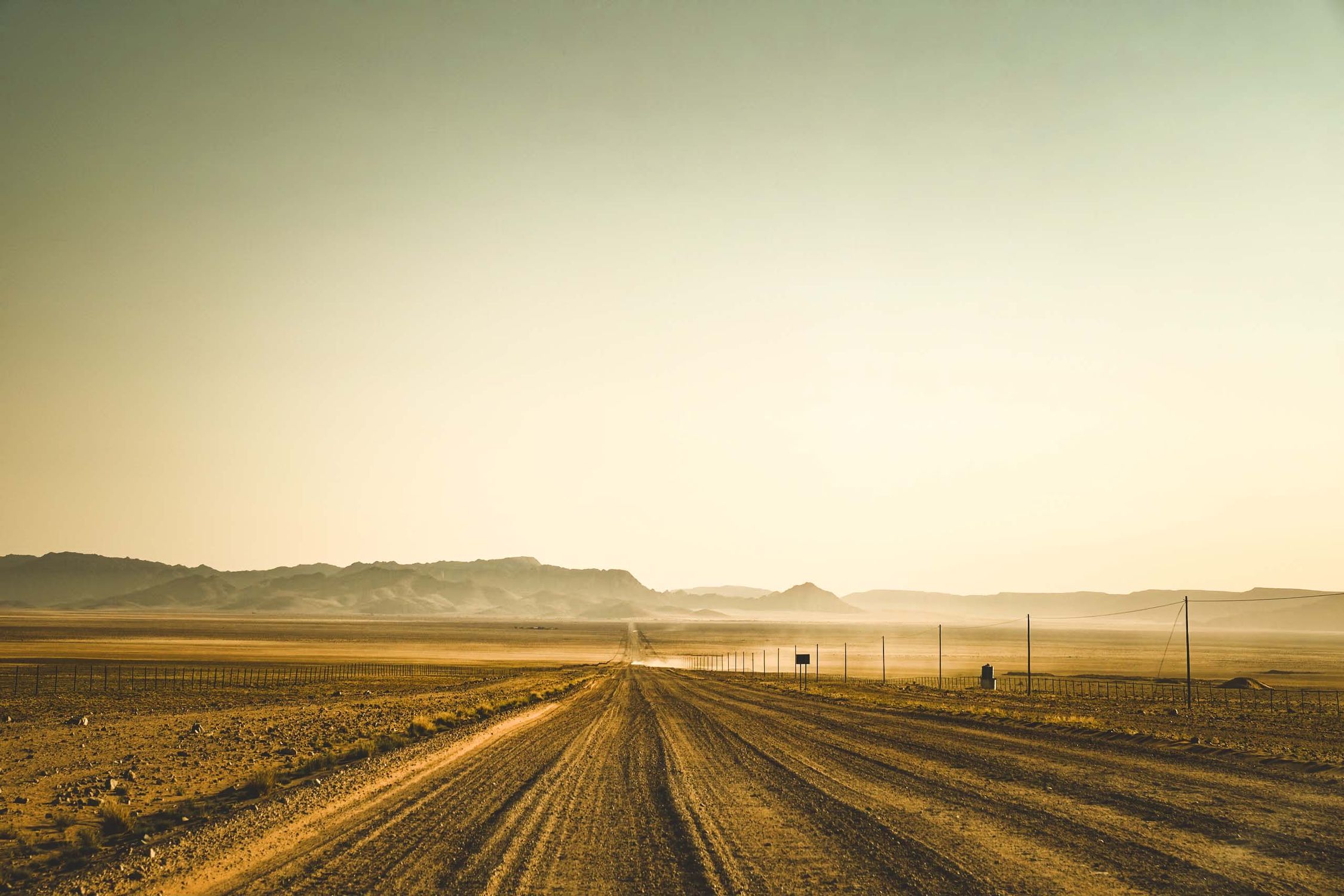
Namibia’s road network is a patchwork of tar and gravel. Main arteries between towns are tarred, but the majority of the country is gravel - ranging from fine sand to coarse, corrugated tracks (countryreports.org). Speed limits are 120 km/h on tar, 80 km/h on gravel or sand, and 60 km/h in built-up areas. In practice, keep to about 80 km/h on gravel and drop lower on rough or corrugated sections. The transition point on mountain passes - where tar gives way to gravel - is often the most treacherous stretch; slow down, keep a safe distance, and be ready for sudden dust clouds. For live route conditions before you set out, the Roads Authority of Namibia is the official source for the network you’ll actually be driving.
A few practical habits make the difference between a smooth ride and a busted suspension:
- Tyre pressure: Reduce by 10-20% before hitting loose gravel for better grip, then reinflate before returning to tar.
- Passing etiquette: Pull slightly to the side when overtaking on gravel to avoid stone chips and dust-blindness.
- Spare readiness: Check the spare tyre, jack, and fluid levels before every long leg; service stations are sparse between towns.
- Night driving: Avoid after dark. Wildlife - especially antelope and jackals - wander onto unlit roads, and sand-storm visibility can drop to zero.
- Fords: Many routes cross dry riverbeds at unbridged fords. Approach slowly, keep momentum, and be prepared for sudden water depth changes after rains.
Rainy season (typically January-March) can wash out tar roads and turn gravel into slick, fine dust. If you’re traveling during that window, pack extra water, a high-visibility jacket, and a portable air compressor for tyre re-inflation.

Best Time to Rent and Book
Namibia’s rental pricing swings hard with the calendar, and knowing the pattern can save you real money. December sits at the bottom of the curve, averaging around $49 per day across vehicle classes - the shoulder-season sweet spot for travelers chasing empty roads and softer rates. September sits at the top, spiking to roughly $96 per day as dry-season traffic peaks and the best 4x4s and camping rigs get booked out weeks in advance.
If your itinerary is flexible, book outside the July-September window and you’ll find both better rates and more availability. Remember that CARAN’s entire member fleet across the country is only 31 agencies, so popular vehicle classes genuinely sell out rather than just running low. Whatever month you land, check current entry requirements and regional advisories on the Namibia Tourism Board before you finalize your route, especially if you’re planning to cross into neighboring countries or visit conservation areas with separate permit rules. Keep in mind that December’s low rates coincide with the start of rainy season, so weigh the savings against the wetter driving conditions covered above.
What to Pack
A reliable GPS watch is worth its weight in battery life when you’re navigating remote canyons or tracking a surf session far from the coast. Here’s how the three top adventure watches compare for a Namibia road trip.
Garmin fēnix 8 Solar Sapphire 51mm
The solar-charged beast gives up to 149 hours of GPS tracking and 48 days in smartwatch mode, backed by a 1.4” solar sapphire touchscreen and multi-band GPS/GLONASS/Galileo/BeiDou positioning. It’s dive-rated to 40m with a titanium build, and the built-in LED flashlight and dual-frequency GPS are priceless when you’re checking a tyre by headlamp in the desert night. The trade-off: it’s heavy at 89g and carries a premium price over $1,100 ($1,199.99).
Garmin fēnix 8 Solar Sapphire 51mm
COROS VERTIX 2S Adventure GPS Watch
The COROS trades a bit of ecosystem polish for value: 40 days of smartwatch battery and 118 hours of full GPS tracking, wrapped in a sapphire crystal screen and titanium bezel. Dual-frequency GPS keeps your position locked even in tight canyon terrain, and at $699 it undercuts the Garmin by roughly $500. It skips the built-in flashlight and has a smaller third-party app ecosystem, but for trail runners and mountaineers who just want dependable tracking, it’s a strong value pick.
COROS VERTIX 2S Adventure GPS Watch
SUUNTO Vertical Adventure GPS Solar Watch
The SUUNTO wins on daily-mode endurance: 60 days in smartwatch mode with solar assist, a full 1.4” color touchscreen, free global offline maps, and 95+ sports modes. At $649 it’s the most affordable of the three and the best fit for hikers and multisport athletes who want a big screen over raw GPS hours (85 hours of full GPS tracking, dual-band GNSS). The touchscreen can lag in cold conditions and heart-rate accuracy trails a chest strap, but for road-trip navigation and everyday wear it holds up well.
SUUNTO Vertical Adventure GPS Solar Watch
Which one should you buy? If you’re doing a long overlanding loop with multi-day stretches off the grid, the Garmin’s 149-hour GPS ceiling and solar charging give you the deepest safety margin. If you’re splitting time between trail stops and long driving days, the COROS’ 118-hour GPS and lower price make it the best middle ground. And if your trip leans more toward hiking and sightseeing than hardcore navigation, the SUUNTO’s 60-day battery and larger screen are hard to beat for the money.
Beyond watches, pack a high-capacity power bank, a compact solar panel, a sturdy dry-bag for electronics, and a portable air compressor for those tyre-pressure tweaks. None of it replaces a good map, but it all buys you margin when the nearest service station is hours away.
Common Mistakes to Avoid (FAQ)
Q: Can I drive a rental at night? A: Technically you can, but wildlife collisions and unlit fords make it risky. Most seasoned travelers stick to daylight hours.
Q: Do I need an IDP if my license is in English? A: No. An IDP is only required when your home license isn’t printed in English (Live Like It’s the Weekend).
Q: Is the standard excess cover enough? A: It protects against most collision damage, but glass, tyre, and sand-storm damage are excluded. Consider a reduced-excess add-on or personal policy if you’ll be off-road a lot.
Q: Will my rental be a brand-new model? A: CARAN members guarantee vehicles no older than three years, with mileage caps (CARAN). Always ask to see the mileage log before signing.
Q: How do I handle sand-storm damage? A: Standard insurance won’t cover it. Keep a spare sand-filter for the air intake, drive with reduced speed, and if a storm hits, pull over in a safe spot until it passes.
Q: Who do I contact about entry requirements or conservation-area rules before I go? A: Start with the Ministry of Environment, Forestry and Tourism’s Namibia Tourism Board page for current entry and travel guidance. The board was established under the Namibia Tourism Board Act of 2000 and is Namibia’s only government-mandated national tourism authority, so it’s the most reliable single source before you lock in a route.
Related Reading
Get price-drop alerts and new guides from BoldTripGuide
One email a week: price drops on the gear we recommend, new guides, and what changed. No spam, unsubscribe anytime.