Sea Kayaking Expeditions: Best Multi-Day Routes 2026
Best multi-day sea kayaking expeditions for 2026 — Norway, Scotland, Croatia, Alaska. Real costs, logistics, and skill requirements for every level.

This post may contain affiliate links. Disclosure
Updated for 2026 — Accurate as of February 2026.
There is a particular kind of freedom that only sea kayaking delivers. You carry everything you need in your boat. You move at the speed of your own arms. You access coastlines that no road, trail, or motorboat can reach. At the end of each day, you pull your kayak onto a beach that you have entirely to yourself, set up camp, cook dinner watching the sunset over the ocean, and fall asleep to the sound of waves.
Multi-day sea kayaking expeditions are among the purest forms of adventure travel. They require fitness, skill, weather judgment, and genuine self-reliance. The rewards are proportional: remote coastlines, wildlife encounters, a deep connection with the ocean, and a sense of accomplishment that few other activities deliver.
I have paddled multi-day routes on four continents over six years, from three-day coastal hops to three-week expedition crossings. This guide covers the world’s best routes — with real 2026 costs and logistics — from beginner-friendly coastal paddles to advanced expedition-level journeys.
2026 Booking Alert: Lofoten Islands guided trips are fully booked for 2026 and 2027. Some operators are already taking deposits for 2028. For Lofoten, book independent trips or join waitlists now. Croatia and Scotland have better availability through May and September.
Lofoten Islands, Norway (5-7 Days)
Paddling through the Lofoten Islands is sea kayaking at its most visually spectacular. Jagged granite peaks rise 1,000 meters directly from the ocean. Turquoise water fills sheltered bays between the mountains. White sand beaches, seemingly transplanted from the Caribbean, appear between headlands of dark ancient rock. The midnight sun — keeping the sky bright 24 hours a day from late May through mid-July — means you can paddle whenever you choose.
The classic Lofoten route follows the outer coast from Reine south to Henningsvaer or Svolvaer in the north, roughly 80-100 kilometers depending on your exact route. The coastline is deeply indented with fjords, sounds, and channels that provide sheltered paddling even when the open ocean is rough. Wild camping is legal throughout Norway under the right to roam (allemannsretten), meaning you can pitch your tent on any beach or headland.
The combination of dramatic scenery, wildlife — sea eagles overhead, seals on the rocks, occasional whale spouts — and the surreal quality of paddling at midnight in full daylight makes Lofoten one of the most memorable outdoor experiences on earth.
Distance: 80-100 km Duration: 5-7 days Difficulty: Intermediate (some exposed crossings, tidal currents in sounds) Water temperature: 8-13°C (June-August) Best season: June through August Guided trips: From 1,600 EUR for 5 days (2026 pricing); most operators fully booked for 2026-2027 Kayak rental: 80-120 EUR per day for a fully equipped expedition kayak with dry bags Getting there: Fly to Leknes or Bodo, then ferry or bus to your starting point
Pro Tip: Bring a fishing rod. Arctic cod, coalfish, and pollock are abundant and can be caught from the kayak. Fresh fish cooked on a beach campfire is the quintessential Lofoten dinner.
Scottish Highlands and Islands (3-10 Days)
Scotland offers the most varied and accessible sea kayaking in Europe. The west coast, from the Clyde to Cape Wrath, features thousands of islands, sea lochs, and headlands creating an almost infinite variety of routes. The Inner Hebrides (Mull, Skye, Jura, Islay) and Outer Hebrides (Lewis, Harris, the Uists) provide sheltered island-hopping through some of the most dramatic coastal scenery in the British Isles.
The classic route is the circumnavigation of the Isle of Skye — 140 km, 7-10 days — taking you past the Cuillin Ridge, through tidal races, along basalt sea cliffs, and through sounds where you are likely to see seals, porpoises, sea eagles, and otters. For a shorter first trip, the Small Isles (Rum, Eigg, Muck, Canna) offer a spectacular 3-5 day island-hopping route through sheltered waters with year-round wild camping rights under the Scottish Outdoor Access Code.
Distance: Variable (3-day island hops to 10-day circumnavigations) Difficulty: Beginner to advanced depending on route Water temperature: 10-15°C (June-August) Best season: May through September Guided trips: From 850 GBP for 5 days Kayak rental: 55-85 GBP per day Wild camping: Legal under Scottish right to roam
 Photo credit on Pexels
Dalmatian Coast, Croatia (5-7 Days)
Croatia’s Dalmatian coast offers warm-water sea kayaking through a chain of over 1,000 islands in the Adriatic. The water is warm (22-26°C in summer), the visibility is exceptional, and the combination of medieval walled towns, secluded pebble beaches, and pine-covered islands creates a paddling environment that is as culturally rich as it is scenically beautiful.
The most popular route runs from Split to Dubrovnik, island-hopping through Brac, Hvar, Korcula, and Mljet. Each island has distinct character: Hvar for lavender fields and nightlife, Korcula for its medieval old town, Mljet for its national park with saltwater lakes. You can camp on beaches, stay in village guesthouses, or combine both approaches.
Northern Dalmatia — the Kornati archipelago and the area around Zadar — is emerging as a strong alternative to the Split-Dubrovnik corridor. The Kornati National Park contains 89 islands across 300 square kilometers and is noticeably less crowded than the southern route, especially in May and September.
Distance: 150-200 km (depending on island routing) Duration: 5-7 days Difficulty: Beginner to intermediate (warm water, generally calm conditions, many shelter options) Water temperature: 22-26°C (June-September) Best season: May through October (June and September ideal for avoiding crowds) Guided trips: From 850 EUR for 6 days Kayak rental: 40-65 EUR per day Where to stay: Wild camping on beaches and village accommodation from 25 EUR
Pro Tip: Paddle early morning before the Maestral wind (a thermal northwesterly) picks up. By 2 PM the wind can be 15-20 knots, creating challenging conditions for loaded expedition kayaks. Use afternoons for exploring towns, swimming, and resting.
Abel Tasman, New Zealand (3-5 Days)
Abel Tasman National Park on New Zealand’s South Island is the country’s premier sea kayaking destination and one of the world’s most beautiful coastal paddles. Golden sand beaches backed by native bush, clear turquoise water, and a sheltered coastline indented with bays and estuaries create ideal paddling conditions. The park is accessible only by boat, kayak, or foot, which means beaches are uncrowded despite its popularity.
The standard route follows the coast from Marahau to Totaranui (51 km), with camping at Department of Conservation (DOC) campsites. The paddling is sheltered and distances between camps manageable at 10-15 km per day, making this the world’s best introductory multi-day sea kayaking trip.
Distance: 51 km one way Duration: 3-5 days Difficulty: Beginner-friendly (sheltered water, well-maintained campsites, multiple exit points) Water temperature: 16-20°C (December-March) Best season: November through April (Southern Hemisphere summer) Guided trips: From 820 NZD for 3 days; independent rentals from 90 NZD per day Camping: DOC campsites must be booked in advance during peak season (December-February). From 15 NZD per person per night. Getting there: Nelson is the nearest town. Bus or water taxi to Marahau.
Baja California, Mexico (5-10 Days)
The Sea of Cortez between Baja California and mainland Mexico is Jacques Cousteau’s “aquarium of the world,” and paddling it by sea kayak is an extraordinary experience. The desert coastline features dramatic rock formations, hidden coves, and desert islands where you camp on pristine beaches beneath a sky blazing with stars.
The marine life is exceptional. Sea lions swim alongside your kayak. Whale sharks and mobula rays cruise the surface. Between January and March, gray whales migrate into Magdalena Bay where you can paddle among mothers and calves in shallow water. Dolphins are a near-daily occurrence.
The most popular route follows the coast from Loreto to La Paz (200+ km), passing the islands of Carmen, Danzante, Monserrat, and Espiritu Santo. The dry desert climate means rain is almost nonexistent, and calm morning conditions in the Sea of Cortez are ideal for paddling.
Distance: 200+ km (Loreto to La Paz) Duration: 7-10 days Difficulty: Intermediate (desert environment adds logistical challenge, some exposed crossings) Water temperature: 18-28°C (coolest January-March, warmest July-September) Best season: October through May Guided trips: From 1,300 USD for 5 days; guided strongly recommended for first-timers Getting there: Fly to Loreto (LTO) or La Paz (LAP) from mainland Mexico or the US
Glacier Bay, Alaska (7-14 Days)
Glacier Bay National Park is sea kayaking in its most epic, wilderness-expedition form. You paddle among tidewater glaciers calving icebergs into the sea, in water surrounded by humpback whales, sea otters, harbor seals, and bears fishing on the shoreline. The scale is almost incomprehensible: mountains rising thousands of meters from sea level, glaciers stretching to the horizon, and a silence broken only by calving ice and surfacing whales.
This is advanced expedition kayaking. The water is cold (4-10°C), the weather is unpredictable, tidal currents are strong, and you are genuinely remote. There are no facilities, no cell service, and no rescue services within easy reach. You carry all your food for the entire trip and camp on wilderness beaches.
Distance: Variable (80-200+ km depending on route) Duration: 7-14 days Difficulty: Advanced (cold water, remote wilderness, no facilities, bear country) Water temperature: 4-10°C Best season: June through August Permits: Required. Obtain from the Glacier Bay backcountry office. Free but limited. Guided trips: From 3,100 USD for 8 days; independent trips possible for experienced paddlers Getting there: Fly to Juneau, then ferry or small plane to Gustavus. Water taxi to the head of the bay.
Essential Gear for Multi-Day Sea Kayaking
| Category | Essential Items | Approximate Cost |
|---|---|---|
| Kayak | Expedition sea kayak (touring, 16-18 ft) | 80-150 USD/day rental |
| Safety | PFD, paddle float, bilge pump, flares, VHF radio | 200-400 USD (own) |
| Navigation | Waterproof chart, compass, GPS device | 100-300 USD |
| Shelter | Tent, sleeping bag, pad | 300-800 USD |
| Cooking | Stove, fuel, pot, utensils | 50-150 USD |
| Clothing | Dry suit or wetsuit, paddling layers | 200-600 USD |
| Dry storage | Sea to Summit Hydraulic Dry Bag (multiple sizes) — see best dry bags tested | 50-150 USD |
| Communication | Garmin inReach Mini 2 or SPOT | 300-400 USD + subscription |
For a deep dive on the satellite communicator piece, see our satellite communicator review comparing Garmin InReach and SPOT — both are standard kit on any sea kayaking expedition. For the full kit rundown, our adventure travel gear guide covers multi-day paddling setups in detail.
Skills You Need Before Your First Multi-Day Paddle
Multi-day sea kayaking requires competence in five areas:
-
Efficient forward stroke. You will paddle 15-30 km per day. An inefficient stroke will exhaust you by noon and cause repetitive strain injuries by day three.
-
Bracing and self-rescue. You must be able to recover from a capsize using a paddle float or cowboy scramble. In cold water, getting back in your boat quickly is a survival skill.
-
Navigation. Reading charts, understanding tidal currents, planning routes around weather and tide windows. Many sea kayaking routes involve crossings where you are out of sight of land.
-
Weather judgment. Knowing when to paddle and when to wait. Sea kayakers develop an intimate relationship with weather forecasts and learn to read the sky, wind, and sea state.
-
Packing. Loading a sea kayak is an art. Heavy items low and centered, frequently accessed items accessible, nothing on deck that can catch the wind or fall off.
If you are new to sea kayaking, take a multi-day guided trip before attempting an independent expedition. A good guide teaches these skills in context while keeping you safe.
Planning Your First Multi-Day Sea Kayaking Trip
Start with a 3-day route in sheltered water with multiple exit points. Abel Tasman, the Croatian coast, or the Scottish Inner Hebrides are ideal first trips. Build toward longer, more exposed routes as your skills and confidence develop.
Book well in advance for popular routes — Abel Tasman in January, Lofoten in July — as kayak rental availability is limited. Bring your own dry suit or wetsuit if paddling in cold water; rental options for these items are often limited and poorly fitting.
And most importantly: check the weather forecast obsessively, but be prepared for it to be wrong. The greatest skill in sea kayaking is patience — the willingness to sit on a beach for a day waiting for conditions to improve rather than pushing out into weather that exceeds your ability.
The Joy of Kayak Camping
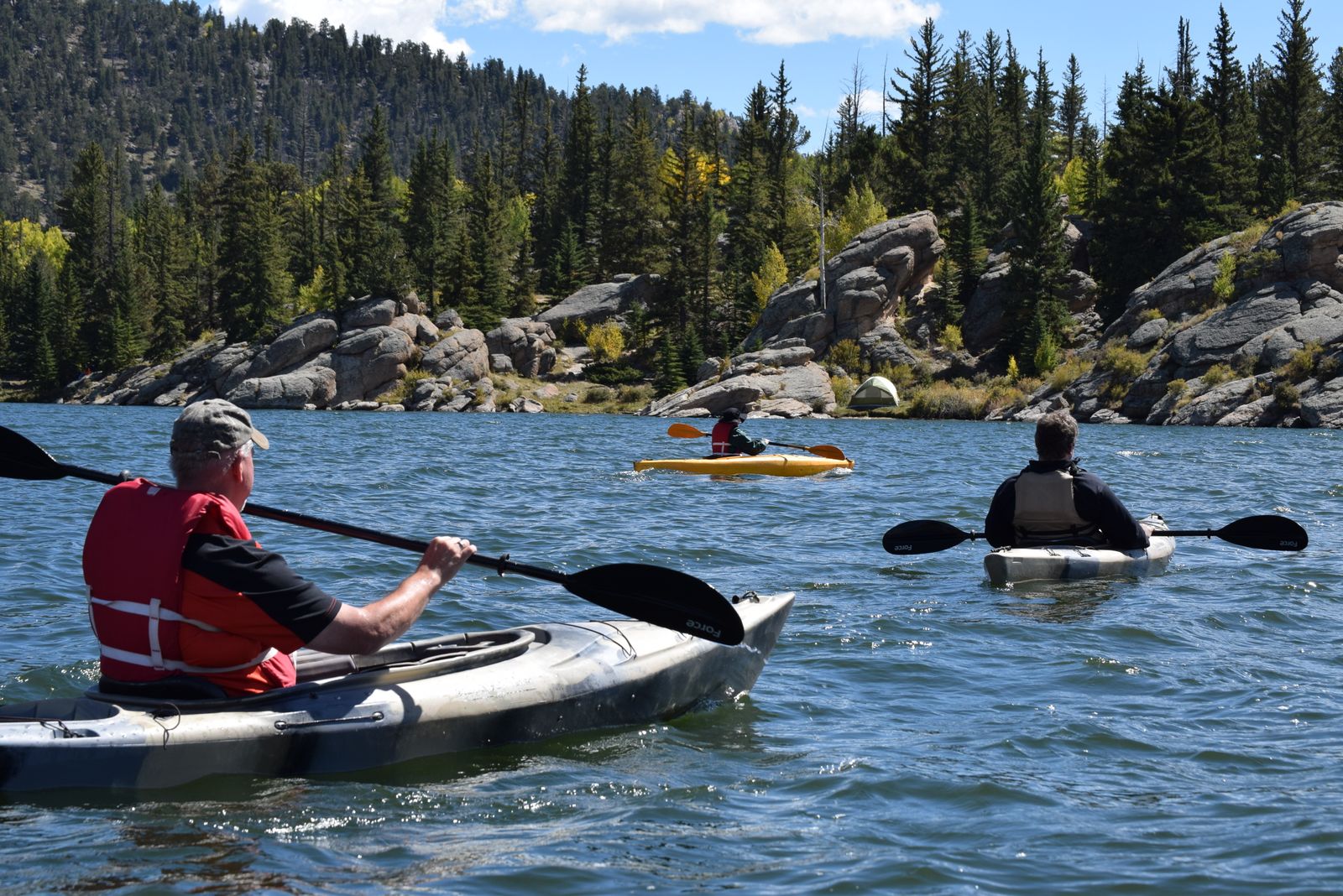
Beyond the paddling itself, what makes multi-day sea kayaking special is the camping. You pull your kayak onto a beach that no road can reach, set up your tent overlooking the ocean, cook dinner as the sun sets, and fall asleep to the sound of waves. In the morning, you watch the sunrise from your sleeping bag, brew coffee on a compact stove, pack everything back into the kayak, and paddle off to find the next remote beach.
The beaches you camp on during a sea kayaking expedition are often inaccessible by any other means. In Lofoten, I camped on a white sand beach at the base of a 900-meter granite cliff with no other humans within 10 km. In Croatia, I camped on a tiny island where the only other occupants were a family of rabbits. In Alaska, the beach was shared with a grizzly bear fishing in the river 200 meters away.
This combination of physical exertion, self-sufficiency, natural beauty, and radical simplicity is what draws people to multi-day sea kayaking. It is the antidote to a complicated, screen-saturated life. For a week, your world shrinks to the elemental: water, weather, food, shelter, and the rhythm of your paddle strokes.
You Might Also Like
Get the best ThrillStays tips in your inbox
Weekly guides, deals, and insider tips. No spam, unsubscribe anytime.