Travel Guide to Costa Rica, Costa Rica
Pura vida meets pure adrenaline in this Central American paradise where zip-lining over cloud forests, surfing both coasts, white-water rafting, and volcano hikes are all in a single day's reach.

Costa Rica, Costa Rica

About Costa Rica
Costa Rica, officially the Republic of Costa Rica, is a country in Central America. It borders Nicaragua to the north, the Caribbean Sea to the northeast, Panama to the southeast, and the Pacific Ocean to the southwest, sharing a maritime border with...
Read more on WikipediaQuick Facts
Safety score derived from the U.S. State Department Travel Advisory for Costa Rica: Level 2 (Exercise Increased Caution), as of 2026-07-08. Country-level guidance; check local conditions before you go.
Why Adventurers Love Costa Rica
 Photo: Monteverde Cloud Forest 01.jpg by Cephas (CC BY-SA 4.0), via Wikimedia Commons
Costa Rica essentially invented canopy zip-lining and the country remains the world capital of the activity, with courses strung through cloud forests, over volcanic valleys, and across jungle canyons. But zip-lining is just the start. The country is bookended by the Pacific and Caribbean coasts, both offering excellent surf. The interior is a chain of volcanoes — Arenal, Poas, Rincon de la Vieja — with hot springs, crater lakes, and lava-field hikes. The rivers, particularly the Pacuare and Reventazon, deliver some of the best white-water rafting in the Americas. Add in world-class wildlife (sloths, toucans, monkeys, sea turtles) and a national park system that protects 25% of the country, and Costa Rica is an adventure traveler’s dream.
Neighborhoods & Adventure Zones
Monteverde
 Photo: Monteverde bosque.jpg by Haakon S. Krohn (CC BY-SA 3.0), via Wikimedia Commons
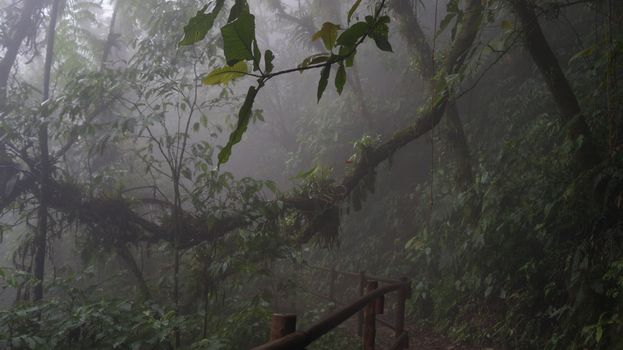
The original canopy-tour town, set in misty cloud forest at around 1,400m. It’s the base for zip-lining, hanging-bridge walks, and night hikes to spot sloths and kinkajous.
La Fortuna
 Photo: Arenal Volcano seen from La Fortuna, Costa Rica.jpg by Central Intelligence Agency (Public domain), via Wikimedia Commons
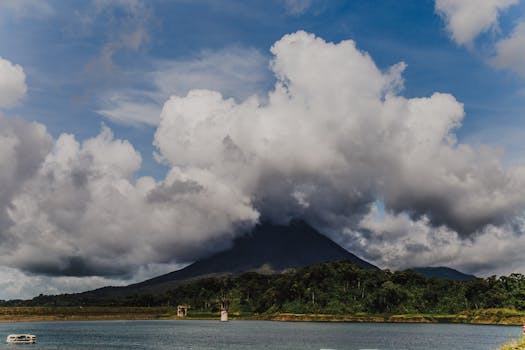
Sitting in the shadow of Arenal Volcano, this is the hub for lava-field hikes, natural hot springs, and put-ins for the Pacuare River. It has the most backpacker infrastructure in the interior.
Santa Teresa & Tamarindo
 Photo: Fishermen at Sunset, Playa Santa Teresa, Costa Rica.jpg by Christopher Crouzet (CC BY-SA 4.0), via Wikimedia Commons
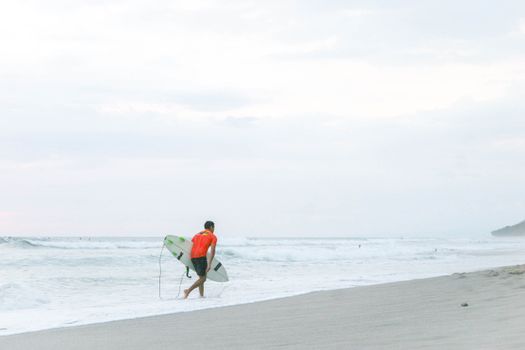
The two anchor surf towns of the Nicoya Peninsula and Guanacaste coast, both with consistent Pacific breaks for every skill level and a laid-back, beach-town base for surf lessons and sunset sessions.
Manuel Antonio
 Photo: Playa Manuel Antonio.jpg by Haakon S. Krohn (CC BY-SA 3.0), via Wikimedia Commons
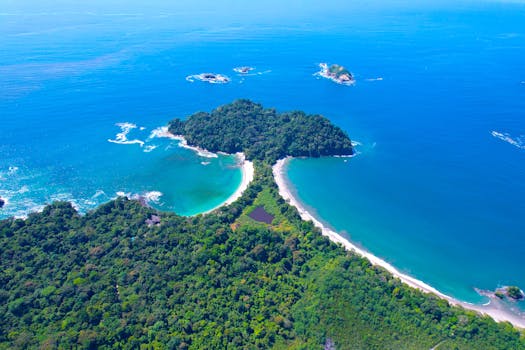
A compact national park backed by beach towns, best for travelers who want white sand, rainforest trails, and reliable wildlife sightings (monkeys, sloths, iguanas) without a long transfer.
Top Things to Do in Costa Rica
- Zip-line through the Monteverde Cloud Forest Reserve — The original canopy tour, flying through treetops at roughly 1,400m with cloud forest and hundreds of bird and orchid species below.
- Hike the lava fields of Arenal Volcano — One of Costa Rica’s most active volcanoes, with trails across old lava flows and natural hot springs at its base for the post-hike soak.
- Raft the Pacuare River — Class III-IV rapids through a pristine jungle gorge, consistently rated one of the best commercially run rafting rivers in the world.
- Surf Santa Teresa — A Nicoya Peninsula beach town with consistent Pacific swell for every level, from first-timers to experienced surfers chasing bigger days.
- Explore Manuel Antonio National Park — Costa Rica’s smallest national park packs in white-sand beaches, rainforest trails, and dense wildlife, including squirrel monkeys and sloths, into a compact, easy-to-walk area.
- Track wildlife in Corcovado National Park — Remote and roadless on the Osa Peninsula, National Geographic has called it one of the most biologically intense places on Earth — tapirs, scarlet macaws, and all four of the country’s monkey species included.
- Watch sea turtles nest at Tortuguero National Park — Accessible only by boat or small plane through a maze of Caribbean-coast canals, it’s one of the most important green sea turtle nesting sites in the Western Hemisphere.
Book tickets & skip-the-line tours: Browse Costa Rica experiences
Getting to the Adventure Spots
 Photo: Juan Santamaria Airport SJO 12 2009 4900.jpg by Mariordo Mario Roberto Duran Ortiz/Mario Duran Valerio (CC BY-SA 3.0), via Wikimedia Commons
Shared shuttles (Interbus, Caribe Shuttle) connect the main tourist towns for $30-60 per trip and are the most practical transport for travelers without a car. Public buses are cheap ($5-15) but slow. Renting a 4x4 is ideal if you want maximum flexibility — many roads are unpaved and require clearance, especially in rainy season. Domestic flights with Sansa connect San Jose to Liberia, Tamarindo, and other towns in under an hour. San Jose’s Juan Santamaria International Airport is the main entry point.
Safety & Practical Notes
The U.S. State Department rates Costa Rica Level 2 (Exercise Increased Caution) (as of 2026-07-08), driven mostly by petty theft and occasional armed robbery targeting tourists, not by the adventure activities themselves. Practical pointers:
- Use licensed operators — For rafting, zip-lining, and volcano/hiking guides, book through operators registered with the Costa Rica Tourism Board (ICT) rather than informal street vendors.
- Car break-ins are common at trailheads and beaches — Never leave valuables visible in a parked rental car, even for a short hike.
- Rip currents — Both coasts have areas with strong rip currents; ask locally about safe swimming beaches, especially around Manuel Antonio and the Nicoya Peninsula.
- Tap water varies — It’s generally safe in San Jose and larger towns but can be unreliable in rural and coastal areas; bottled or filtered water is the safer default outside cities.
- Emergency number — Dial 911 nationwide. Plugs are Type A/B (same as the U.S.), so no adapter needed for American travelers.
Best Time to Visit
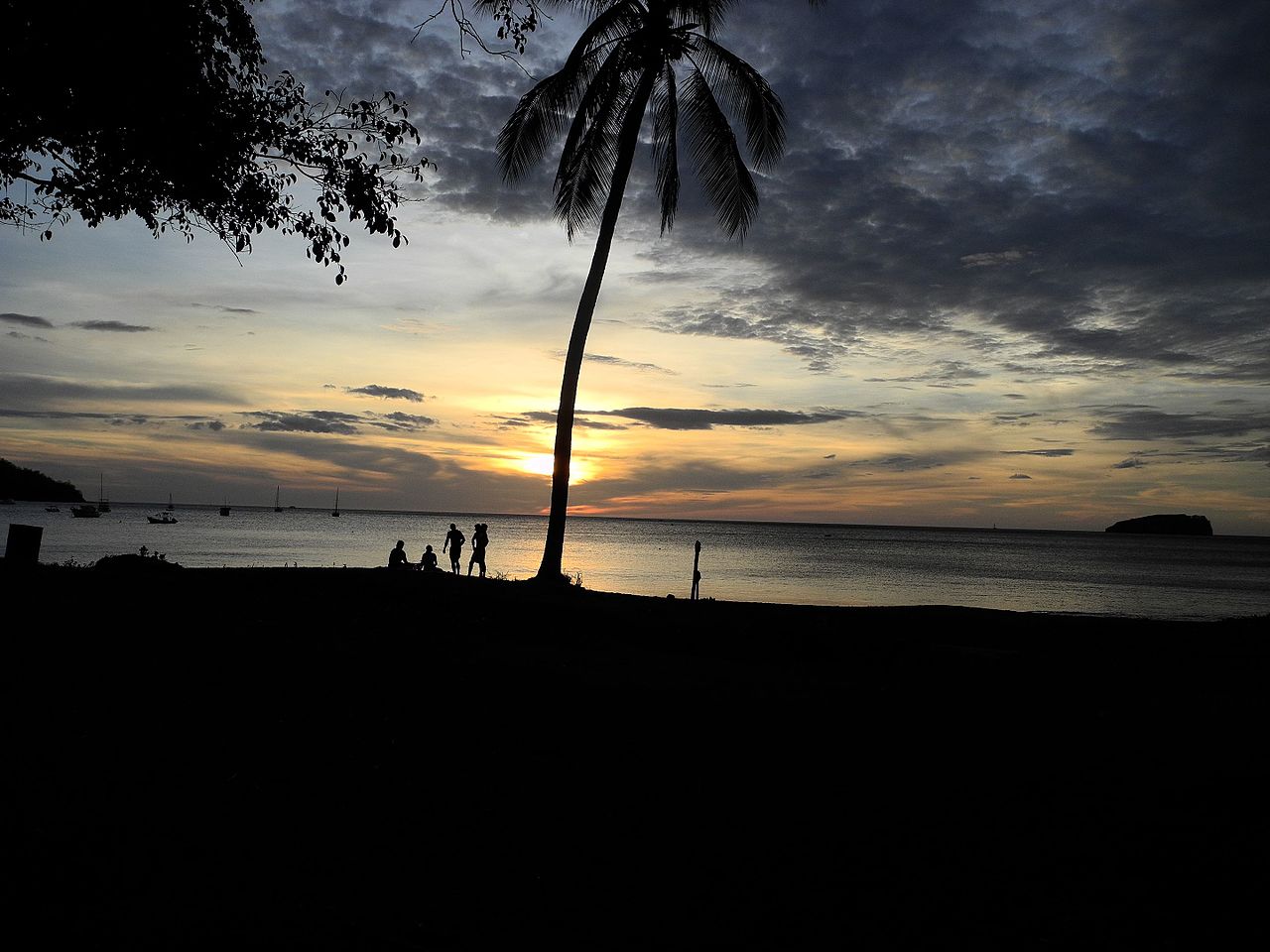 Photo: Costa Rica Sunset.jpg by LeonidasB (CC BY-SA 4.0), via Wikimedia Commons
December through April is the dry season and peak travel time — best for hiking, wildlife visibility, and reliable road conditions, but also the most expensive and crowded. July brings a short mid-summer dry spell locals call the “veranillo,” a good window for lower prices with decent weather. The rest of the wet season (May, June, August-November) still works for surfing and rafting (rivers often run higher and better), just expect afternoon downpours and rougher unpaved roads.
Where to Stay
 Photo: CostaRica Arenal Volcano (pixinn.net).jpg by Christophe Meneboeuf (CC BY-SA 3.0), via Wikimedia Commons
Costa Rica is spread out and each adventure zone has its own base. Monteverde for cloud forest zip-lining and hanging bridges. La Fortuna for Arenal Volcano, hot springs, and Pacuare rafting. Santa Teresa or Tamarindo for Pacific surfing. Manuel Antonio for wildlife and beaches. Budget travelers will find hostels for $10-18/night throughout the country, with La Fortuna and Tamarindo having the most backpacker infrastructure. Mid-range options include eco-lodges and boutique hotels ($40-80/night). Camping is available in some national parks. Moving between zones typically requires half-day bus rides or domestic flights. For picks by zone, see our La Fortuna and Monteverde basecamp guides.
Budget Tips
Eat at sodas (local family restaurants) for $4-6 instead of tourist restaurants. The dry season (December-April) is peak season with higher prices — July offers a mini dry season with lower costs. Book activities directly with local operators rather than through hotels or online aggregators. Cook at hostels where possible — grocery prices are reasonable at local markets. US dollars are widely accepted, but you will get a better deal paying in colones. Many national parks have modest entrance fees ($10-18) and do not require guides.
Frequently Asked Questions
Do U.S. citizens need a visa for Costa Rica?
No. U.S. passport holders can enter visa-free for up to 90 days for tourism. You'll need a passport valid through your stay and, technically, proof of onward travel, though this is rarely checked at the airport.
Is Costa Rica safe for adventure travel?
The U.S. State Department rates Costa Rica Level 2 (Exercise Increased Caution), as of 2026-07-08, mainly due to petty theft and occasional armed robbery in tourist areas -- not the outdoor activities themselves. Use a licensed operator for rafting, zip-lining, and volcano hikes, don't leave valuables visible in parked cars, and check surf conditions and volcanic activity advisories before heading out.
What's a realistic daily budget?
Budget travelers can get by on $40-80/day covering hostel dorms, local sodas, and public buses. Add $30-60/day if you're moving between adventure zones by shuttle, or more if you're booking guided rafting, zip-line, or wildlife tours directly.
What's the best way to get around without a tour package?
Shared shuttles (Interbus, Caribe Shuttle) connect the main tourist towns for $30-60 per trip and are the easiest option without a car. Renting a 4x4 gives you the most flexibility since many roads to beaches and lodges are unpaved, especially in rainy season.
Related Guides
Upcoming Holidays
Costa Rica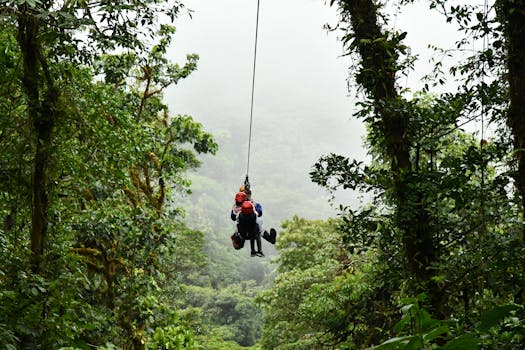
Get price-drop alerts and new guides from BoldTripGuide
One email a week: price drops on the gear we recommend, new guides, and what changed. No spam, unsubscribe anytime.