Car Rental Guide: Yukon and Alaska Highway, 2026 Edition
How to rent a car for the 1,387-mile Alaska Highway in 2026: company options, price bands by vehicle class, insurance rules, and gravel-road realities.

This post may contain affiliate links. Disclosure
The Alaska Highway runs 1,387 miles from Yukon’s interior into Alaska, and renting a vehicle for it means picking a car that can survive gravel shoulders, sudden weather, and long stretches without a gas station - not just the cheapest daily rate. Major agencies including Budget, Enterprise, Hertz, Avis, Alamo, National, Thrifty, and Dollar all operate along the route, alongside northern specialists like GoNorth Car & RV Rental, Alaska 4x4 Rentals, Alaska Overlander, and Alaska Auto Rental. This guide breaks down what each vehicle class actually costs in 2026, what paperwork and insurance you need, and the road conditions that determine whether an economy sedan or a 4WD SUV is the right call.
Short answer: Every agency on the Alaska Highway requires a valid US, Canadian or International Driving Permit licence plus a credit card; liability insurance is legally mandatory in both Yukon and Alaska. Economy cars run $28-50 a day and SUVs $72-80. Confirm your contract permits cross-border driving before you book.
Rental Companies and Where to Book in Whitehorse
Whitehorse is the logistical hub for this route, and it’s where most travelers pick up their vehicle before pushing north or west. Budget Car Rental runs two locations here - one at the airport (75 Barkley Grow Crescent) and one downtown (4178 4th Ave) - giving you a choice between grabbing a car straight off your flight or picking up mid-trip if you’re arriving by other means. Enterprise Rent-A-Car has three locations across the Yukon, more than any other company in the territory, plus a desk at Whitehorse International Airport (YXY). Avis, Hertz, Alamo, National, Thrifty, and Dollar round out the major national brands operating in the region.

If your route pushes into Alaska itself, GoNorth Car & RV Rental operates locations in Anchorage, Fairbanks, Whitehorse, and Seattle, which makes one-way rentals between those cities straightforward if you don’t want to backtrack. Alaska.org also lists Alaska 4x4 Rentals, Alaska Overlander, and Alaska Auto Rental as specialists that focus specifically on SUVs and trucks built for gravel-road travel - worth calling directly if the majors are sold out during peak summer months or if you want a vehicle already outfitted for backcountry driving.
Summer is peak season on this corridor, and both the national brands and the northern specialists see their SUV and 4WD inventory sell out weeks ahead. If your travel window is fixed, book the vehicle class you actually need as early as possible rather than assuming you can upgrade at the counter - by the time you land in Whitehorse, the gravel-capable vehicles are often the first ones gone.
What You’ll Pay: 2026 Rates by Vehicle Class
Pricing breaks into clear bands by vehicle type. Economy cars - a two-door Mitsubishi Mirage is the benchmark - run $28 to $50 a day, the cheapest way onto the highway if you’re sticking to pavement. Compact cars like a Nissan Versa run $45 to $62 a day, and midsize sedans such as a Chevrolet Malibu average $46 to $53 a day - close enough to compact pricing that the extra room is often worth it for a long haul.

Once you need ground clearance, the price jumps. SUVs - a Nissan Pathfinder is typical - run $72 to $80 a day, reflecting real demand for higher-clearance vehicles on the Dempster and other gravel stretches. Vans, like a Dodge Grand Caravan, run $93 to $100 a day, the most expensive class on this route, useful if you’re traveling as a group and need the cargo room for camping gear. Pickups such as a Ford F-150 run $74 to $90 a day, a middle ground between SUV clearance and van capacity.
Rates fluctuate by season and by which of the agencies above you book with, so it’s worth comparing more than one before committing - especially if your dates fall during the short summer peak when demand for SUVs and 4WD vehicles spikes.
The gap between classes matters more on a route this long than it would on a weekend rental. A two-week itinerary at a $50-a-day compact rate runs about $700 for the vehicle alone, while the same two weeks at $80 a day for an SUV runs closer to $1,120 - a difference worth weighing against how much unpaved road is actually on your itinerary. If you’re sticking to the paved sections of the Alaska Highway, a midsize sedan at $46 to $53 a day covers the trip without paying for clearance you won’t use. If the Dempster Highway or other gravel routes are on the plan, the SUV or pickup pricing is the realistic floor, not an upgrade to skip.
Requirements: License, Card, and Insurance Minimums
Every major agency on this list requires a valid driver’s license - U.S., Canadian, or an International Driving Permit - and a credit card for the deposit and final payment. That’s a hard rule at Budget, Enterprise, Hertz, and the rest; don’t expect to talk your way around it with a debit card. Liability insurance is legally mandatory in both Yukon and Alaska, and most rental contracts include the jurisdictional minimum by default, so you won’t need to buy it separately unless you want more coverage than the base policy provides.
Because this route crosses the U.S.-Canada border, confirm with your rental company before you book that cross-border driving is permitted on your specific contract - policies vary by agency, and getting turned back at the border with the wrong paperwork will cost you a day you don’t have.
Insurance: What’s Required, What’s Worth Buying
Liability coverage is the only insurance you’re legally required to carry, and it’s baked into nearly every contract at the minimum level Yukon and Alaska law demands. Everything past that is optional but worth weighing seriously on this specific route. A Collision Damage Waiver (CDW) or Loss-Damage Waiver (LDW) protects you against the two most common ways a rental gets damaged out here: stone chips and punctures from gravel sections, and the higher risk of a wildlife collision or an ice-related slide in winter conditions.
If you’re debating whether to add it, consider where you’re driving. The Dempster Highway and long unpaved stretches of the Alaska Highway put more wear on tires and paint than a normal rental sees in a year, and a single gravel chip in the windshield can turn into a repair bill that erodes any savings from skipping the waiver. For a route this remote, buying the agency’s CDW is the simpler call - you don’t want to be negotiating deductibles from a service station hours from Whitehorse.
Read the fine print on what liability actually covers before you assume you’re protected. The mandatory minimum in both Yukon and Alaska is there to cover damage or injury to other people and property, not damage to the rental vehicle itself - that’s exactly the gap the CDW or LDW closes. On a route where the closest replacement vehicle might be a full day’s drive away, that gap is worth closing before you leave the rental counter, not after a rock chip cracks the windshield fifty miles into the Dempster.
Road Realities: Gravel, Weather, and Wildlife
The corridor mixes paved highway with long gravel sections and mountain passes, and the transitions between them can be abrupt. The Dempster Highway is largely unpaved and requires a high-clearance or 4WD vehicle for safe passage - this isn’t a route to attempt in a compact sedan. Even the main Alaska Highway itself includes stretches of gravel long enough to catch drivers off guard if they’re used to smooth interstate pavement.
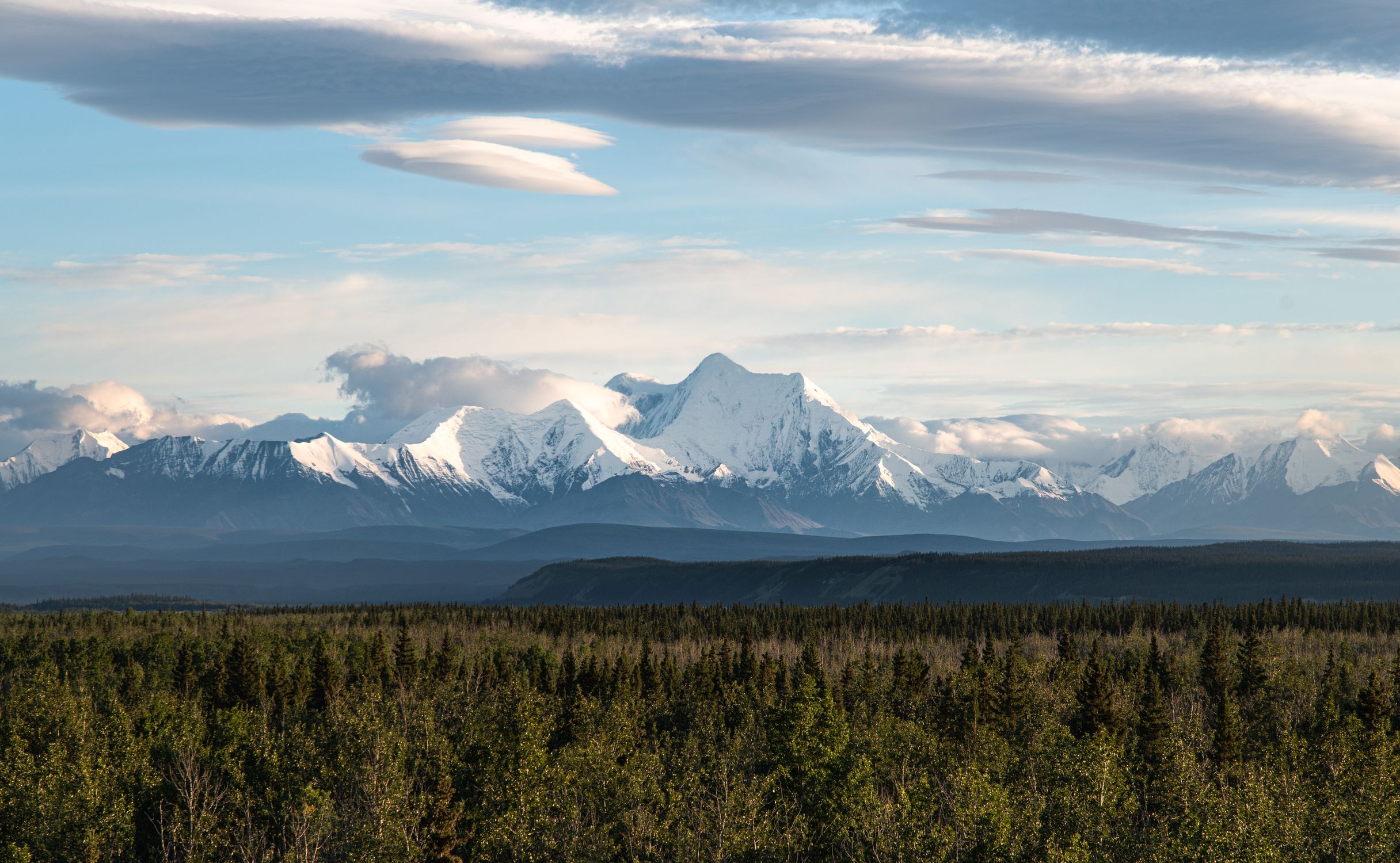
Wildlife crossings are frequent along the entire corridor - moose, caribou, and bears are most active at dawn and dusk, which makes those hours the highest-risk windows for a collision. Winter brings heavy snowfall and icy surfaces that demand slower speeds and more following distance; even in summer, sudden storms can drop visibility to near zero with little warning. Before you set out each morning, check 511 Yukon and 511 Alaska, which publish live weight restrictions, weather alerts, and road closures for the route - static maps won’t tell you if a pass closed overnight.
None of this is unusual for a northern overland route, but it compounds. A gravel section in dry weather is a manageable annoyance; the same gravel section after rain, at dusk, with a moose on the shoulder, is a different situation entirely. Building slack into your daily driving plan - shorter legs than you’d cover on an interstate, with buffer time before dark - does more for your safety margin than any single piece of gear.
Staying Safe on the Alaska Highway
Safety: The Alaska Highway crosses both the U.S. and Canada. Canada carries the U.S. State Department’s Level 1 - Exercise Normal Precautions rating, with the UK Foreign Office noting only standard petty-crime precautions (US advisory - UK FCDO, updated 2026-06-02). The U.S. does not issue a domestic advisory for its own Alaska stretch of the route, so treat that half with the same standard road-trip precautions: remote terrain, spotty cell coverage, and long distances between services.
Beyond the official ratings, the practical safety concerns on this route are logistical rather than criminal: long unserved stretches, weather that changes fast, and wildlife that doesn’t yield the right of way. Treat every fuel stop as mandatory rather than optional, and don’t count on cell service to bail you out if something goes wrong between towns - distance is the real hazard here, not crime.
Tell someone your route and rough schedule before you set out, and check in when you reach a town with service. It costs nothing and it’s the single easiest way to shorten a search-and-rescue window if a breakdown or a road closure strands you between Whitehorse and the next stop on your itinerary.
Packing and Daily Planning for the Drive
Start early. Summer daylight in the far north is long, but the safest driving hours are still the early ones, before wildlife activity peaks and before any afternoon weather rolls in. Carry extra fuel - service stations are sparse on the Dempster Highway, and a full tank plus a reserve container can prevent a costly detour or a long wait for a tow. Bring water and a spare tire: cold temperatures cause tire pressure to drop, and dehydration is a real risk on long, isolated stretches where the next stop might be hours away.
Most Yukon rentals, especially through Budget and Enterprise, offer roof-rack or cargo-box accessories - use them. Storing bulky gear overhead frees up interior space for passengers and keeps the cabin usable for the long hours you’ll spend in the vehicle. If you’re staging out of Whitehorse, check the City of Whitehorse’s parking rules before you leave your vehicle downtown versus at the airport lot - rates and restrictions differ between the two, and it’s a five-minute check that saves you a ticket.
Plan your daily distance around services, not around what the vehicle can technically cover in a day. It’s tempting to push for a bigger mileage day when the road is clear, but fuel, food, and lodging options on this corridor are spaced unevenly, and a long day that ends past the last open station is a worse outcome than a shorter day that ends where you can actually refuel and rest.
Common Mistakes to Avoid
Booking the wrong vehicle class is the most common one. An economy sedan at $28 a day looks appealing, but it doesn’t have the clearance for gravel sections, and most travelers who try it end up upgrading to an SUV mid-trip once they hit the Dempster or a rough stretch of the Alaska Highway - at a worse rate than if they’d booked the SUV up front. Skipping the CDW is the second-most expensive mistake: the waiver is optional, but a single stone chip or bumper scrape on a gravel stretch can cost more than the waiver would have for the entire trip.
Under-fueling is a real risk, not a theoretical one - running out of gas on the Dempster Highway can leave you stranded for hours with no cell service to call for help, so top up before every long unserved segment rather than waiting until the tank gets low. Ignoring the dawn-and-dusk wildlife windows raises your collision risk significantly; slow down and stay alert during those hours specifically. And don’t rely on a static map instead of checking 511 Yukon or 511 Alaska each morning - a closed pass or a weight-restricted bridge won’t show up until you’re already there. Finally, don’t skip the roof-rack accessories most agencies offer; overloading the interior with gear reduces visibility and can affect handling on windy mountain grades.
Related Reading
Get price-drop alerts and new guides from BoldTripGuide
One email a week: price drops on the gear we recommend, new guides, and what changed. No spam, unsubscribe anytime.